

But these Sheffield legends, whose passion and talent helped to shape the city, are largely unfamiliar to modern generations.
They are all commemorated in a series of blue plaques unveiled to mark this year’s Castlegate Festival, shining a light on their often forgotten contributions to the historic Sheffield district.
The figures being celebrated include a groundbreaking circus master who inspired the Beatles, a larger than life theatre impresario who lent his name to the world’s first football cup, and a businesswoman who revolutionised convenience food.
The Castlegate Festival, taking place on Saturday, September 14 and Sunday, September 15, celebrates the past and present of the area which was the birthplace of Sheffield and was home to its long-lost castle.
Today, a new park is being created on the site of the castle, later occupied by Castle Market, with the long-buried River Sheaf being opened up to public view.
Events and attractions during Castlegate Festival 2024 include the monthly Quayside Market at Victoria Quays, a free music festival on Exchange Street, a skate jam, and a pop-up climbing wall at Pollen Market.

1. Pablo Fanque - UK’s first Black circus master, who inspired the Beatles
Pablo Fanque (1810-71), Britain's first recorded non-white circus owner, was born in Norwich but married a Sheffield woman and performed in and staged many shows in the city. He was an 'outstanding' equestrian performer and his circus was hugely popular in Victorian Britain, particularly in the north, for 30 years during what is regarded as the golden age of the circus. He was an innovator, emploting his own architect and graphic artists to present his touring shows. He staged many of his shows in Sheffield around the Castlegate area, including Sheffield Fairground on Blonk Street and the Alexandra theatre on Exchange Street. He is mentioned in the Beatles song 'Being for the Benefit of Mr. Kite!', which is on the Sgt. Pepper's Lonely Hearts Club Band album and was inspired by one of his posters. | Picture Sheffield Photo: Picture Sheffield
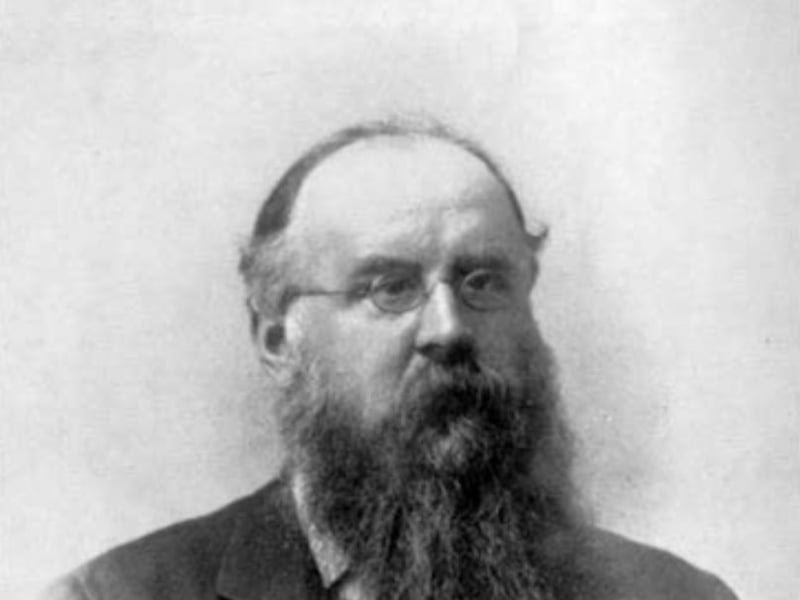
2. Arthur Davy - bakery magnate
Arthur Davy (1838-1902) started a bakery and cafe empire which has been described as Sheffield's answer to Greggs of its day. Arthur began his career as a wholesale grocer and tea merchant in the Bridgehouses area before expanding into groceries, baked goods, cooked meats and cafes. He had premises all over Sheffield, including on Fargate (now WHSmith), The Moor and Haymarket. A large bakery was built on Paternoster Row but closed in the 1980s and was replaced by the National Centre for Popular Music, which is now Sheffield Hallam University’s Student Union. The company was acquired in 1974 and all its shops and bakeries closed. The original 1904 Davys Café and Bakery building, on the corner of Castle Street and Haymarket, was recently converted into apartments and renamed The Old Bakery. | Picture Sheffield Photo: Picture Sheffield
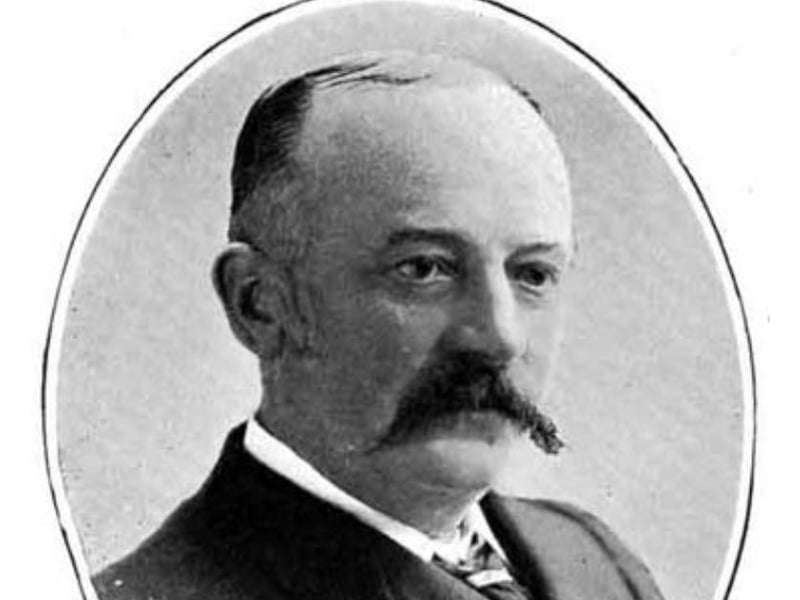
3. Henry Bryars - vet, race horse owner, dog rescuer and developer
Henry Bryars (1853-1905) was a successful vet, horse race owner and property developer, who gave the city the distinctive crenellated red-and-yellow brick buildings bounded by Lady's Bridge, Blonk Street and the River Don. It was after securing contracts to stable and care for the cart-horses belonging to railway companies in Sheffield, many of which were concentrated around the Wicker, that he initiated the ambitious building project in 1899. It included a four-storey stable block, with a farriers and sick bays on the ground floor, stables for his own race horses, a house and surgery for himself, and two blocks of shops with flats above and a home for stray dogs in the basement. The stable building, by noted Sheffield architects Flockton, Gibbs & Flockton, was later the birthplace of the mushy pea and the famous furniture emporium Hancock and Lants. It was nearly destroyed in the 1980s for a road scheme but has since been converted into flats and a shop. | Picture Sheffield Photo: Picture Sheffield
4. Ella Gasking - mushy pea pioneer
Ella Gasking was the daughter of William Batchelor, a Sheffield tea dealer who opened a dried pea factory in the basement of the Primitive Methodist chapel on Stanley Street, off Wicker in 1899. By the time of his death in 1913, the business had grown to employ 50 people. With his sons at war and his wife in poor health, it was left to Ella, then just 22, to run the company as managing director. Despite having no business training, she proved more than up to the task. Ella, who when the First World War ended was assisted by her brothers Maurice and Frederick, revolutionised the pea industry in the UK. She set up a new pea canning factor in the old Bryars stables at Lady's Bridge, and it was under her stewardship that canned 'processed', or mushy, peas were introduced by the company. This early convenience food, saving households the effort of soaking dried peas overnight, proved an instant hit and the company soon had to relocate to a much larger factory at Wadsley. Batchelor’s went on to have the highest sales of canned and dried peas in the world, with a turnover was just under £1 million, and Ella was awarded an OBE. Today, Batchelor's still sells tinned peas but it perhaps better known for two other time-saving creations, Cup a Soup and Super Noodles. | Unknown Photo: Unknown