
The SAS mindset that turns pressure into discipline
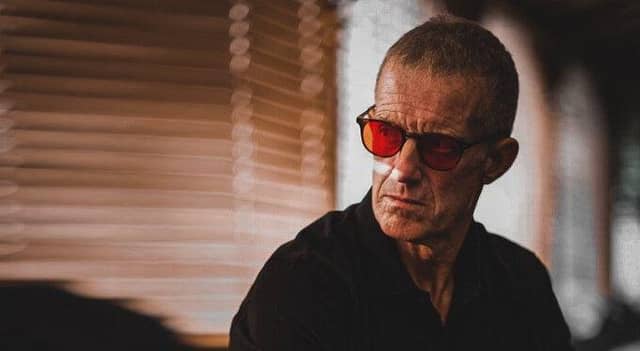

Sheffield-born Des Powell built his reputation in one of the hardest arenas there is. From the Paras to the SAS, his career was shaped by pressure, discipline and real operational risk.
A former SAS Sergeant Major, Powell spent eight years in the Parachute Regiment before joining the SAS in 1986, later serving for more than two decades in counterterrorism and covert operations. He is also the Sunday Times bestselling co-author of SAS Bravo Three Zero and SAS: My Trial by Fire.
Now recognised as an expert military speaker, he draws on frontline experience across South-East Europe, South America, Africa and the Middle East to speak on leadership, resilience, discipline and performance under extreme pressure.
In this exclusive interview with the London Keynote Speakers Agency, Des Powell reflects on the SAS ethos, the value of discipline in and out of uniform, and the leadership standards that hold up when conditions are toughest.
Question 1. In high-stakes environments like the SAS, how is trust built and sustained within a team?
Des Powell: “I think trust really is quite a simple thing. It's like when you first meet someone, you don't trust them from the beginning, but as you get to know them, trust comes about.
“And I think in the regiment, if we're talking about working and skill and being trained at high levels, well then you soon find out what you're capable of, how good you are, and trust comes about working together, knowing each other.
“And after all, in the regiment, we work in very small groups. So, you get to know each other like family, and you get to know each other's capabilities of how good you are at some things and how bad you are at others. But the trust comes about through working together in close proximity in small teams.
“So I think the regiment itself is very good regarding the type of guys that have this ethos and the trust that comes about and I think the ethos, as you've, when you ask the question, has a lot to do with the trust itself, but when you are trusting guys literally with your life, well then trust itself is absolutely paramount.”
Question 2. Looking back on your SAS career, what is the single most valuable lesson that still shapes how you live and work today?
Des Powell: “Well, there's many things, but I've just mentioned one which I think I took from the regiment and I've used from day one, and that is part of the ethos, which is discipline.
“As I say, I know people, friends of mine, that can't get out of bed, that had difficulty waking up in the morning. And for me, I think discipline, especially self-discipline, is probably the number one thing that I follow through.
“Even this morning, just automatically, I'll get up early. I'll get up about 6am. I don't need an alarm clock. I just get up. That's the first thing I do, is get up early. And what I do, I get up with an attitude of, right, let's get the job done.
“So secondly, the job, and whatever that job is, let's get up early, 6am, and secondly, let's get the job done. And whatever that job is, whether it's you're working on a computer, or you've got to go out and you've got to do some physical manual work, but get up early, get the job done.
“Thirdly, I think of doing something physical. I go, right, that's been embedded into me within the armed forces. So, I think, I'm going to do something physical. Sometimes I do it that morning or I'll do it later on in the day. So, I'll get up early, get the job done, do something physical.
“Then I'll think, right, let's eat something healthy. So, I'll have a big healthy breakfast. Again, another military thing. Okay, that you get up and you've got to have energy inside you. By the way, the regiment is very pragmatic. It's a very pragmatic way of life.
“So, these things I do are very pragmatic in actions itself. Get up early, get the job done, physical, eat something healthy. Mindwise, pray and meditate, set goals, think of things that you want to do. Use the mind.
“I read up on things. I learn things. I'm reading books. I'm through a couple of books at the moment and sometimes it's not books. It might be things that I've seen. Oh, I need to learn about that.
“And lastly is cleanliness, clean the body, clean yourself, clean the house, clean the car. All these are very pragmatic things and all of them take self-discipline.
“If it works in the military, especially in the regiment, it'll work in civvy street. So, there's about seven things there. Get up early. Secondly, get the job done. Thirdly, do something physical. Fourthly, eat something healthy, get a big breakfast in you. Fifth, pray, meditate, set goals. Six, read something, learn something. And lastly, clean yourself, house, car, whatever.
“And I think all of those things have just come about naturally for me within the armed forces, particularly within the SAS. I was in the parachute regiment for 8 years and then I was in the regiment, the SAS, for 20 years and to take the number one thing, discipline, out into civvy street, I think discipline just ties everything up. You're not always motivated, you don't always feel positive, you don't always want to do things, but discipline tells you, it says, okay, you're not motivated today.
“You may feel tired. You may feel not in the mood. But discipline tells you, well, this has got to be done. Discipline, in a way, is doing things that you don't like, but you know you've got to do them. And you know it's going to do you some good to get up early, get out of bed, eat good breakfast, etc.
“All of them, they're quite normal things really. But I come across a lot of people that seem to struggle with discipline. And I think particularly in the regiment, discipline was paramount. And I think even in the service sector, no matter what it is, whether you're in health, whether you're a doctor, whether you're a lawyer, whether you're in banking, whether you're in insurance company, you've got to have discipline. You've got to follow through on that.
“So, answering your question in a long-winded way, I think the number one thing that I brought into civvy street that I still use today is discipline, self-discipline. And I think it's that that has really helped me over the years.”
Question 3. In special forces operations, what role does precision play in achieving success?
Des Powell: “Okay, I look at precision itself as that I'd like to probably delete that word and put another word in, which is probably professionalism. If you want precision, you've got to have a guy or guys that are professional in what they do, and the regiment itself is very professional in everything.
“So, I think precision comes about by doing the job correctly. Okay. So, the only way to do that, as we said, the format of the regiment is to recruit guys at a high level and then take them to the next level, if you like. Okay. And that is by having certain skills, certain areas of training within the regiment, which brings about professionalism.
“Whenever we do a job, we always do it at the highest level we can possibly do. As I said, probably some of the techniques that we use in our regiments are, or that they may not use in any other areas of the military. I myself was an air troop and I used to specialise in high altitude freefall parachuting using oxygen from heights of 25, 30,000 ft, free falling for 2 minutes at a time. And it takes quite a bit of skill and training to do that at a high level to get that certain precision that you've mentioned.
“It takes training, more training and even more training. So, precision comes about through professionalism and being a professional soldier and being good at what you do. The regiment has got a reputation of being very good at what it does. And that only comes about through the men itself. Remember, you're only as strong as the weakest link. A chain is only strong as the weakest link.
“And in the regiment, we make sure that everyone is at the highest level. We don't have any weak links, or we like to think we don't. So that's why we have continuous training and trying to get our level of professionalism as high as we can. It comes back to that ethos again, that never-ending pursuit of excellence. How far can we go?
“And we found the pragmatic way to do it is just train, more training and even more training, and get to a level that it becomes like a drill. And a drill indicates that things become automatic. And we use a phrase all the time in the military about we will drill this and we will drill that.
“And that is because when situations become very tense and stressful, the mind sometimes doesn't always work properly. So, a drill works very well. So, when you're in a difficult situation, you just know automatically this is what I need to do.
“So, precision comes about through professionalism. Professionalism comes about through training, more training and even more training until you get to a level that you think is good enough.”
This exclusive interview with Des Powell was conducted by Tabish Ali of the Motivational Speakers Agency.