
"Housing targets are about Government spreadsheets, not what people actually want"

Some greenbelt land will have to be turned into housing, but vague borders between council territories shouldn’t be the deciding feature
A decision over how two councils have responded to neighbouring fields being earmarked for housing developments has revealed the problems in how we handle housing plans.
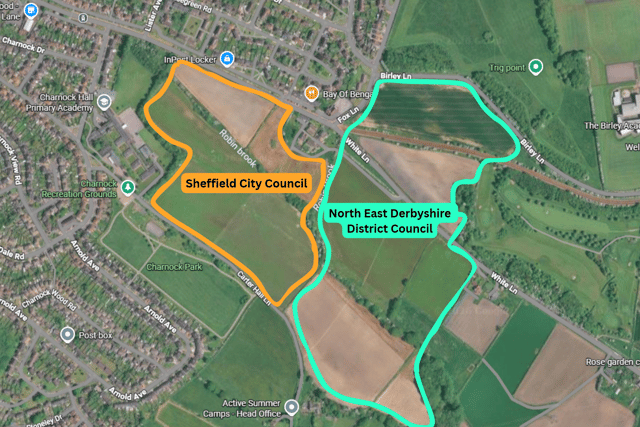
In the latest development of the ongoing greenbelt housing controversy, North East Derbyshire District Council has blocked plans to build 300-350 new homes on a field south of White Lane in Charnock due to heritage concerns.
However, a neighbouring field that crosses into Sheffield City Council’s remit will still be used for the development of 300 homes if the draft Local Plan goes ahead.

Campaigners say the two sites “physically connect” and “look the same” as they argue what’s right for one council should be right for another.
Realistically though, I think this reveals a greater issue with how we handle planning matters in the UK - we’re looking at our country through spreadsheets not people.
We face a genuine housing crisis in the UK, and as someone currently trying to buy their first home I know full well how hard it is to get on the property ladder.
Difficult conversations will have to be had about where we build new houses and supportive infrastructure, including reservoirs as we face continued droughts.
But if Labour really are committed to a mass house building endeavour then we need to have a real discussion about what people actually want, because I can tell you right now that no one is happy about Sheffield’s current plans.
A vague council boundary line shouldn’t be deciding whose greenbelt is and isn’t spared, and the people who live on either side of this invisible line are probably united in their thinking.
As a nation we should be looking across the board at what plots of land would best be suited for new developments.
In an ideal world this could see forgotten communities properly redeveloped, decrepit houses restored and abandoned industrial sites turned into bustling villages.
South Yorkshire alone is filled with communities that are shadows of their former selves, made up of empty shops and overgrown properties.
Instead of redeveloping these, we have council’s being assigned quotas for new housing and desperately trying to meet Government set timetables with whatever space they have spare.
And ultimately, natural land shouldn’t be thrown away for a rushed housing development that will make no one but the bean counters happy.