
Schools ordered to enforce mobile phone and smart watch change from today under new law

Schools can no longer be ‘passive’ about children bringing their phones to class
Schools must enforce a major change to how and when students get to use their mobile phones under a new law starting today.
As of this week (Monday, June 29), schools in England must ensure pupils do not have access to their mobile phones for the entire school day.
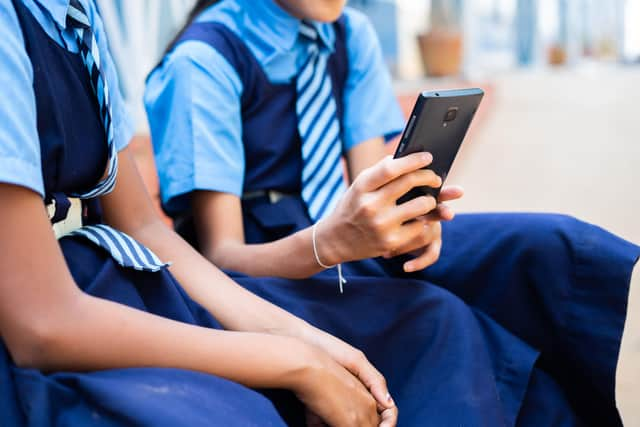

This includes other devices like smartwatches and tablets, and is in force whether pupils are in class, on break, or between lessons.
The distinction is that schools must have an ‘active’ mobile phone policy in place that is clear and enforced, as opposed to passive rules. Schools will be inspected by Ofsted to ensure steps are consistently taken to ensure pupils do not have access to their phones in the school day.
Many schools in South Yorkshire already have active policies in place already.
Several schools in the Astrea Academy Trust operate a no-phones policy and ask children to surrender phones at the start of the day, with a guidance page calling them “addictive”, “linked to mental health problems” and preventing “children from being children.”
“The presence of a phone will stop children getting to university,” the page reads.
“Children will not be thinking about Pythagoras when there is a phone in their pocket.”
Other options available to schools include requiring children to keep their phones in faraday pouches, proving they are switched off while on school grounds, or outright banning children bringing them to class.
Education Secretary Bridget Phillipson said: “We have been clear that mobile phones have no place in our schools but now we’re going further through tougher guidance and stronger enforcement. Mobile phones have no place in schools. No ifs, no buts.
“Our Attendance and Behaviour Hubs will support schools that are struggling to effectively implement phone bans so all our children can learn in phone-free environments.
“This comes alongside our world-leading curriculum reforms which will ensure children build the media and digital literacy skills needed to thrive at work and throughout life.”
Several national newspapers report that schools can use their own discretion for pupils in Y12 and Y13, such as allowing older students to use their phones in designated areas.
Exceptions will also be made for students who require their phones to manage medical conditions, as some medical devices like insulin pumps for diabetes can be controlled by apps on phones.
Chief Inspector of the Office for Standards in Education, Children’s Services and Skills, Sir Martyn Oliver, said in a Gov.uk statement: “My message to headteachers is you now have all the backing - and the backing of my inspectors - to ban mobile phones in schools immediately. They chip away at children’s attention span, distract from learning and can be detrimental to children’s wellbeing.”