
Tragedy as tennis player dies after suffering cardiac arrest at Sheffield club where defib didn't work

A tennis player died after suffering a cardiac arrest at a Sheffield club where the defibrillator did not work, an inquest heard.
Russell Paul Hudgell fell ill at Beauchief Tennis Club, where he was playing a doubles league match, on November 9, last year.
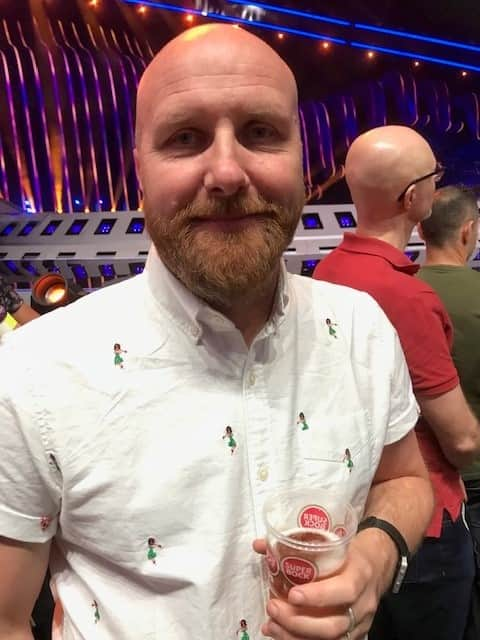

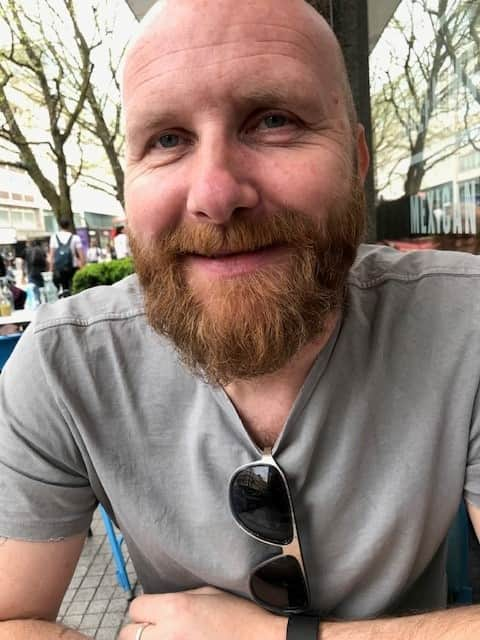
A defibrillator at the club was found to be out of charge when first aiders attempted to revive 56-year-old Russell.
Russell’s family described his death as “possibly avoidable” and said they hope defibrillator legislation can be changed.
In a statement after the hearing, the family said: “Russell was a kind, intelligent, generous, and funny man who loved to travel and had a sense of adventure.
“He always tried to help others either in his work as a social worker or in his private life.
“He is much missed by his friends and especially his family.
“Russell’s death was possibly avoidable, and we hope that his loss to us goes some way to change the current defibrillator legislation where sports clubs are under no legal obligation to maintain their machines.
“Hopefully, it may also encourage other owners of defibrillators to check their machines more regularly, so no other family has to go through what we have in losing Russell.”
Senior Coroner Tanyka Rawden, delivering a narrative verdict yesterday, said that information on defibrillator maintenance is out there for ‘those who choose to access it’.
Lee Hodginson, who had been Russell’s doubles partners on the day tragedy struck, told the inquest that Russell said he had not been feeling well for about a month.
During a short break in their game, Lee found Russell leaning against a nearby fence struggling to catch his breath.
He then saw Russell had collapsed, and was laid faced down on the ground.
“I just dropped the racket and ran over to him,” Lee explained.
Lee, a trained first aider, called for someone on the next court to bring the club’s defibrillator and call 999 as he began CPR, the inquest heard.
Meanwhile Dr Rachel Tricks, an A&E consultant at Sheffield Children’s Hospital, who was playing on a nearby court, ran over to also provide assistance.
Attempts were made to try and find the code for the defibrillator, which was locked in a case and mounted on the side of the tennis club building.

But eventually, someone ended up breaking the casing and running the machine over to where Russell was as CPR was being administered.
The inquest heard that after applying the pads and readying the machine, a problem occurred.
Lee told the inquest: “I pressed the button to start the mechanism, and there was just a voice from the defibrillator saying there’s insufficient battery to operate the machine.
“I knew we were in a lot of trouble at that point.”
Joseph Patchett, a specialist paramedic, told the inquest that by the time he arrived CPR was being ‘done to very high standard’, and he retrieved equipment from his own vehicle.
A Yorkshire Ambulance Service (YAS) defibrillator was used, identifying that a shock was needed. It was seven minutes after the club device could have been used, if it had been working correctly.
The paramedic told the inquest that following this, ECG reports suggested Russell’s heart rate had stabilised, however they still couldn’t find a pulse.
Drugs were administered, CPR continued and three further shocks were given.
Tragically, Russell was pronounced dead at the scene.
The paramedic added: “The standard of care he got before me getting there was excellent. He got everything we could give him. It was a tough day at the office.”
Dr David Kirby, a consultant in emergency medicine at Luton and Dunstable University Hospital, appeared via video link to answer medical questions.
He explained how Russell, who was suffering from angina, was in a fortuitous situation, with both Lee and Rachel on hand, however the lack of a defibrillator had caused serious problems.
“For every one minute of delay in defibrillation, survival drops by about 10 per cent,” he explained.
Russell had suffered a type of cardiac arrest that would have benefited from electrical shock, he added, and the stabilisation of the heart beat after YAS responded suggests earlier defibrillation would have helped, he told the court.
He explained that in these scenarios ‘success’ is broken into two categories - the first being the return of spontaneous circulation (ROSC), wherein the heart begins beating again, and the second being described as ‘survival to 30 days’.
Under the circumstances, Dr Kirby said that Russell had around a 50 per cent chance of ROSC, however only a 25 per cent chance of surviving past 30 days due to the underlying conditions that had led to the attack - namely narrowing arteries.
He told the inquest: “I have to say if we classify ROSC to, as some degree, survival, then even though Mr Hudgell would probably not have survived, on balance he would have had ROSC and would have not have died at the time when he did.
“On balance, what tipped it for me is that Mr Hudgell did respond to the defibrillation provided by YAS. We saw a rhythm change. The electrical activity did respond to the defibrillator.”
Following questions from senior coroner Tanyka Rawden, he added that he couldn’t say whether Russell would have survived past 30 days, but that the odds were not in his favour.
Chris Muscroft, the secretary of the tennis club, described the club as a ‘community based organisation’, run by volunteers, with the defibrillator being installed in 2017 through funds raised.
It was fitted into a mounted box on the front of the building, with a heater plugged into the club’s electricity to ensure it carries on working properly in cold weather.
He told the inquest that they joined Circuit - a British Heart Foundation defibrillator monitoring programme - in 2021, and from then had to do checks every 12 weeks to ensure the lock worked properly, the heating was still working, and that a green light was displayed on the machine.
These checks were handled by Chris, who would then log into the Circuit website and confirm they’d been done.
The last check before Russell’s death was held on October 7, with Chris telling the court there were no issues.
He added: “We always check the green light’s flashing, that’s what we’re advised to do. Every check prior, the green light was flashing.”
Since the incident new policies have been introduced, including a new diary recording checks, another member being added to the Circuit system, and the lock code being placed on multiple signs across the building and sent out to members.
However, upon questioning from the coroner, he clarified that no new training had been held though plans are in place for January and that the battery hadn’t been changed in the seven years leading to Russell’s death.
He added: “I want to reiterate my condolences to the family. It is a great loss to us all.
“We consider ourselves a tennis club family, it’s a great loss to us all.”
A number of family members attended the inquest and throughout proceedings they thanked people for they had done to help Russell in his final moments.
In her narrative conclusion, Senior Coroner Tanyka Rawden said: “It’s clear to me having access to a working defib when a heart is in a shockable rhythm, which Russell was, makes survival more likely. Even if just for a short time
“In this case there was a delay of up to seven minutes between when the first shock could’ve been administered by the tennis club defibrillator and when it was by the YAS defibrillator.
“Had he got that return of spontaneous circulation he still would have been very poorly, but what is clear is he would not have died when he did.”
She explained that she would not be submitting a ‘prevention of future deaths’ report, citing the improvements made at Beauchief, particularly the weekly recorded checks of the machine.
The coroner went on to respond to a question from the family regarding a lack of information on defibrillator maintenance, explaining that she had done her own research, particularly through the British Heart Foundation who have a number of webpages on the subject.
“There is a lot of guidance on how to maintain these machines, and how to check these machines both before and after use,” she added.
“The information is already out there for those who choose to access it.
“What I can’t do is write to everybody who has a machine and tell them to check it.”
In regards to battery life, she said that the British Heart Foundation advise people to get in touch with manufacturers regarding how often they should be changed, but added that her research found it should typically be done every two to five years.