Why you might start seeing more mushrooms in your gardens and in hedgerows and woodlands
There are some easily identified edible species but don’t risk it!
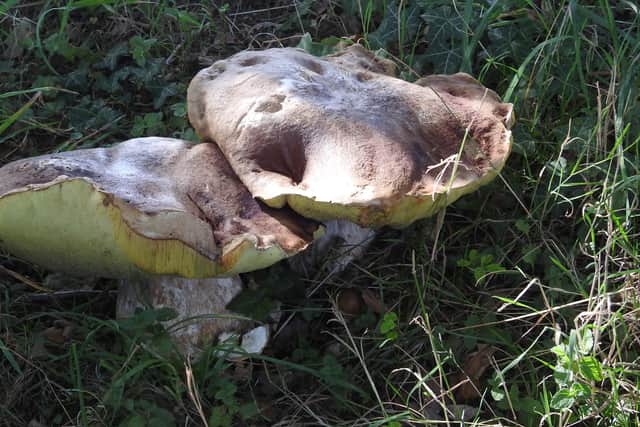
Autumn is by no means the only time of year for fungi to be present and visible, but it is undoubtedly the time for numbers and variety. This is even more so if we are following a long, very hot and dry summer with early autumnal rains to give some moisture in the ground. Suddenly, “mushrooms” seem to appear everywhere around woodlands, hedgerows and meadows, and even in parks and garden. The fungus pictured this week is a member of the Boletus group or Boletes and is a “basidiomycete fungus” that produce sexual spores on club-shaped cells called basidia. The Boletes are especially obvious because if you look under the cap of the mushroom the surface is full of tubes (where the spores develop) rather than on flaps or gills as in the common edible mushrooms. Boletes also tend to be rather large and chunky.
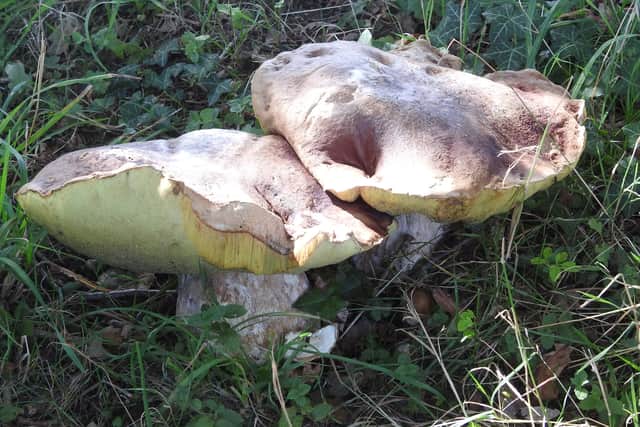

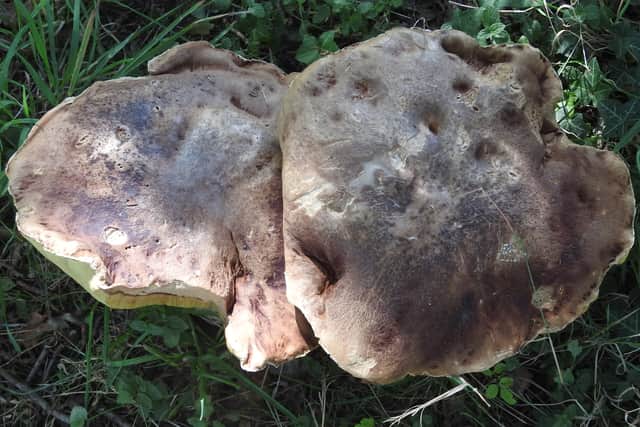
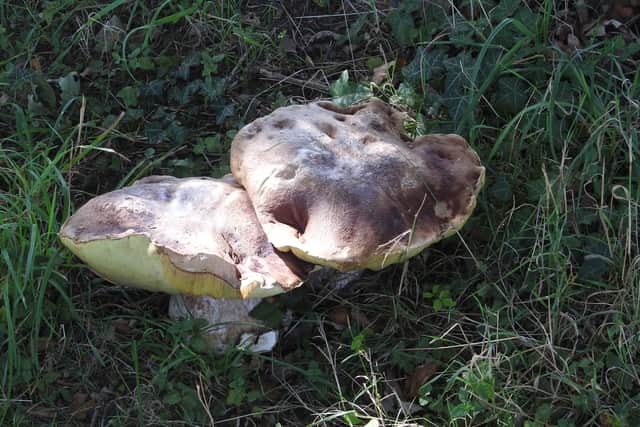
The specimen pictured is the so-called “Penny Bun” (Boletus edulis) and often referred to as the “King of Edible Fungi”, with each cap being nearly six inches across. In France, that centre of fungal cuisine, they are called Ceps, in Germany, they are Steinpilz, and in Italy they are Porcini. In Britain they are popularly known as Penny Buns because they look like a nicely baked crusty cob, and they are considered the most useful and delicious of the wild, edible mushrooms. Having tubes and pores under the cap rules out many nasty and highly poisonous mushrooms which have gills, which is helpful to fungal foragers.

However, there are other and often rather similar-looking Boletes which are at best “inedible” and best avoided, and in a couple of cases can be rather nasty. With its purple and orange colouration and foul-smelling, garlicky flesh the Devil’s Bolete or Satan’s Bolete (Boletus satanus) is one to be avoided. Indeed, my strong advice is that if you are not an expert and are at all unsure of identification, then with wild fungi, despite the temptation, it is best to avoid. There are some easily identified edible species but don’t risk it!
Professor Ian D. Rotherham, researcher, writer & broadcaster on wildlife & environmental issues, is contactable on [email protected] ; follow Ian’s blog (https://ianswalkonthewildside.wordpress.com/ ) and Twitter @IanThewildside; BlueSky @ianthewildside.bsky.social