
Why tiny white flies are swarming across Sheffield - and what you can do about them
The tiny flies are abundant in gardens right now
You may well have seen tiny white insects that have been swarming the region’s gardens and streets recently.
The creatures, which measure less than one millimetre in length, seem to fly directly in people’s faces, causing some to fear they’ve swallowed them.
Other residents have mistaken them for ash and blossom while some have likened the swarms to the ‘upside down’ in hit TV series Stranger Things.
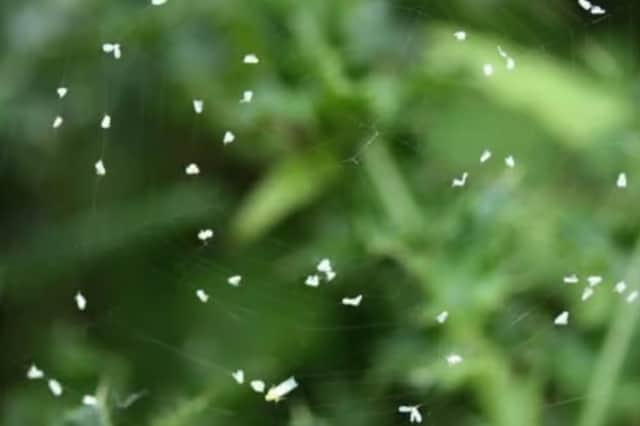

The creatures, simply called Whitefly, are out in force all over the UK at the moment, particularly during sunny weather.
The fluttering insects have been spotted in areas such as Deepcar and Beauchief - but are believed to be widespread across the city.
They are a relative of the sap-sucking aphid (greenfly) and though they love feeding off plants, they seem to be attracted to shiny cars and people’s coats.
Whiteflies are completely harmless to people but can be a pest in gardens, where they will gorge on the underside of leaves, with a particular preference for cabbages and other types of brassicas.
It is thought that the hot weather the UK saw this summer created the perfect breeding conditions for them.
The good news, according to the Royal Horticultural Society, is that the glut of bugs creates a source of food for other food chain enhancing insects, such as ladybirds, lacewings, wasps and spiders, that all help control pests.
But In warm climates and particularly in greenhouses, whiteflies present major problems in crop protection. They can also excrete a sticky substance (honeydew), which allows the growth of “sooty moulds,” say experts.
They feed on fruits and vegetables, including tomatoes, peppers, cucumbers and melons, which can be a bit of a pain if you’re growing your own produce.
Glasshouse whiteflies thrive in warm conditions and given the UK recently enjoyed a scorching heatwave, it created idyllic breeding conditions for them.
They’re not usually a problem on outdoor plants, but will often be found all year round on house plants and in greenhouses, where conditions are warmer.
How do I deal with them?
Whiteflies are covered with a waxy white dust, so you can easily spot signs of them by looking for a white dusting on plants, particularly beneath the leaves around the veins, or around the soil.
While the creatures are completely harmless to people they can be a pest in gardens, so if you want to get rid of them, do it naturally without using pesticides.
One option is to mix washing up soap and warm water and apply this to the leaves of plants, which helps prevent the flies from sticking to it.
Leave it for a while and then rinse the plant to remove the dead bugs and keep repeating the process until the problem is under control.
Using vinegar and water should also work.
Strong-smelling plants, such as mint or parsley, can also help keep whiteflies away, as can spraying a dilute solution of essential oils and water onto leaves.