
Power from poo: How Electricity bosses hope to provide green energy for homes in Sheffield

Homes in Sheffield are set to receive a new heating source - powered by human waste.
Under a scheme being set up by E.ON and Yorkshire Water, water from the city’s biggest sewage treatment works will be linked up to a nearby power station to create green energy.
The companies have revealed that they are looking into the capture of 'waste' heat from the wastewater treatment process at Yorkshire Water’s Blackburn Meadows site, which would create a low or zero carbon source of heating for E.ON’s Lower Don Valley district heating network.
This would result with large heat pumps recovering heat to provide for the equivalent of 40,000 Sheffield homes.
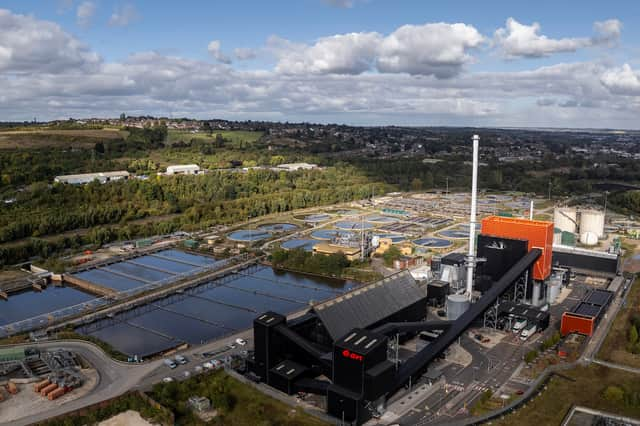

They want to connect the sites in Tinsley, and have signed a memorandum of understanding to explore a range of opportunities that could improve energy efficiency and reduce carbon emissions from their respective sites – from capturing heat from the wastewater treatment works, to capturing carbon emissions from the biomass power station.
They are looking at the capture of ‘waste’ heat from the final stages of the wastewater treatment process at Yorkshire Water’s Blackburn Meadows site, providing a low or zero carbon source of heating for E.ON’s Lower Don Valley district heating network.
In this, large heat pumps would recover heat from the final effluent, potentially providing enough heat for the equivalent of about 40,000 homes.
Partnering the two sites would support E.ON’s plans for a multi-million-pound investment that would more than double the size of its Lower Don Valley heat network, with the Yorkshire Water plant already earmarked as a possible customer and also provider of heat into the network.
Simon Duncan, Commercial Director for E.ON Energy Infrastructure Solutions, said: “We need to find new, cleaner ways of heating our homes and businesses, and heat networks like ours in the Lower Don Valley allow us to do just that.
“We’re the playmakers in creating a more sustainable UK through projects like this around the country, and with Sheffield’s bold steps to become a zero-carbon city by 2030 we’re looking to expand the route of our district heat network to play a role in that ambition.
“Expanding our network and connecting a wider variety of locally available heat sources is part of a plan to create a more secure, more sustainable and more affordable energy source for the city – potentially building a model that can be replicated around the country and supporting Sheffield’s recent success as being named one of the pioneering cities developing heat zones around the UK.”
Nicola Shaw, Yorkshire Water chief executive, said: “Both our organisations are absolutely committed to net zero and the journey towards that for the UK. We’re really excited about what we can do in Sheffield given the importance of this project for the city, and for Yorkshire more widely.
“There's a really good opportunity for us to work with E.ON to get the best out of both sites. It’s such a beneficial partnership for Sheffield.
“It helps us because E.ON are creating heat which goes into a district heat network and we can also work together on how we supply Sheffield and the way we work with our underground networks across the city, taking out disruption from people's everyday lives. It’s an exciting way to help the city go green and to work together to make people's lives better.”
Other options being explored by the two companies include a direct connection for electricity and heat from the Blackburn Meadows biomass plant as a way of significantly reducing carbon emissions and enhancing energy efficiency at Yorkshire Water’s neighbouring site. The collaboration will also consider building a carbon capture and storage plant at the wastewater treatment site, aiming to capture carbon emissions from the biomass plant and contribute to a substantial reduction in greenhouse gases.
The two companies will also work together on potential proposals for decarbonising the energy needs of other Yorkshire Water operations in the wider region.
Sheffield has been selected as a pilot city for Government plans to expand the role of heat networks around the country. Heat networks are a more efficient and more cost-effective way of providing heat to built-up areas by producing and distributing heat from a central source instead of individual boilers in each property.
District heating networks will play a critical role in decarbonising cities. Heat networks currently provide 3% of the heat demand in the UK, with that number potentially growing to 20 per cent nationwide by 2050 in order to deliver net zero.
Half of Europe’s total energy consumption is dedicated to heating and cooling, with nearly 80 per cent coming from non-renewable sources, often fossil fuels. With the majority (70 per cent) of people in Europe living in urban areas, growing urbanisation will further increase demand for both heating and cooling.
The Blackburn Meadows-Yorkshire Water project is the latest in a line of innovative energy projects being delivered by E.ON across the country.
E.ON is working on the UK’s first in-sewer waste-water heat recovery system and an energy centre at Horiba MIRA’s technology park in Warwickshire, serving as a pivotal testbed. Using an in-sewer heat capture solution similar to a system in Germany means it can be set up close to where the heat is needed, reducing the additional infrastructure needed and helping to cut unnecessary costs.