
'Giant house spiders' looking for mates roaming Sheffield homes at this time of year
Wildlife expert Ian Rotherham on what has become known as ‘Giant Spider Season’...
Regular Deepcar correspondent, Michael Parker, sent a message and photographs concerning a recent sighting which, disconcertingly, was indoors!
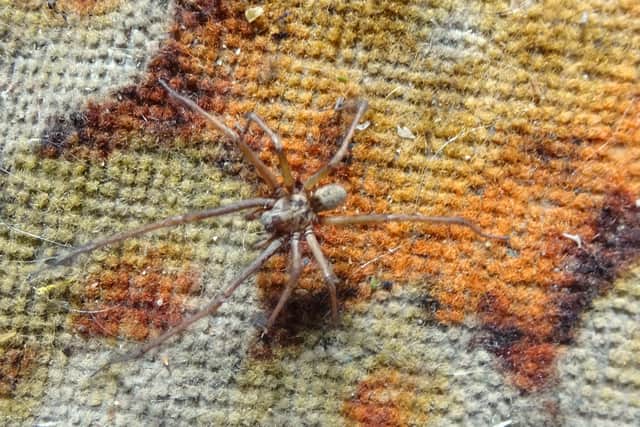

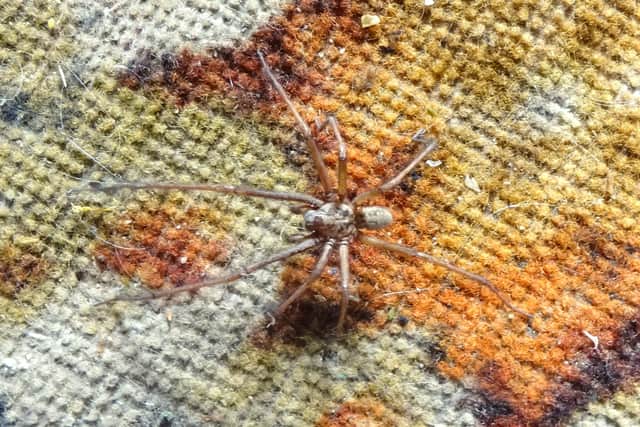
‘Please find attached copy of photographs of a particularly large spider that came scurrying across my threadbare carpet the other week. The picture does not do justice to the size of this thing nor the speed at which it travelled. It looks like the usual long-legged spiders that spin webs all over the place (the ones that spin/dance about in their webs when disturbed) but much larger and more substantial in body and legs. It was sort of pumped up on spider testosterone and steroids!’.
Mike also asked if this was a seasonal occurrence. This is actually a male of one of the “Giant House Spider” species or a Tegenaria, famous for their impressive size and turn of pace! Their exceedingly long legs and small bodies, particularly of the males, are characteristic, but importantly they are totally harmless.
Without seeing it ‘in the hand’ I can’t be sure of the species but probably Tegenaria gigantea.
Around September, these impressive beasts go searching for females to mate with and this is when you are most likely to spot them scuttling across your living room carpet. They can be expected especially during long, hot summers and until the first frosts!
Michael’s other spiders are long-legged “Cellar Spiders” (correctly, Pholcus phalangioides) and also known as the “Daddy Long-legs Spider”.
These are always found indoors because they favour warm, stable temperatures.
They spin loose, messy webs often in nooks and corners of rooms, feeding on insects and other spiders including large house spiders.

This species generally hangs upside-down in their webs and when disturbed bounce and vibrate rapidly to try and ward off any danger.
Sometimes they curl up to become inconspicuous. Their long, thin legs and tiny body, are distinctive and gave them the Daddy Long-legs name, but this leads to confusion with “Daddy Long-legs” craneflies and harvestmen which are totally unrelated.
This subtropical spider is “synanthropic” i.e., associated with humans, and only arrived in Britain around 1864.
Professor Ian D. Rotherham, researcher, writer & broadcaster on wildlife & environmental issues, is contactable on [email protected] ; follow Ian’s blog (https://ianswalkonthewildside.wordpress.com/ ) and Twitter @IanThewildside; BlueSky @ianthewildside.bsky.social