
'One woodland. Two official strategies': An open letter from Save Chapeltown, Ecclesfield, Grenoside Green Belt group
A n open letter from Save Chapeltown, Ecclesfield, Grenoside Green Belt group to the people of Sheffield...
Sheffield stands at a crossroads.

The decisions being made today will shape our city’s landscape, environment and communities for generations to come. Those decisions must therefore be based on sound evidence, transparency and public trust.
Yet the evidence now emerging raises serious questions about whether that standard has been met.
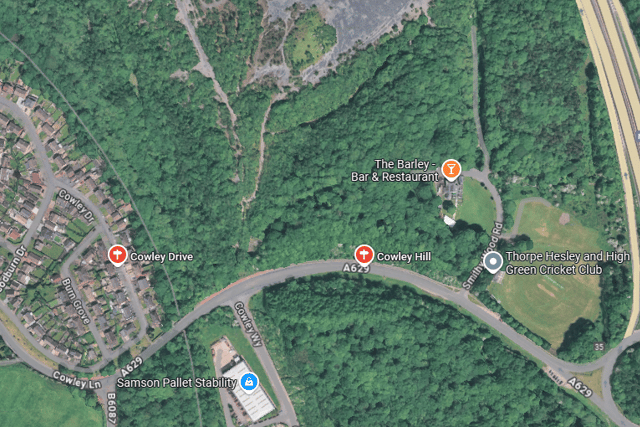
Hesley Wood (CH04), a Green Belt site in the north of Sheffield, has been allocated in the Sheffield Local Plan for approximately 15 hectares of industrial and employment development.
The proposal would transform woodland and open Green Belt into a major employment site involving large industrial buildings, new roads, extensive engineering works and increased HGV traffic.
At the very same time, another official document tells a completely different story. The South Yorkshire Local Nature Recovery Strategy (LNRS), prepared under the Environment Act 2021 by the South Yorkshire Mayoral Combined Authority, Sheffield City Council and partner organisations, identifies this same landscape as an area where woodland should be restored, enhanced and better connected for nature recovery.
The Strategy is not simply an aspiration.
It is intended to guide planning, biodiversity policy, habitat restoration and future land-use decisions across South Yorkshire.
The interactive Local Habitat Map identifies Hesley Wood within multiple woodland opportunity layers, including:
• WO-02-01 – Restore Ancient Woodland Restoring ancient woodland into positive ecological management.
• WO-02-02 – Create Ancient Woodland Connections Creating woodland corridors and buffers to connect fragmented ancient woodland through planting and natural regeneration.
• WO-01-05 – Manage Existing Woodland Improving existing woodland through sustainable ecological management for biodiversity and wider environmental benefits.
These are not campaign claims.
They are official priorities identified by the Council and its partners.
They represent a strategic vision for restoring woodland, strengthening ecological networks and improving biodiversity.
Yet Sheffield’s Local Plan proposes industrial development on the same landscape.
This raises a simple but fundamental question.
Which strategy is Sheffield City Council actually following?
If Hesley Wood is important enough to be identified for woodland restoration, ecological connectivity and nature recovery, why is it also considered suitable for permanent industrial development?
These are two fundamentally different visions for the future of the same place. The contradiction becomes even more significant because the Head of Planning at Sheffield City Council, is acknowledged as one of the officers involved in preparing the Local Nature Recovery Strategy while also playing a central role in preparing the Sheffield Local Plan.
We make absolutely no allegation of personal wrongdoing.
However, the public and the Planning Inspectors are entitled to ask a straightforward question.
How have these two competing strategies been reconciled?
No clear explanation has yet been provided.
This Is About More Than Hesley Wood
During the preparation of the Sheffield Local Plan, residents have uncovered numerous concerns that deserve careful examination.
These include:
• the release of Green Belt land while questions remain over the identification and use of brownfield sites;
• inconsistencies between housing evidence, housing assumptions and housing register information;
• concerns regarding infrastructure capacity, transport, schools, healthcare and environmental impacts;
• proposals affecting contaminated former industrial land and woodland landscapes;
• apparent conflicts between the Sheffield Local Plan and the South Yorkshire
Local Nature Recovery Strategy;
• delays and inconsistencies identified through Freedom of Information requests;
• and continuing questions over whether all available evidence has been fully considered before allocating Green Belt land for development.
Each issue deserves proper scrutiny.
Taken together, they raise a much broader question.
Has the Sheffield Local Plan been prepared using a fully transparent, evidence- led and internally consistent process?
Lessons From Sheffield’s Past
Many people will remember Sheffield’s Street Trees dispute.
It divided communities, damaged public confidence and ultimately resulted in the independent Lowcock Report.
The Report highlighted serious shortcomings in transparency, communication, public engagement and decision-making, concluding that trust between the Council and many residents had broken down.
The issues surrounding Hesley Wood are different.
We are not suggesting they are the same.
However, they raise many of the same principles.
Has all relevant evidence been properly considered?
Have competing strategies been openly reconciled?
Have communities been given the information they need to understand why decisions are being made?
Can the public be confident that environmental evidence genuinely influences planning decisions?
These are not unreasonable questions.
They are exactly the questions that good planning should be able to answer.
Sheffield has already experienced the consequences of losing public trust in major environmental decisions.
We should learn from that experience—not repeat it.
Why This Matters
Planning is not simply about housing numbers or employment land.
It is about the places where our children will live.
The woodlands that absorb carbon.
The habitats that support wildlife.
The landscapes that define our communities.
The Green Belt that separates towns and villages.
The decisions made today cannot easily be reversed tomorrow.
If official environmental evidence identifies Hesley Wood as a priority for woodland restoration and ecological connectivity, the public deserves to understand why another official strategy proposes replacing part of that same landscape with industrial development.
If these competing strategies can both exist without explanation, what confidence can communities have that environmental evidence genuinely influences planning decisions?
A Call for Transparency
This campaign is not about opposing progress.
It is about demanding better planning.
Planning that is transparent.
Planning that is consistent.
Planning that is based upon the best available evidence.
Planning that genuinely balances economic growth with environmental protection.
Planning that commands public confidence.
We believe the people of Sheffield deserve clear answers.
We therefore call upon Sheffield City Council and the South Yorkshire Mayoral Sheffield stands at a crossroads.
A Call to Every Resident
This issue affects every person who cares about Sheffield’s future.
Whether you support development or oppose it, everyone should expect planning
decisions to be honest, transparent and evidence-led.
We therefore encourage residents, businesses, community groups, environmental
organisations and elected representatives to make their voices heard.
Write to Sheffield City Council.
Write to the South Yorkshire Mayoral Combined Authority.
Contact your local councilors.
Contact your Member of Parliament.
Ask questions.
Request explanations.
Take part in consultations.
Demand transparency.
Because this is about far more than one woodland.
It is about the future of planning in Sheffield.
It is about whether evidence matters.
It is about whether environmental commitments are honoured.
It is about whether communities are listened to.
And ultimately, it is about what kind of city we leave to future generations.
One Woodland. Two Official Strategies.
One Simple Question. Which One Will Shape Sheffield’s Future?