
How developer justifies building on former Sheffield football pitch that it denies is green belt

Developer explains why it should be allowed to build homes on sports pitch site
As England’s World Cup campaign gets up-and-running, a developer is attempting to explain why they should be given permission to build on a former Sheffield football field they argue isn’t green belt land.
Despite football fever sweeping across the globe and all eyes being glued to the action over the Atlantic, one parcel of Sheffield’s football heritage could be about to change forever.
Harron Homes wants to build on the site, once home to football pitches in Handsworth, and claims that rather than being green belt, it is a less-protected ‘grey belt’.
The company has now submitted a planning application to Sheffield Council for a scheme which would build on what they themselves describe as ‘former’ playing fields, next to Medlock Close.
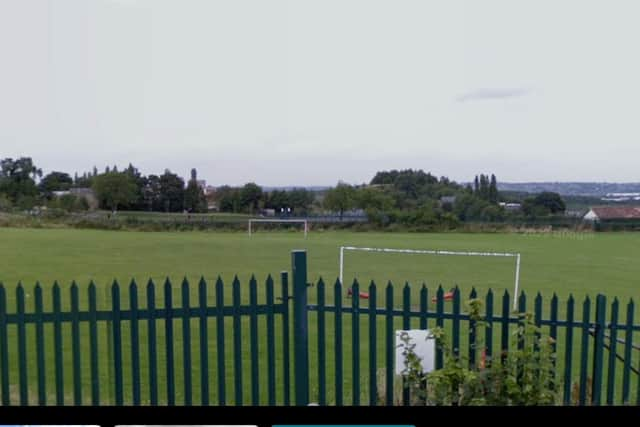

They want to build 56 homes, as well as access roads, on the green space site. Of those, 14 are described as ‘affordable’.
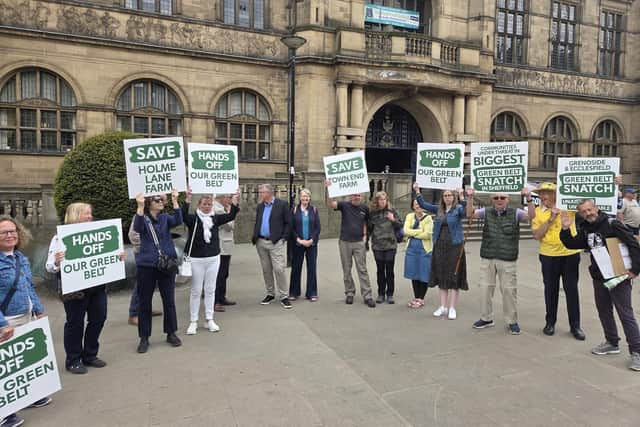
And a planning and design statement by planning consultants ID Planning, attempts to explain why they should be allowed to go ahead with the plans, at a time when major protests have been voiced over the loss of green belt land in the city.
ID Planning’s report, which accompanies the planning application which has now been submitted, states: “The site comprises an area of former playing field situated to the north of Medlock Close .”
“The site is currently within the green belt in the adopted Unitary Development Plan Policy Maps. The emerging Sheffield Plan is currently being examined by Government appointed Planning Inspectors. “
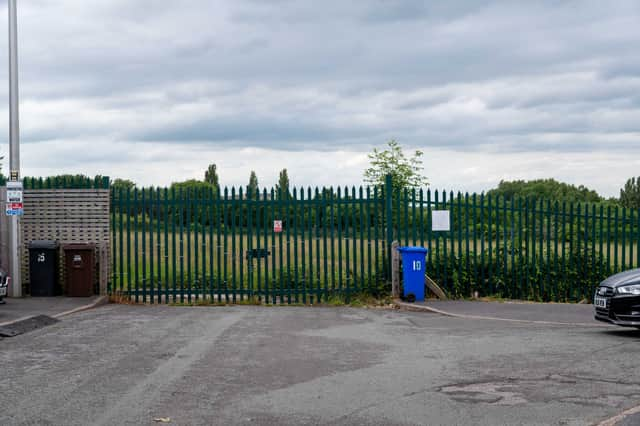
However, their report also claims that the site is now considered ‘grey belt’ and the proposed development of the site would not be inappropriate in the green belt.
The government's definition of the grey belt includes land on the edge of existing settlements or roads, as well as old petrol stations and car parks. But it is up to individual councils to decide what will be designated as grey belt.
The application states: “The principle of development of the site is acceptable being considered as grey belt.
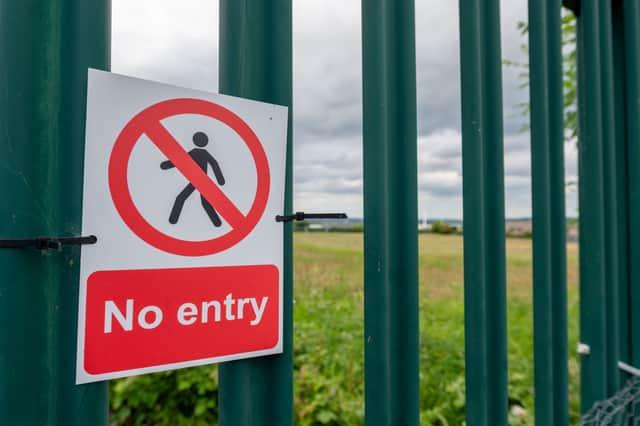
”The application site was formerly used as a playing field, although the site has not been used for this purpose for over 10 years.”
It confirms that pictures from 2008 show the site was previously laid out to provide a full size football pitch on the eastern part of the site. The western side of the site comprised two goals forming a mini pitch with no pitch markings. They also recognised that the site may have also been previously used as a cricket pitch.
It goes on to state that in the area where the houses would be built, there is estimated to be a surplus for adult 11-a-side and seven-a-side pitches, with small deficits for youth and mini five-a- side pitches.
It added: “The existing deficits in some pitch typologies are balanced out by a the surplus so there is currently the equivalent of 12 match spare capacity across all pitches in the sub area. In the future the capacity is predicted to drop to the equivalent of six match spare capacity across all pitches.”
It also looks at cricket pitches. It adds: “Cricket demand is concentrated in the south west and northern sub areas. The supply and demand assessment identifies a deficit in grass wicket provision, however, when artificial provision is utilised to accommodate junior demand there is sufficient capacity across Sheffield to meet current levels of demand.”
The consultants conclude: “The proposed development represents a logical and sustainable extension to the village, well related to existing housing and within walking distance of local services, the primary school and community facilities, as well as a range of sustainable transport methods.”
Sheffield’s Local Plan includes a government target for 38,000 homes by 2039. Sheffield City Council officials say they want to use brownfield - previously used - land first.