
The South Yorkshire Police 'cold case' team using new technology to make sure no crime is forgotten

As a rapist who struck 40 years ago prepares to be sentenced tomorrow as his past finally catches up with him, The Star spoke to the specialist police team which cracked the case.
David Hill is due to be sentenced at Sheffield Crown Court tomorrow after a DNA swab taken when he was arrested for another offence was checked against police records and linked him with an unsolved city centre rape from decades ago.
Offcers are constantly reviewing historic investigations to see whether modern technology can help solve cases previously left to gather dust - but the process constantly sees investigators face brick walls.
The cold case inspectors in the major incident review team don’t operate too dissimilarly to regular police detectives.
They are constantly reviewing evidence, tracking down witnesses and working to bring cases to trial.
The unique challenge they face though is that the crimes they investigate can date back decades, to times where forensic analysis didn’t exist and CCTV was nowhere near as clear or widespread as it is today.
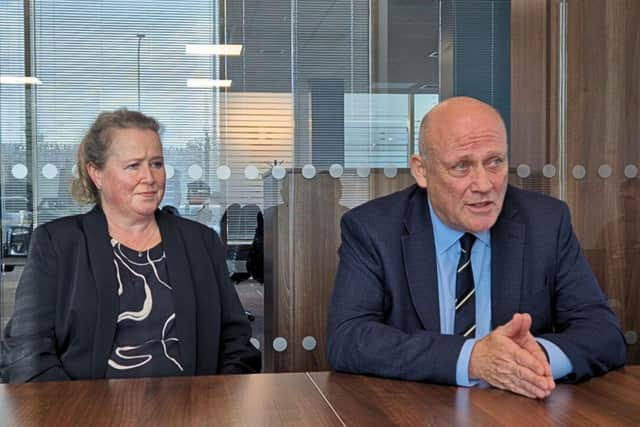
"The advantage that we do have now obviously is the forensics,” Dave Stopford, who runs the team at South Yorkshire Police, told The Star.
“So we apply to retrieve the forensic samples, have meetings with scientists and try and improve the samples to the point where we get an identification.
“Sometimes the case papers that we have may not be complete, and therefore we have to rely on going back to some of the witnesses at the time.”

Witness statements can help back investigations, however an incredible amount of work goes into analysing every possible DNA sample that has been kept in storage, which is then individually checked against national databases to search for matches.
Unfortunately, as the understanding of DNA examinations is a relatively recent development, there are often cases where historic samples simply aren’t good enough to ever produce a match.
“There are instances where [we have to stop] and it’s generally down to the point where the forensic science can’t advance the samples to an identification,” Dave continued.
“We take it as far as we can, we try and work with the scientists to further the case as best we can, but sometimes we have to just say this one is not going to reach an identification.
“In some cases, we’ll put those aside and say we’ll revisit them again in another five years because science may have advanced again in that time.”
Dave explained that when he took on this role just shy of a decade ago, the focus was looking at cases chronologically before 2000, when DNA examinations advanced.
However, now the team looks for a perpetrator’s risk and solvability as they decide on which cases to pursue.
“We try and look at which of the ones that are solvable, so which once we’ve got some really good samples on,” he added.
“We look to see whether the victim’s alive, any major suspects if they’re still alive, but also the risk that suspect could be.
“So if you think about say an unknown suspect for a child rape, there’s a very strong possibility that person may still be committing those offences.
“So we look at the risk they present to society, the solvability and take it from there.
“We know that every victim is affected, and we would never try to judge who it’s affected more, so it’s more about what risk the offender presents going forward.”
South Yorkshire Police reaffirmed that they will always look into reports of crimes, no matter how long has passed.
“We will always meet with a victim, we will always investigate thoroughly what we can,” Dave said.
“The forensic issues are helpful to us but it doesn’t stop us from investigating a crime.
“So anyone from any time period we will meet them and investigate their offences.”0