
DNA 'one billion times more likely' to have come from Sheffield rape suspect than anyone else, court told

A forensic scientist has told jurors that DNA samples obtained 40 years ago are ‘more than a billion times more likely’ to have come from an accused rapist than anyone else.
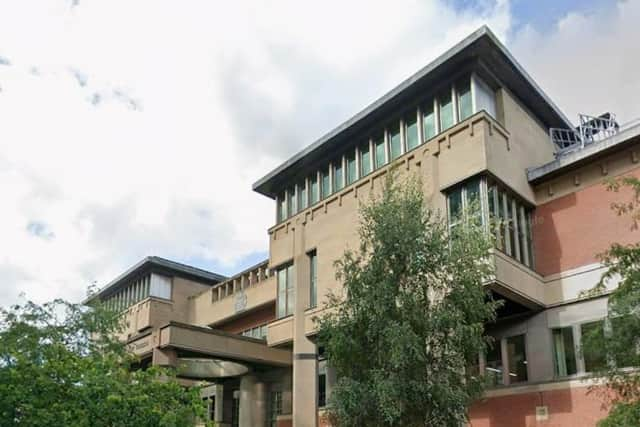
David Hill, aged 76, is on trial at Sheffield Crown Court accused of a rape which was reported in 1985.
The pensioner is accused of raping a woman in her 20s at knifepoint at a car park in Sheffield city centre.
He denies the charge.
Yesterday (February 6), forensic scientist Laura Lewis entered the witness box to explain to jurors how DNA evidence tied Hill to the 40-year-old case.

It was explained that during what was referred to as a ‘speculative search’ in 2018, evidence stored by South Yorkshire Police’s cold case team was re-examined and a DNA match could still not be found.
The same type of examination was carried out again in May, 2021, and on that occasion Hill was identified as a ‘DNA hit’, the court was told.
Louise Revell, for the Crown Prosecution Service, asked Ms Lewis to explain how DNA matches were identified.
The process was broken down for jurors, in which the witness covered how DNA could be split into 16 points to be examined, as well as an additional component that identifies sex.
Samples can be ‘complete’ or ‘partial’ based on how many of these components are present, jurors were told, and through examination scientists can identify whether the DNA of one or more people is present.
Ms Lewis - who explained that all her findings were peer reviewed - told the court how she examined evidence stored by police, including clothing worn by the complainant at the time of the alleged incident.
The evidence was examined by scientists at the time, however it was explained in court that a DNA database didn’t exist in 1985 and technology to examine samples has advanced in the subsequent decades.
The scientist told the jury that in her work she attempts to separate the main sample - which has been identified as vital evidence for a case - from background DNA samples that can be imparted onto clothing through the process of simply wearing them.
She added that this process is ‘not 100 per cent effective’, and it can be impossible to separate two samples.
When studying a dress worn by the complainant during the alleged attack, Ms Lewis found evidence of two people’s DNA profiles in the main sample, the court was told.
A computer programme then helped provide a statistical analysis of the data gathered, showing the likelihood of it matching another DNA profile, it was explained in court.
Addressing the scientist, prosecutor Ms Revell asked: “In your opinion, this finding is in the order of a billion times more likely if the cellular material tested had originated from David Hill and one other individual, rather than if it had originated from two other individuals?”
Ms Lewis agreed.
Hill was identified as the ‘major donor’, with trace evidence of a second person also identified, the court was told.
Another item of clothing provided only partial samples, however it was said in court that Hill’s DNA profile had still been identified.
A medical swab taken back in 1985 identified the presence of a male’s DNA, however Ms Lewis explained that despite a number of tests she was unable to identify a specific DNA profile.
Get Sheffield’s biggest stories as they unfold - sign up for our breaking newsletter and keep up to date on the latest news from Sheffield and South Yorkshire
“You set out that is in keeping with the account that [the complainant] provided,” said Ms Revell as she explained the scientist’s findings to jurors.
“You also go on to indicate that the scientific results are not contrary to David Hill’s own account that he engaged in sexual activity with women in the 1980s.”
After he was arrested on March 23, 2022, Hill of Clifton Bank, Rotherham, gave a prepared statement to police, jurors were previously told.
In that statement, that had previously been summarised in court by Ms Revell, Hill said that while he did not remember the complainant, if an encounter did occur it would have been consensual.
Speaking to Ms Lewis today, the prosecuting barrister continued: “You make the point that scientifically you can’t make any point regarding the issue of consent.”
The trial continues.