
High Court dismisses legal challenge over Rotherham housing scheme

A bid to bring a judicial review against Rotherham Metropolitan Borough Council’s decision to approve a residential development in Masbrough has been rejected by the High Court.
Amalgamated Smart Metering Ltd, a subsidiary of Mercia Power Response, which operates a power generation facility in the area, had sought to challenge the council’s approval of planning permission for a housing development at the former bus depot on Midland Road.
The company expressed concerns that the residential development, which could include up to 120 homes, would disrupt its operations due to noise and potentially require the scaling back or cessation of its facility’s activities.
Mercia argued that it had not been properly informed about the planning application, which it claimed prevented it from making representations regarding potential noise conflicts.
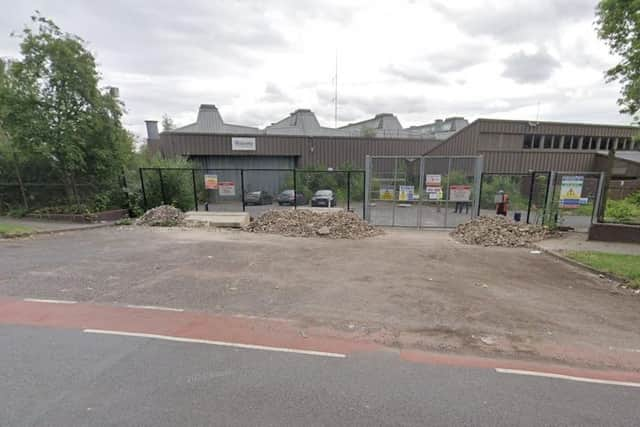

Specifically, the firm contended that RMBC had failed to consult it individually, despite the proximity of the development site to the business, which it believed had implications for the noise impact from the proposed residential development.
Additionally, the claimant’s application to extend the time for filing the judicial review claim form was rejected. The court found that the claimant had missed the six-week deadline to challenge the planning decision, which expired on 4 April 2024.
The claimant had expressed concern, stating that it had only “very recently discovered” the existence of the planning permission on June 11, 2024, after hearing rumours.
However, Judge Robert Palmer KC ruled that the evidence indicated the firm had been aware of the planning application much earlier, referring to an article from February 2024, which the claimant had seen, had been “explicit” in stating that an outline planning application had already been submitted in 2023.
While the claimant raised several valid concerns about the planning application, including the noise impact assessment and consultation failures, the court ultimately ruled that the council’s actions did not amount to a public law error justifying a judicial review.
The judge acknowledged that the claimant had been aware of the planning application much earlier, and its delay in bringing the claim caused undue prejudice to the developer.
The developer, who had already incurred substantial costs and made significant progress with the site’s demolition and sale negotiations, faced potential financial loss due to the claimant’s late challenge, the ruling added.