
Harvey Willgoose murder detective denies opportunities were missed & says no sentence will "bring back" teen
The detective in charge of the Harvey Willgoose murder investigation says no sentence will “bring back” the teen, and denies the force missed opportunities in the dealings they had with his killer in the months prior to the fatal stabbing.
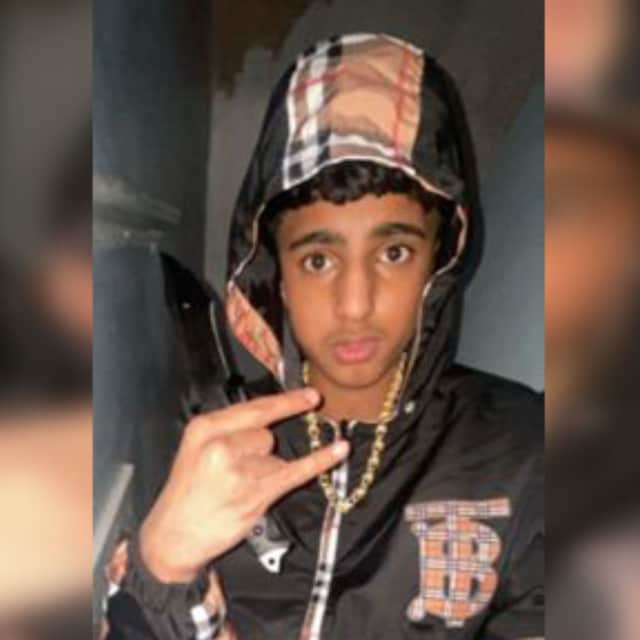
15-year-old Harvey was stabbed in the heart during an incident in the courtyard of All Saints Catholic High School on Granville Road, Sheffield, a few minutes into the lunch break on Monday, February 3, 2025. He collapsed less than a minute later, and died a short time after that.
His killer, Mohammed ‘Umar’ Khan, has today been sentenced to life imprisonment and to serve a minimum term of 16 years, after jurors found him guilty of murder after a trial.

Both the defendant and Harvey were pupils at All Saints School at the time of the fatal attack.
During the course of the five-week trial, the jury heard how police spoke to the defendant on December 27, 2024 - less than six weeks before Harvey’s death - at his home after his mum found an axe in his bag and contacted the school.
After confiscating the axe, the officer in attendance told the boy he was not in trouble, that the conversation was about his “wellbeing” and “gave him advice about the dangers of carrying weapons.”
On January 29, 2025 - five days before the killing - police were called out to the school, after a fight between two pupils at the school triggered a “lockdown” incident when the defendant claimed he saw one of the boys with a knife.
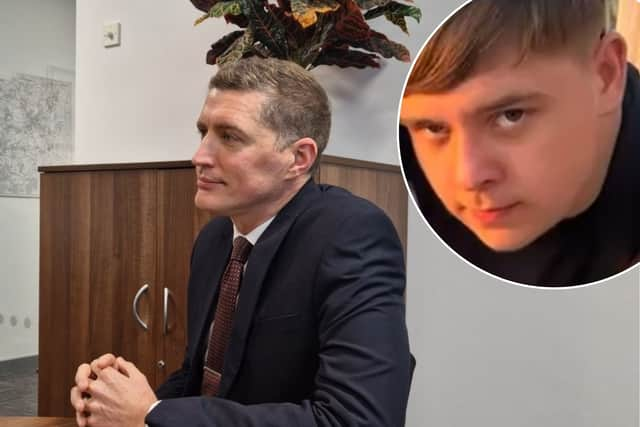
The Star spoke to DCI Andy Knowles, detective in charge of the case, and asked him whether the force missed opportunities in the dealings they had with the defendant prior to the murder; and whether there may have been a different outcome for Harvey and his family had officers acted differently.
DCI Knowles told The Star: “I'm not sure I would agree with that characterisation. So in relation to the axe it was reported that he got an axe in his house. Officers spoke to him that he hasn't committed an offence as such by having it there in his house.
“So they chose to deal with it by words of advice trying to get to understand why a young person would want a weapon like that, what purpose he'd get from it.

“And he's obviously denied any knowledge of it. So it was seized and taken away from him.
“In relation to the lockdown incident, we now know from the child that it was the defendant who alleged that another boy had a knife.
“Understandably, the school went into lockdown while they gained control of that situation and searches were made of a number of students, including the one who was said to have the knife and no knife was was ultimately found.
“It's tragic that this didn't go on to then prevent Harvey's death, but it's hard to see a direct through line from those incidents to ultimately Harvey's killing.”
The Star also asked DCI Knowles whether the force still believes giving the boy “words of advice” when he was found with an axe was the correct approach, given concerns about weapon-enabled violence, particularly amongst teenagers and young people.
He replied: “There's obviously different approaches that could be taken. I understand the officer's approach to want to get to the bottom of why a young person would want a vicious-looking weapon like that axe.
“The defendant denied that it was anything to do with him, which was clear the officer didn't believe and wanted to sort of press the point of why would you want this? What would you do with it? And also emphasise the risks it brings to himself. Which is an important part of the campaigning message that we have under our Knives Take Lives banner.
“People might think that they want to carry a weapon for status or for their own protection, but actually they're exposing themselves to a massive amount of risk not just from physical harm, but from the consequences of a split second decision to use a weapon like that like we saw in this case. Ultimately the consequences of those decisions cannot be undone and it can be absolutely devastating as it was here. “
DCI Knowles was also asked: “Is there anything you would say to Harvey's family about the investigation and the length of sentence the boy is looking at?
He replied: “I think what we just need to reflect on is that ultimately, whatever the length of sentence, it can't undo what's gone before it.
“It won't bring back Harvey who's been denied the opportunity to grow up and enjoy a full life.
“I think the family have tried to make something positive uh from the experience in their campaign work has been exceptional. I think it's a real credit to them that they've tried to make something positive come out of something so terrible.”