
Andrew Welsh: Barnsley child rapist who attacked young girls could be freed from prison within days
A Barnsley paedophile convicted of numerous sex offences including eight counts of rape has been authorised for release and could be freed within a matter of days, the Parole Board has confirmed.
Andrew Welsh was jailed for 17 years on January 27, 2017, for a string of sex attacks, including the rape of two youngsters, which were carried out between 2000 and 2009. He was also given a one-year extended licence, bringing his total sentence to one of 17 years.
The girls Welsh preyed upon were all under eight years old, with one of the rape victims aged between two and five at the time of the attacks.
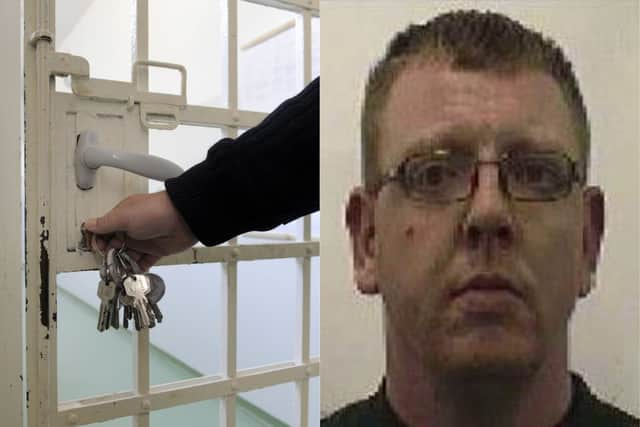

Welsh sought to deny responsibility for his crimes, but a Sheffield Crown Court jury convicted him of eight counts of rape and sexual assaults of three girls.
The Parole Board is an independent body that carries out risk assessments on prisoners to determine whether they can be safely released into the community.
A Parole Board spokesperson told The Star that the Parole Board has “directed Welsh’s release.”
They said the decision to release Welsh, formerly of Poplar Terrace, Royston, Barnsley, was made at the conclusion of a hearing held on Monday, August 18, 2025. Welsh was aged 39 on the date his case was reviewed, and 30 on the date of conviction.
The spokesperson noted, however, that Welsh’s release “won’t be immediate because there is a 21-day reconsideration period.”
A Parole Board decision summary, seen by The Star, states: “After considering the circumstances of his offending, the progress made while in custody and the evidence presented at the hearing, the panel was satisfied that imprisonment was no longer necessary for the protection of the public.”
It adds: “Witnesses recommended Mr Welsh’s release. In this case, protective factors which would reduce the risk of reoffending were considered to having somewhere suitable to live; having a job; and having the support of his partner.
“The panel examined the release plan provided by Mr Welsh’s probation officer and weighed its proposals against assessed risks. The plan included a requirement to reside in designated accommodation as well as strict limitations on Mr Welsh’s contacts, movements, and activities. The panel concluded this plan was robust enough to manage Mr Welsh in the community at this stage.”
The panel said they were presented with evidence was presented regarding Mr Welsh’s progress and custodial conduct during his sentence.
They also heard further evidence including: three victim personal statements, one of which was read by a representative, and two of which were included in the dossiers, “all of which clearly conveyed the impact of Mr Welsh’s crimes and the consequences of his offending,” the decision summary states.
It adds: “The contents were given careful consideration by the panel members who also took into account the concerns expressed about licence conditions which might apply if Mr Welsh was returned to the community.”
The summary states that upon his release, Welsh will be subject to the following licence conditions, which must be strictly adhered to:
• To comply with requirements to reside at a designated address, to be of good behaviour, to disclose developing relationships, and to report as required for supervision or other appointments
• To submit to an enhanced form of supervision or monitoring including signing-in times
• To comply with other identified limitations concerning contacts, activities, residency, and an exclusion zone to avoid contact with victims
• To meet specified restrictions relating to the use of electronic technology
Should Welsh be freed on Monday, September 8, 2025 - exactly 21 days from the date of the decision to release him, allowing for the reconsideration period - he will have served exactly eight years, seven months and 12 days of his 17-year sentence in prison.
In addition to the custodial element of his sentence, Welsh was also told he must remain on the sex offenders’ register indefinitely, and is also set to be made the subject of a sexual harm prevention order upon his release from custody.
It is not known what prison, or prisons, Welsh has served time in, or if he will return to the South Yorkshire area once he is released.
Speaking on the date Welsh was jailed in 2017, the South Yorkshire Police officer in charge of the investigation, Detective Constable Jo Chambers praised Chambers’ victims for the bravery they displayed by coming forward.
“Welsh pleaded not guilty to all the offences and the case went to trial, resulting in the victims having to go through the difficult and harrowing ordeal of giving evidence in court.
“When victims go through this process, it is a traumatic experience and I would like to praise them for their bravery.
“They have shown immense courage and strength,” she said at the time.
Individuals on the sex offenders’ register are required to notify to their local police of certain personal details and information, including - but not limited to - their name, address, date of birth and national insurance number.

This is done initially - usually following release from custody - annually or whenever their details change.
The purpose of a sexual harm prevention order is to protect the public from sexual harm from a defendant, and typically involves a range of prohibitions, which are deemed necessary.
This can include: prohibiting an offender from engaging in particular activities on the internet; from undertaking certain forms of employment and from having contact with children.