
Sheffield astrophysics student's incredible photo of the moon's true colours 'hidden in plain sight'

This stunning image was taken right here in Sheffield with a lens pointing up from a student village
Sheffield physics & astrophysics student Nayyar Badu captured this stunning image of the moon from his student halls.


With International Observe the Moon Night on Saturday, September 19, he said he wanted to share his image of the moon which he has dubbed "Hidden Elements".
He said: “The moon, as seen from Earth and space, often appears monochrome, but its rich history is revealed through the hidden colour variations scattered across the surface from millions of years of meteor impacts.
“I took this image right here in Sheffield, capturing it from the student village with my personal telescope.
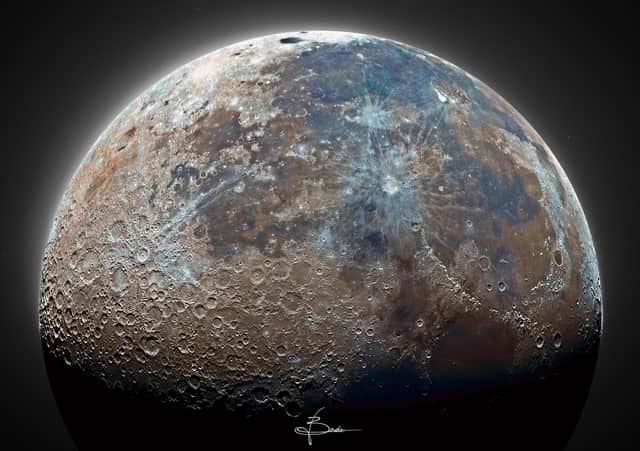
“What I really love about the mineral moon is that these colours are always there, just hidden in plain sight, which is why I have given this image its name.
“The moon appears this way as sunlight interacts with different elements on the moon's surface, which is reflected back at Earth.
“However, each element has a subtly different colour and this can be brought out by taking many shots to reduce the noise from the sensor - in my case, around 70GB of data!
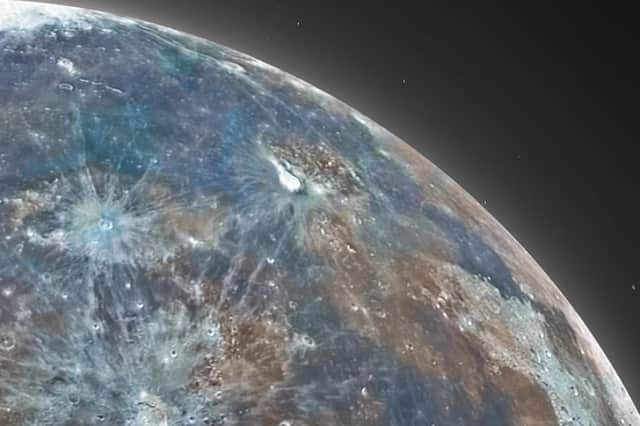
“Then the saturation can be carefully brought up, and where there are subtle colour variations, they will begin appearing as you saturate the lunar surface, which is what is visible in the photo.
“The different colours represent different chemical elements - for example, blue indicates titanium oxide, and orange-reds indicate iron. I combined this colour data with very close shots of the moon stitched together into a mosaic to get the detail of the craters combined with the natural hues of the minerals!
“I believe this mirrors people as well, as only over time do someone's true colours and potential truly show, and I think it's beautiful that the same can be said about our closest celestial companion.”
He added: “Sheffield has strong academic ties to astrophysics research, such as the University of Sheffield’s work on instruments like the HiPERCAM camera, but it’s incredible how an amateur backyard setup caught the eye of the world's biggest space agencies.
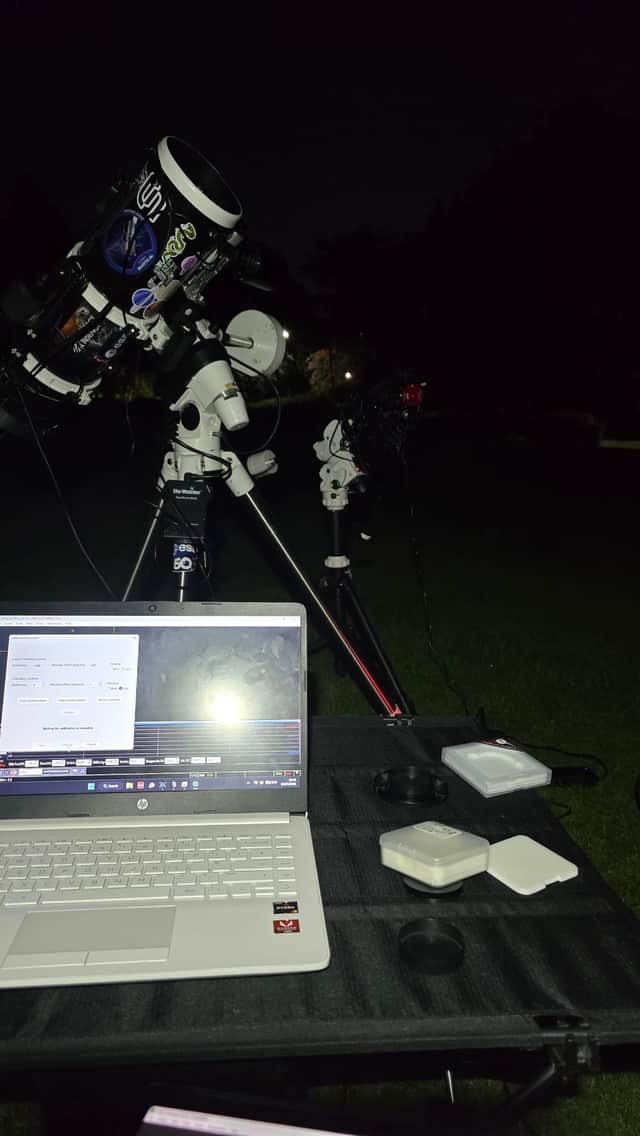
“My deep-space and lunar work has just been officially recognized by both NASA after being featured twice on their official Instagram stories, as well as through a collaboration with the European Space Agency (ESA).”
He said fellow students have now been inspired to pick up their telescopes.
Nayyar said: “With this Saturday’s large event coming up and the general interest in astronomy being at a high following the recent solar and lunar eclipses, I hope my story will resonate with a lot of people.”
See more of Nayyar’s work, including his astrophotos featured by NASA and the ESA, on their Instagram page here: https://www.instagram.com/astronayyar/
His work has also featured on BBC Sky At Night in the January 2026 issue.