
New generation obsessed with Park Hill’s past as trendy neighbourhood continues to flourish
Park Hill has captured the fascination of a new generation of urban explorers - a Sheffield landmark that has lived through decades of change
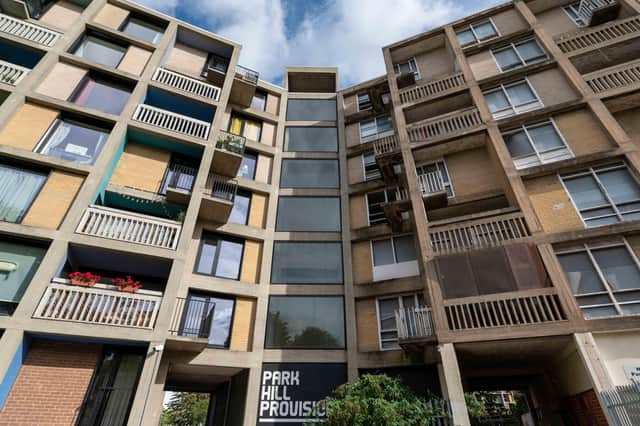
With coffees served in clear glasses, colourful cuffed beanies and designer furniture showrooms, Park Hill is a far cry from its troubled past.
As homes sell for up to £350,000, a new generation is discovering the history behind its concrete walls.
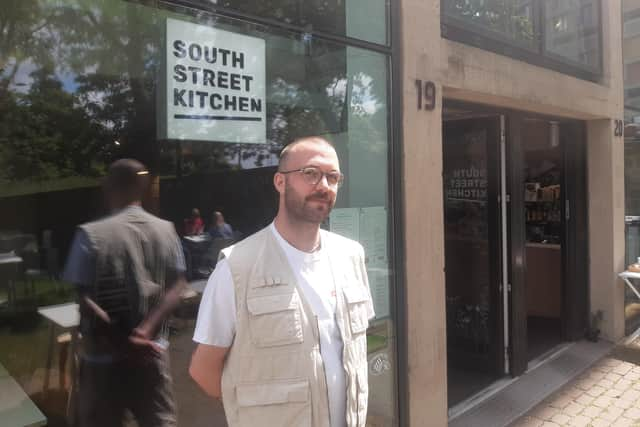
Men with striped shirts and pruned moustaches sit outside South Street Kitchen, expensive cameras in tow, as they stage their latest street art snaps. The longstanding local photographer I’m with nudges me.

“You wouldn’t have seen anyone flashing a camera about like that 25 years ago,” he says.
I don’t doubt he is right.
What was once the most feared pub in the city, the Scottish Queen, is now a Nest modern furniture showroom. A Petra Lounge chair and pouf boasts a £3,378 price tag – a bargain down from £3,975, the price tag insists.

Joggers ask me for directions to the amphitheatre: they’ve heard the view is unbeatable.
As a student, I remember stopping to take in the view on summer afternoons, watching the sun fall over the city alongside what seemed like everyone else in Sheffield.
More recently, on a summer walk, I came across a yoga class taking place against a backdrop of brutalist architecture.
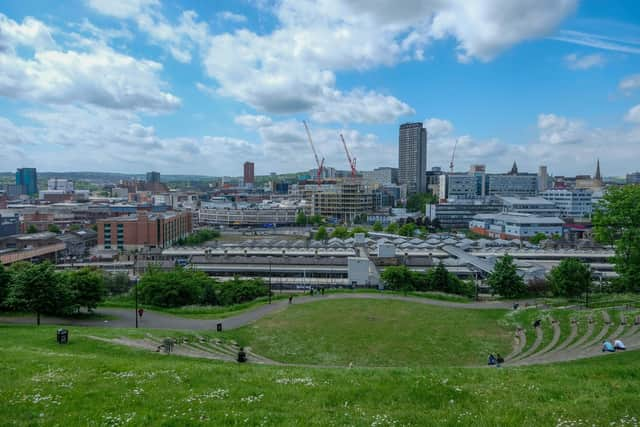
It is difficult to imagine a more striking contrast with Park Hill’s reputation just a few decades ago.
Its concrete walls have witnessed a remarkable shift, from post-war optimism to years of neglect and now an ambitious attempt to give the landmark a new future.
Streets in the sky
When Park Hill opened in 1961, it represented an ambitious vision for social housing.
Designed by architects Jack Lynn and Ivor Smith, it replaced some of Sheffield’s worst slum housing with modern flats offering private bathrooms, central heating and hot water.
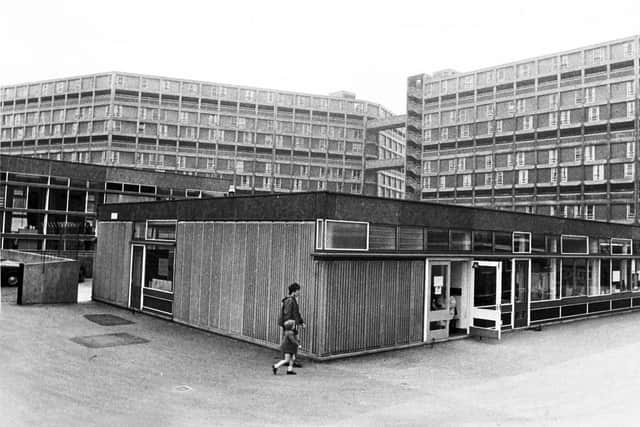
Its elevated walkways, known as the “streets in the sky”, were designed to recreate traditional streets, connecting homes and encouraging neighbours to socialise. Shops, four pubs, playgrounds and a school helped make Park Hill a community in its own right.
But as Sheffield’s steel industry declined, unemployment rose and investment in council housing fell. Maintenance suffered, businesses closed and the estate became associated with crime and anti-social behaviour.
As conditions deteriorated, residents gradually moved out of their flats. By the mid-2000s, the original community had left, and large parts of the estate stood empty.
Park Hill was granted Grade II listed status in 1998, recognising its architectural significance and helping protect it from demolition.
The trendy Park Hill of today
Developer Urban Splash took on the estate in 2004, working with Places for People to transform its buildings while preserving their distinctive concrete structure.
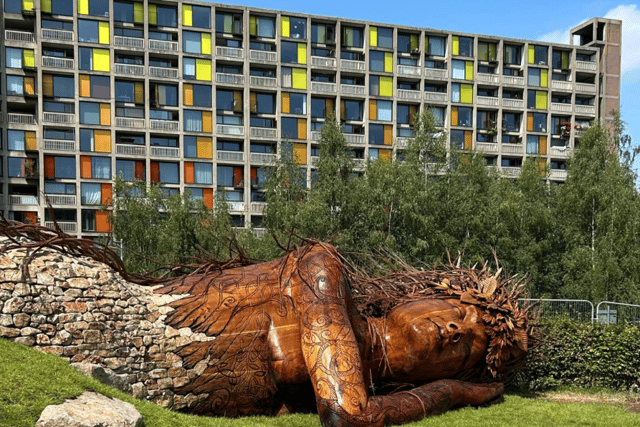
The first phase introduced bright orange and yellow panels into the concrete frame and delivered new homes and commercial space. Completed in 2013, it helped establish the look of the redeveloped Park Hill.
Further phases brought more homes, workspace and shops, followed by student accommodation in 2020.
Businesses such as South Street Kitchen - with seasonal salads and some of the cities best veggie and vegan offerings - have since helped give the estate a new identity.
The regeneration has so far delivered 455 homes, accommodation for 356 students and 50,000 sq ft of commercial workspace.
Work on the fourth phase began in 2026, bringing 125 more homes to the Duke Street block, including 30 affordable properties. The first residents are expected to move in during 2027, with prices starting at £187,500.
A fifth and final phase has also received planning approval for another 105 homes, alongside commercial space.
Elsewhere, Park Hill continues to embrace its new identity.
In August 2026, the On The Edge garden, designed by Sarah Eberle, opened at its permanent home at the estate after winning a Gold Medal and Garden of the Year at the RHS Chelsea Flower Show, bringing a new green space to the striking concrete surroundings.
A £350,000 home in a former council estate
The scale of Park Hill’s transformation was brought into sharp focus in September, when a four-bedroom townhouse sold for £350,000 – the most expensive home ever sold at the estate.
Nine of the first 12 homes released in the latest phase sold on the day, with prospective buyers queuing to secure a property, some arriving overnight.
The townhouse is the only four-bedroom home ever created at Park Hill. It has its own entrance and access to gardens shared with eight other homes.
The sale marks a striking shift for an estate originally built to provide affordable council housing.
Buyers are now prepared to pay hundreds of thousands of pounds for a chance to live in the swanky new neighbourhood.
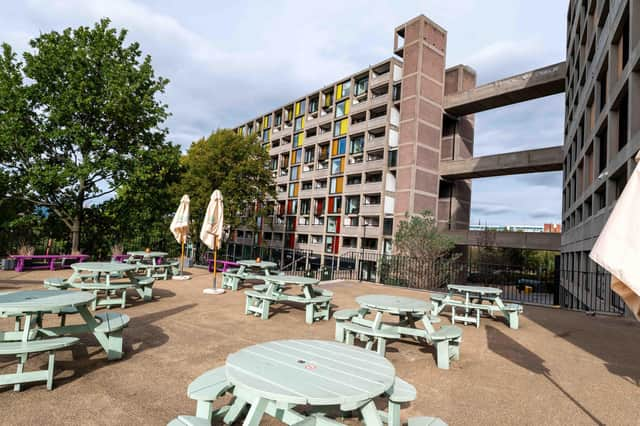
Yet the contrast between its newest homes and the parts still awaiting redevelopment remains stark.
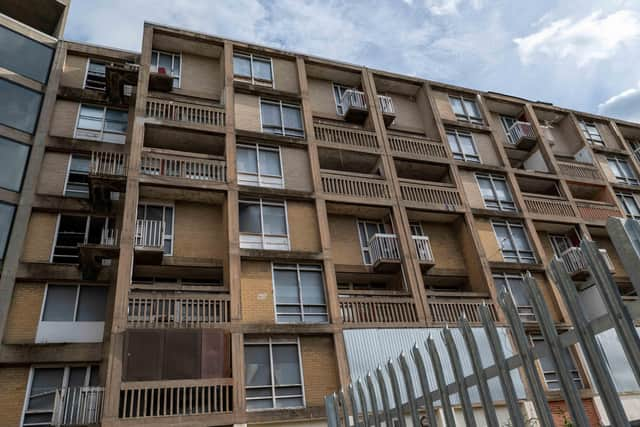
One block remains derelict, its empty windows a reminder of Park Hill’s troubled past.
It recently attracted a wave of young urban explorers keen to investigate the last remaining part of the estate’s decline. It is a period they are too young to remember themselves.
Many will now encounter Park Hill first as a fashionable neighbourhood but the brutalist walls tell the story of a city shaped by steel - a community that has lived through its own rise, decline and reinvention.