
British Mountaineering Council funds wildfire engagement officer after worsening wildfires

A staggering 81.22 hectares (114 football pitches) of Peak District peatland has been devastated by more than 12 wildfires in the Peak District’s Sheffield Moors area since 2018, at an estimated cost of £1.6 million to the UK economy.
To combat this, the British Mountaineering Council’s (BMC) charity, the BMC Access & Conservation Trust has funded a wildfire engagement officer for the Sheffield Moors area. This new role supports the existing, highly skilled ranger team to address the escalating threat of wildfires caused by climate change, deliberate incidents and recreational fires.
This BMC-funded role is managed in collaboration with Moors for the Future Partnership (MFFP), the Eastern Moors Partnership (EMP) and the Peak District National Park Authority (PDNPA). EMP site manager, Danny Udall, says, “The Peak District is already experiencing significant wildfires this season. This weekend alone we attended 10 campfires and barbecues; one was even within eyesight of last year’s burn area on Froggatt Edge. Many people see camping with a fire on social media and visit the Peak District to have a go, but one in 50 of these can become an ‘out of control’ fire, which can result in a wildfire. Between 2021-2023 our patrols prevented 343 campfires and barbecues - that’s 4.6 per week during peak season from April to September. Since Covid we have had one significant wildfire every year, but last year we had two. Every wildfire we put out costs a couple of hundred pounds, but the cost of not putting them out could be over half a million.”
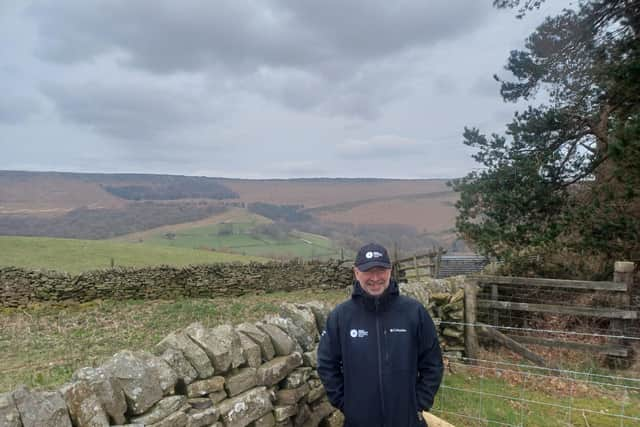
Our new wildfire engagement officer, Damian, comes from a 30+ year career in the emergency services and he was a fire warden in Staffordshire last summer. He will join the current, dedicated ranger team to spearhead public engagement and site monitoring during the peak-risk season. "Most people do not set out on a beautiful Peak District evening to start a wildfire, but it’s so easily done,” says Damian. “My role is about education and proactive protection - stopping a spark before it becomes a catastrophe. With the Easter holidays coming up soon, I’ll be patrolling at high-risk times - dusk, evenings, weekends and bank holidays. Using thermal-imaging drones has become a hugely efficient way for us to spot wildfires quickly and get to the exact location before it’s too late. And I’ll be chatting to the public to raise awareness of how easily you can unintentionally start a wildfire. I’d say that 99% of people have no idea how dangerous their campfire or disposable barbecue can be, or even that these are banned in the Peak District."
Key public safety guidance:
- Zero tolerance on naked flames - barbecues and campfires are strictly prohibited in the Peak District. One stray ember can devastate centuries of peat growth, sending thousands of tonnes of carbon into the atmosphere, degrading water quality, killing thousands of insects and ground-nesting birds, endangering firefighters (including volunteers) and harming local businesses.
- Emergency protocol - if you spot smoke or flames, dial 999 immediately and ask for the fire service. Provide a precise location using What3Words or a grid reference.
- Rapid ignition - do not be deceived by wet weather; vegetation can dry out within the hour even after heavy rainfall, creating ideal wildfire conditions.
- It could be you. No one thinks their fire will get out of control so they try one anyway despite the ban - instead, take a hot flask or use a camping stove with care.
Ted Talbot, programme manager for Conservation and Land Management at Moors for the Future Partnership (MFFP) says, “Wetter is better. Healthy, water-logged peat acts as a natural firebreak and colossal carbon store, whereas dry, degraded peat provides high-energy fuel for deep, long-burning wildfires that devastate the landscape, wildlife, farming, tourism and human health. Investing in peatland rehabilitation work is the most effective long-term defence against wildfire. MFFP and this collaboration of organisations are already carrying out restoration work by re-vegetating bare peat, damming gullies to trap water and planting sphagnum moss, the vital peat-building plant.”
This landmark wildfire engagement officer role is a direct response to a shortfall in central government funding. Wildfires are estimated to cost the UK economy up to £20,000 per hectare, putting the Sheffield Moors area total at an estimated £1.6 million since 2018. To ensure the long-term stability of the landscape, human health and local businesses, the BMC Access & Conservation Trust is calling for increased financial support from the private sector, local companies and the public.
BMC head of access & environment, Dr. Cath Flitcroft, says, “The BMC Access & Conservation Trust is funding a wildfire engagement officer to help tackle the increasing risk of wildfire on the Sheffield Moors, particularly at a time when public funding is under pressure and many visitors are unaware of how fragile our peat and moorlands are. This work reflects a broader strategic focus for the BMC - helping to prevent wildfires across the UK through education and contributing to the restoration of our uplands so they are not only healthy landscapes for people and wildlife but they are also sequestering carbon helping to reduce overall emissions.”