
Silver Linings Sheffield: Piercings shop ordered to pay £10,000 to trainee with anxiety sacked via Facebook

The trainee was dismissed via a Facebook message
A Sheffield piercing shop that sacked a trainee with anxiety in a Facebook message that ‘descended into venting at her’ has been ordered to pay £10,000 in compensation.
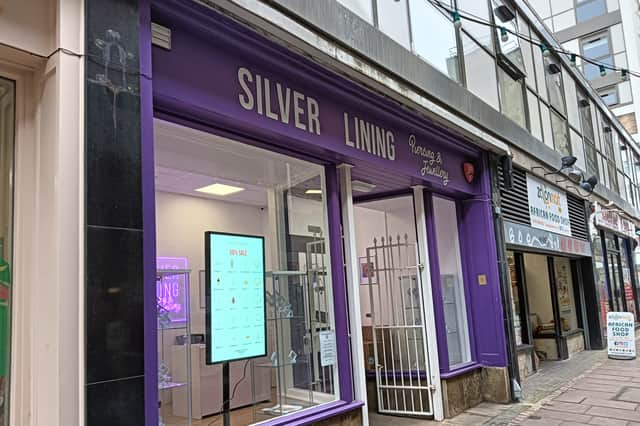

Silver Lining Sheff, in Chapel Walk, failed to uphold the Equality Act when a young woman was dismissed in August 2022 by discriminating against her disability.
An employment tribunal held in late 2023 heard how the trainee had been at the shop for 10 months. However, her anxiety led to struggles running the studio by herself at times and saw her at one point being signed off for three weeks.
The tribunal heard how her boss, Fiona Clancy, was an experienced occupational therapist who offered advice for the young woman to manage her condition - but this was often unprompted and “unwanted” by trainee, who felt she was being pressured to return to work.
The employment tribunal panel largely disagreed that the trainee was ever pressured to return to work.
However, when she was signed off work for her condition a second time in July 2022, Mrs Clancy served her her notice and offered the trainee two options - take on reduced hours, or find another job.
A report into the tribunal reads: “The only offer available to the claimant was reduced hours. There was no discussion of extra support for the claimant at the shop...”
Further, the panel found the message to the trainee was “unnecessarily critical of the claimant” and “characterised as descending into, if not an actual rant, then into just venting at the claimant at times.”
In the message, Mrs Clancy wrote: “I'm afraid that since you do not wish to take up our offer of supporting you back into part time work whilst you address your anxiety, we are left with no alternative.
“As I have mentioned, we cannot operate our business without a member of staff in Sheffield. We are happy to compromise and for you to work part time whilst you work on your anxiety. However just not coming into work at all is not feasible for us.”
However, the tribunal found Mrs Clancy should have at that point in their working relationship realised her employee had a disability, yet discriminated against her anxiety when she fired her.
The report reads: “Once the respondent knew of the claimant’s disability, it is obvious to any reasonable employer - and particularly one with Ms Clancy’s experience - that there is an increased likelihood of sickness absence and an increased risk of dismissal.
“For these reasons, therefore, the claimant’s claim that the respondent failed to make reasonable adjustments is successful.”
As a result, the tribunal ordered Mrs Clancy to pay £10,000 in compensation to her former employee.
Additionally, the trainee claimed Mrs Clancy and her husband “harassed” her by “pressuring her to return to work” and telling her off on two occasions, including for losing a set of shop keys.
The tribunal rejected these claims, writing: “although the alleged acts were unwanted by the claimant, they did not, objectively, violate the claimant’s dignity or create an intimidating, hostile, degrading, humiliating or offensive environment for the claimant. This is a high threshold and the conduct of the respondent did not come close to it.”