
University of Sheffield students tackle overlooked women’s health crisis
Women face many barriers to getting the best healthcare - now a group of university innovators are taking action to make things better
Urgent and overlooked challenges in women’s healthcare are being tackled by the next generation of innovators at the University of Sheffield, through a new initiative accelerating solutions to some of the most under-addressed areas of global health.
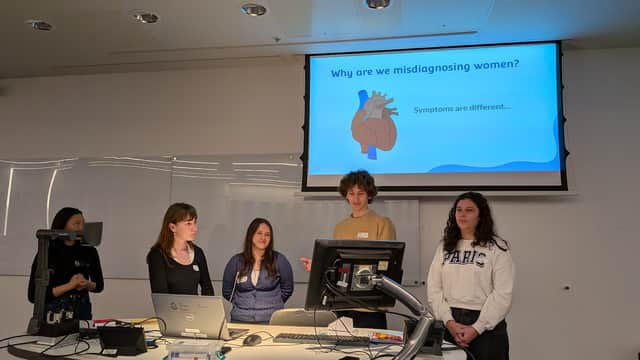

In a first-of-its-kind collaboration bringing together students, clinicians and industry leaders, new ideas have been developed to address health challenges that leave millions of women facing years-long delays in diagnosis and care.
The Women’s Health Innovation Challenge saw students from across disciplines and year groups work in teams to create solutions to some of these issues, including the fragmented care across the female health lifecycle and the widespread normalisation of serious symptoms.
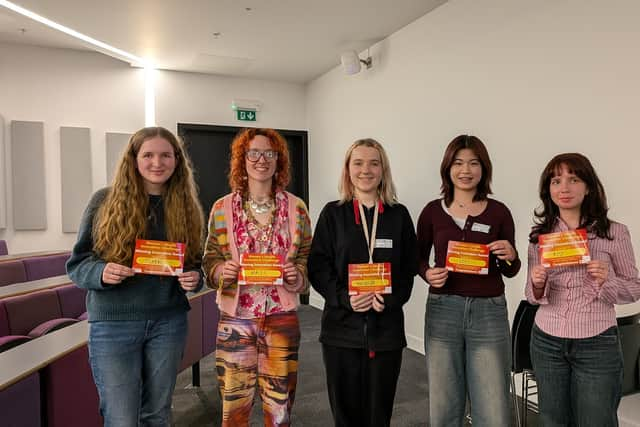
Among the key challenges explored was endometriosis, a condition affecting one in 10 women globally, where patients in the UK face an average diagnosis time of over nine years. Other innovations addressed gaps in menopause care, cardiovascular health in women and the fragmentation of digital health solutions across different life stages.
The initiative reflects the university’s growing leadership in women’s health innovation, a field widely recognised as underfunded and underserved despite affecting half the global population, and its commitment to translating research and ideas into meaningful impact.
The event was supported by experts from across research, industry and healthcare, including panel members from Health Innovation Yorkshire & Humber (HIYH), an NHS England organisation which acts as a bridge between healthcare providers, commissioners, academia and industry.
Participants explored a range of innovative solutions to some of the most complex challenges in the sector. These included the development of non-invasive diagnostic tools using menstrual blood to support earlier detection of reproductive health conditions, a gamified app designed to help address body dysmorphic disorder, and digital tools aimed at improving symptom tracking and management in autoimmune conditions. Together, these ideas demonstrate the potential for technology-driven, patient-centred approaches to transform how women’s health is understood, diagnosed and treated.
Rachel Kovacs, final year Biomedical Engineering student at the University of Sheffield and organiser of the event, said: “I was lucky enough to be one of the students to take the first Women’s Health in Biomedical Engineering module in the UK, right here in Sheffield, and it really opened my eyes to how under-innovated the field is. I only discovered this in my final year and I wanted other students to find it sooner.
“The event itself has already made a huge difference — students now see women's health as a space worth innovating in. If even a handful take their ideas further, we could genuinely change women's lives. Having personally experienced some of these gaps, I know the impact this could have on women across the globe.”
The event culminated in students pitching their ideas to a panel including clinicians, academic researchers and founders of women’s health start-ups, creating a direct link between emerging innovation and real-world application.
The challenge forms part of the University’s wider activity in this space, including its Women’s HealthTech Innovation Network, which brings together regional and national expertise to translate research into solutions that address longstanding inequalities in care.
Dr Vanessa Hearnden, Senior Lecturer in Biomaterials and Tissue Engineering at the University of Sheffield and co-chair of the Women’s HealthTech Innovation Network, said: “The Women’s Health Innovation Challenge gave students a rare opportunity to work directly with clinicians, researchers and industry partners to tackle real-world problems. The quality of ideas and level of engagement demonstrated the impact this kind of interdisciplinary, challenge-led learning can have.”