
Sheffield woman calls for urgent change in care and support for people with severe ME
A Sheffield woman is sharing her devastating health story in a bid to get better support for people with severe ME.
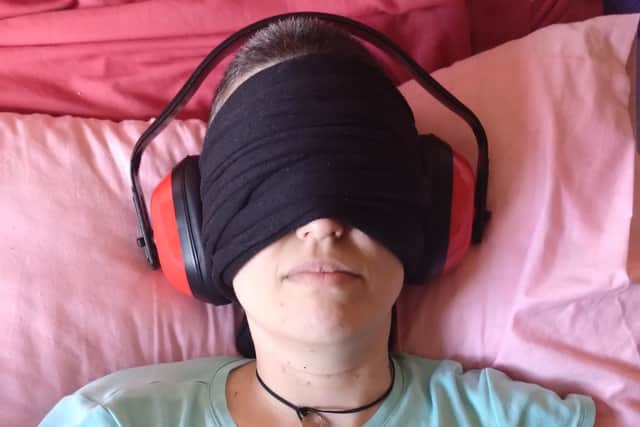

Rebecca Taylor, now 42, first became ill at the age of 11 following a viral infection, and has spent more than three decades living with a condition that has progressively stolen her independence, education, career prospects and quality of life. In 2024, a probable Covid infection triggered a significant deterioration and now she is completely bedbound.
It is estimated that at least 404,000 people in the UK have Myalgic Encephalomyelitis (ME), a multisystemic disease with symptoms including profound fatigue and sleep disturbance.

Rebecca said: "I cannot sit upright for more than a couple of minutes without risking fainting. My day is spent lying down, often wearing a blindfold because light is painful. I live with severe symptoms every minute of every day."
Rebecca experiences profound weakness, chronic pain, severe sound and light sensitivity, debilitating fatigue, muscle spasms, tremors and episodes of paralysis. Everyday activities that most people take for granted, such as holding a conversation, washing or eating, require careful management and can trigger significant worsening of symptoms.
Her husband is her primary carer, balancing her complex care needs alongside full-time work, while her parents provide additional support whenever possible.
Rebecca added: "Most people have no idea that ME can be this severe. Whenever I describe my condition, people are shocked. They struggle to comprehend that someone can be so profoundly disabled and yet receive so little informed medical support. The reality is that there is currently no clear treatment pathway for people with severe ME, no specialist care services, and no trained carers who understand my condition. If my health continues to deteriorate, there is no safety net waiting. There isn't a single hospital in this country with the facilities or training to accommodate even my most basic care needs, let alone provide any treatment. That has to change."