
Sheffield wildlife column: Mandarin Ducks in the news
A female Mandarin Duck, proud mother of eleven ducklings, made the news in the Sheffield Telegraph as she brought transport to a halt on Sheffield’s busy Ecclesall Road. In search of the Porter Brook, the ducks were lost and it needed local motorists to stop and help the birds back to safety.
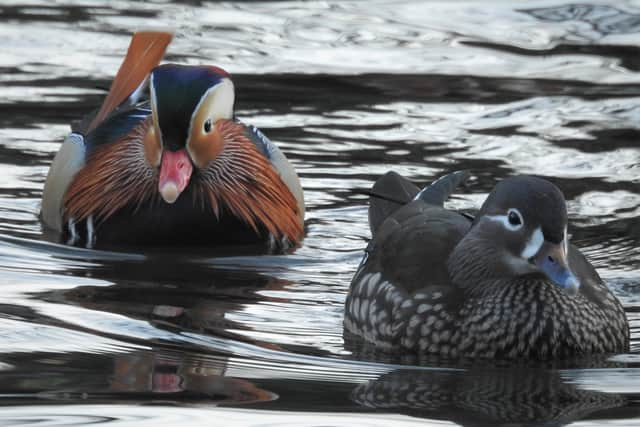

This situation came to mind during the recent centenary celebrations at Graves Park, marking a hundred years since the famous bequest to the city by Alderman J.G. Graves. During the walk around the parkland and the former medieval fishponds, we spotted a Mandarin female but with only two chicks. Maybe there were more hidden in the vegetation or perhaps the brood was already reduced by predators. Mandarins tend to nest in tree-holes and so need big, old trees often away from the safety of water.
The young birds have to be encouraged to leave the nest-hole and plummet to the ground below followed by a trek in search of a pond, river, or other suitable waterbody. This can be fraught and leads to situations such as reported in the newspaper. However, it isn’t only exotic Mandarins that have this problem. Many years ago, I was involved in helping run Sheffield University’s halls of residence around Endcliffe. A female Mallard Duck almost always nested in a small pond close by Sorby Hall, and she would then march her chicks down across the parkland, over the road, and down Brocco Bank to the Porter Brook in Endcliffe Park. My recollection was that the same traffic chaos ensued.
Of course, the Mandarin situation triggers debates about native and non-native or exotic species, and how these all interact. This is indeed the theme of our next Sheffield-based Biodiversity Research Group ‘Wilder Visions’ conference, in October, and titled, ‘Nature in its Place. What is Native?’ The emergence of so-called recombinant ecologies mixing native and non-native is happening and is inevitable, but controversial too. We now have more British Mandarins than exist in their increasingly decimated native habitats, which makes you think about our vital roles in global conservation.
Professor Ian D. Rotherham, researcher, writer & broadcaster on wildlife & environmental issues, is contactable on [email protected] ; follow Ian’s blog (https://ianswalkonthewildside.wordpress.com/ ) and Twitter @IanThewildside; BlueSky @ianthewildside.bsky.social