
Sheffield scientists use forensics and DNA database to tackle illegal trade in persecuted bird of prey
Experts are targeting wildlife crime with an innovative forensic toolkit and DNA database as part of efforts to protect one of the UK’s most iconic birds of prey, the Peregrine Falcon.
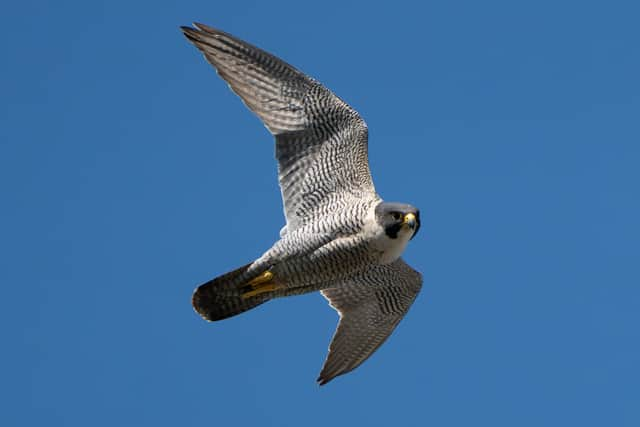

Researchers at the Universities of Sheffield and Leicester have collaborated on a project led by the Scottish Government's Science and Advice for Scottish Agriculture (SASA) division to develop a method that can determine whether Peregrine Falcons claimed to have been bred in captivity are genuinely captive-bred, or have been taken illegally from the wild.
Peregrine Falcons are protected in the UK, but concerns have grown in recent years about the illegal removal of birds from the wild due to falconry becoming increasingly popular over the past two decades, especially in the Middle East. This trend coincided with a significant increase in the export of falcons from the UK, prompting concerns about potential illegal wild take.
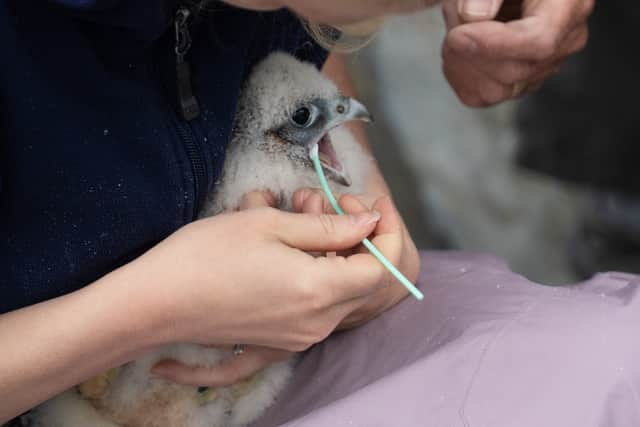
Scientists from Sheffield worked with an army of licenced bird ringers, who mouth swabbed wild Peregrine chicks to collect DNA before returning chicks back to their nests. Together, the team created a forensic marker set for genetic profiling to identify individuals, parents and siblings; and UK Peregrine DNA database.
These two tools are being used in combination to combat the illegal take of wild Peregrines, aid convictions and help safeguard the population.
Dr Deborah Dawson, a Researcher in the University of Sheffield’s School of Biosciences, said: “Our precious Peregrines have been persecuted for far too long. This marker set will help secure convictions to protect Peregrines and allow them to thrive for everyone to enjoy, and for future generations to cherish.”
The UK Peregrine DNA database continues to grow and now contains over 1,000 samples from wild Peregrines and 500 samples from captive falcons. The forensic toolkit and DNA database is routinely used by the UK government’s Animal and Plant Health Agency (APHA) to investigate the bloodlines of Peregrines in the captive breeding sector and check compliance with UK law. The toolkit has been successfully used in police investigations to detect Peregrines illegally taken from the wild, in some cases even enabling individuals to be linked back to specific nests.
Researchers at Sheffield helped develop and validate the forensic DNA marker, supported by a Research England knowledge exchange grant.
Local bird ringers from the Sorby Breck Ringing Group were among the many licenced ringers from across the UK who collected Peregrine mouth swabs for the DNA database.
Dr Emma Hughes, from the Sorby Breck Ringing Group - a volunteer-led group operating across Sheffield, South Yorkshire and North Derbyshire - said: "It is my job to collect the DNA samples and ensure accurate measurements are taken from each of the chicks. It is a privilege to see these young birds up close, and to contribute to the development of a DNA toolkit that enables the detection of individuals illegally taken from the wild.”
The newly published research outlines the forensic validation of the method and highlights a major Scottish case study demonstrating its practical application.
Peregrines hold special significance at the University of Sheffield. Since 2012, 41 chicks have fledged from the nest at St George’s Church, thanks to the collective efforts of staff, students, local residents and wildlife experts.