Sheffield on the Wildside: Bug hunters beetling down at Totley Primary School
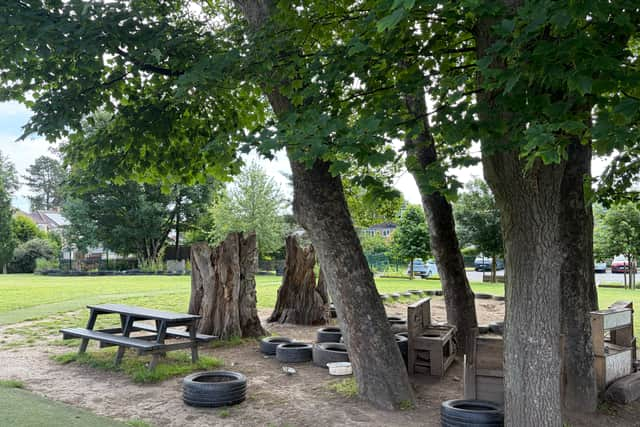
I had a very interesting message from local reader, Rick Hilton, about an interesting ‘find’ whilst at a ‘family fun day’ at Sheffield’s Totley Primary School. Rick is a local reader of the column and read something I wrote about Lesser Stag Beetles and another ‘dead wood specialist’ the Rhinoceros Beetle.


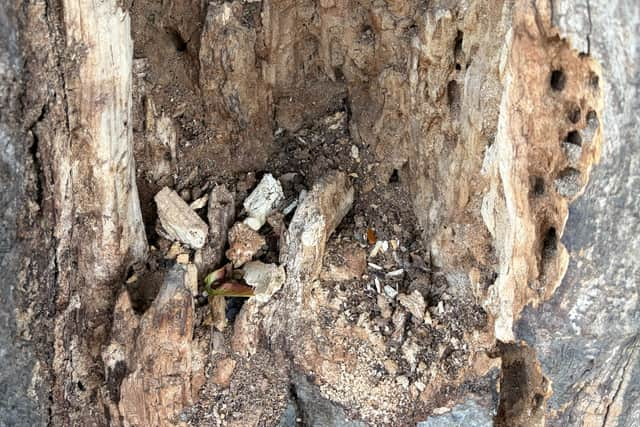
Both these species lay their eggs on great, rotting timbers of old and dead trees and tree-stumps. Female beetles once mated, will lay up to thirty eggs individually into suitable decaying wood, with a preference for broad-leaved trees such as oak, ash, beech, white willow, and even old apple trees.
The larvae feed on the fungi that rot the wood and, over a year or more, grow to a large size before emerging as adults. The rate of growth varies with the quality of the rotting timber (and its nutrient value) and the ambient temperature. The larvae once fully grown, settle down to pupate as autumn draws in, and the new adults emerge the following summer, from May into June.
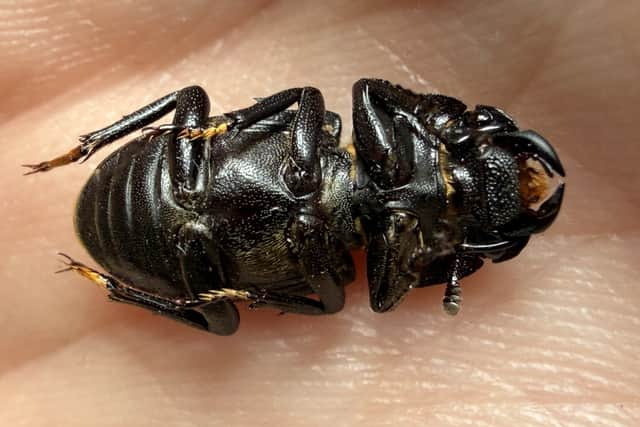
The nocturnal adults emerge at night to fly in search of mates having spent the daytime sheltering in rotten timbers, under bark, and feeding on tree sap. They live for up to two years.
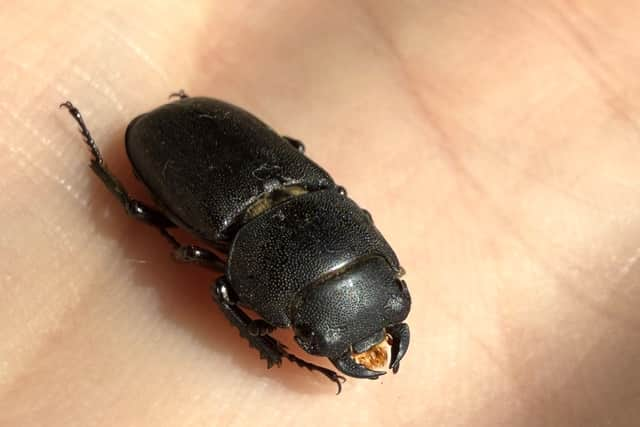
Rick’s children are avid ‘bug-hunters’ and his younger son found a dead beetle on old timbers in the school play area. I am guessing this was one of last year’s adults which having mated and secured its offspring for the next generation, had reached the end of its own life.
I think, from the pictures that this was a male. Nationally, these are not classed as rare but are southern and spreading northwards with climate change. They have also increased across the region with more enlightened tree management since the 1980s, with dead tree-trunks, standing and fallen, now being left as biodiversity habitat. It is good to see these insects benefitting from this, and perhaps acting as ‘indicators’ for other, associated, rare ‘deadwood’ species which are present but less obvious. Let me know if you spot one!
Professor Ian D. Rotherham, researcher, writer & broadcaster on wildlife & environmental issues, is contactable on [email protected] ; follow Ian’s blog (https://ianswalkonthewildside.wordpress.com/ ) and Twitter @IanThewildside; BlueSky @ianthewildside.bsky.social