
Sheffield launches five-year blueprint to put movement at the heart of daily life
Sheffield has launched a new five-year blueprint aimed at making movement part of everyday life and helping the city become healthier and more connected.
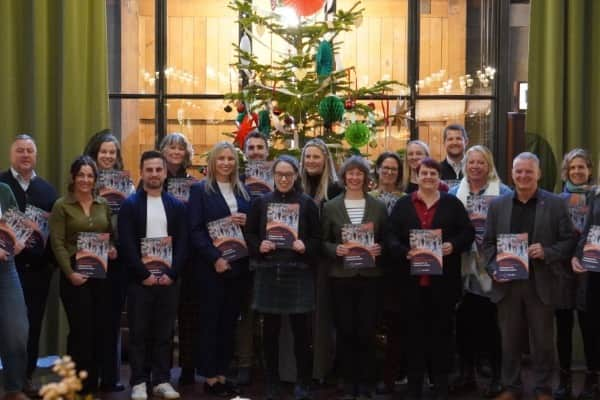

Move More Sheffield: A Blueprint for Collective Action 2026–2031 was unveiled at The Mowbray, where leaders and partners from health, education, local government, sport and the voluntary and community sector gathered for the launch.
The framework has been developed through the National Centre for Sport and Exercise Medicine (NCSEM) Sheffield partnership, driven from its research hub at Sheffield Hallam University’s Advanced Wellbeing Research Centre. It builds on the previous strategy and Sheffield’s long-standing ambition to create a happier, healthier and more connected city.
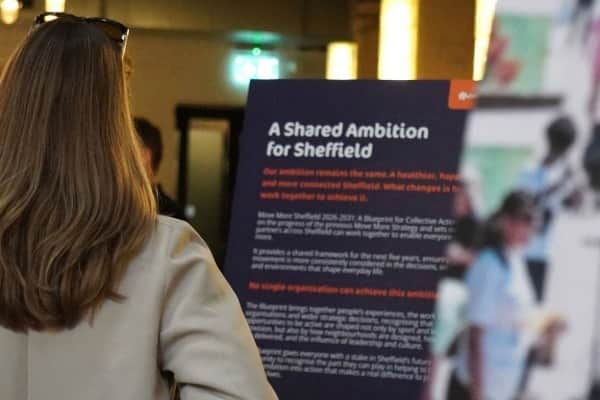
The blueprint says progress has been made, but that major barriers and inequalities in physical activity remain. It argues that opportunities to be active are shaped by more than personal choice or the availability of sport and leisure provision, pointing instead to the role of neighbourhoods, transport, housing, services and wider city decisions.
Its aim is to help people and organisations work more closely together, and to make movement a more consistent consideration in planning, investment and service design.
The framework sets out three levels of influence: communities, where lived experience highlights everyday barriers and opportunities; organisations, whose services, resources and partnerships shape what happens in practice; and strategic leaders, who can influence policies and investment.
It also introduces five Move More Networks covering communities, education, health and social care, environment, and sport. These are designed as spaces for learning, sharing and connecting, while helping bring community and organisational insight into wider discussion and decision-making.
Alongside this, the blueprint identifies eight system shifts needed in how Sheffield works, including acting on community feedback, building meaningful relationships and making investment more responsive to need. Seven system commitments outline how NCSEM Sheffield will support the change over the next five years, from bringing people together and developing leadership to improving communication and embedding learning.
Steven Pleasant, Chair of NCSEM Sheffield, said: “In Sheffield, we have built a strong reputation for helping people move more, but we also know there is still much more to do. In many ways, this Blueprint marks the beginning of a new chapter for health and wellbeing in Sheffield.
“Quite simply, it is a practical guide to collective action. It is about creating the conditions and opportunities that enable people to move more. The starting point is community, because that is where lived experience and local knowledge exist. From there, it extends out to organisations and strategic partnerships, because it's through people working together that you can actually make lasting change.
“It is a framework that helps build movement into wider decision-making, whether in transport, regeneration, housing or other areas, but Blueprint delivers success on its own. It's about the people and organisations coming together to bring it to life. I am inviting everyone to work with us to make this change a reality.”
Dr Marlize De Vivo, Director of NCSEM Sheffield, based at Sheffield Hallam University’s Advanced Wellbeing Research Centre, said: “Sheffield's ambition hasn't changed. What needs to change is how we work together to achieve it."