
Sheffield drivers are now paying over £78 to fill up as fuel eats up more than a tenth of weekly wages
Filling up in Sheffield now costs £78.10 a tank, with drivers handing over 10.7% of their weekly wages just to stay on the road, a new analysis shows
Unleaded petrol in Sheffield has climbed to 156.2p per litre, pushing the cost of a standard 50-litre fill to £78.10. Set against the city’s median weekly wage of £733, based on Annual Survey of Hours and Earnings (ASHE) data, that means more than one in every ten pounds earned is going straight into the fuel tank.

The analysis, carried out by Ovoko, compared FuelMap petrol prices with official earnings data to reveal how much of drivers’ income is swallowed by a single fill-up. Sheffield sits just below the South Yorkshire average at 10.7%, but the figures show even middle-of-the-pack areas are now seeing fuel take a significant chunk of weekly pay.
Across South Yorkshire, petrol prices are tightly clustered, ranging from 155.7p in Barnsley to 157.6p in Rotherham. Yet the share of income drivers spend varies far more sharply, from 10.5% in Barnsley to 11.7% in Rotherham.
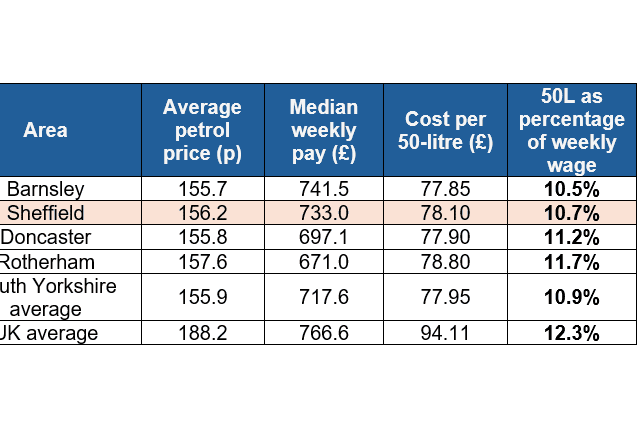
Sheffield actually has the second cheapest petrol in the region at 156.2p per litre, but still ranks mid-table once wages are factored in. Drivers are not facing the very highest burden locally, yet a full tank still takes a significant slice of weekly income. The gap comes down to earnings, with lower-paid areas seeing fuel eat up a much larger share of pay despite near-identical prices at the pump.
Kazimieras Urbonas, Supplier Excellence Manager at Ovoko, said: “When you compare it across South Yorkshire, the pattern becomes clearer. The price barely shifts from one area to the next, yet the share of income can move by nearly a full percentage point.
“Sheffield sits towards the lower end on price, but the picture shifts once wages are factored in. Drivers are not facing the very highest burden locally, but they are still spending more than one in every ten pounds of their weekly income on fuel. Crossing that 10% threshold matters – it is the point where filling up the car starts competing with the weekly food shop for the same slice of the pay packet.”