
Sheffield 2026: An honest look at the job market in a city where manufacturing did not die but went high-tech
What are job prospects like in Sheffield and who are the biggest employers? Let’s take a look behind the gloss at the gritty truth of job hunting in 2026
This city has never been a place that trades on pretence. It made its name with its sleeves rolled up — forging the steel and cutlery that carried the word "Sheffield" stamped onto blades all over the world. Walk through Kelham Island today, past the old works that now house breweries, design studios and software firms, and you get a clear sense of a place that has not so much abandoned its past as repurposed it. For anyone weighing up where to build a working life in 2026, that mix of grit and reinvention is worth understanding before you start sending out applications.
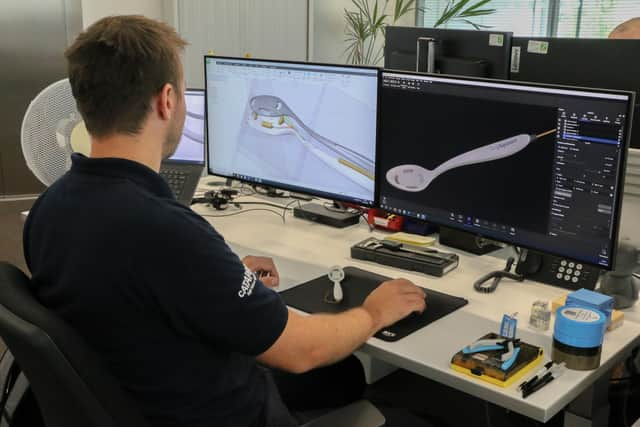

This is a grounded look at what the Sheffield job market actually feels like right now — which sectors are hiring, what the numbers say about pay and opportunity, and where a newcomer or a local looking for a change might realistically find a footing.
A city bigger and broader than its reputation
It is easy to forget the sheer scale of Sheffield when you're here all the time. With a population of roughly 565,000 according to the 2021 Census, it is one of England's largest cities, and the wider City Region pulls in well over a million people across Rotherham, Barnsley and Doncaster. That size matters when you are job hunting, because it means the local economy is far more varied than the "steel city" shorthand suggests. Manufacturing still counts, but it now sits alongside two large universities, a major teaching hospital network, a growing digital cluster and a public sector that remains one of the biggest employers in the region.
The headline labour figures tell a reasonably encouraging story. Official Annual Population Survey data has put the Sheffield employment rate in the region of 71 to 73 per cent in recent years — a little below the national average, but climbing, and the gap has narrowed steadily since the long shadow of deindustrialisation. The point for a job seeker is simple: the market is neither booming nor stalling. It rewards people who know where to look.
Advanced manufacturing: the steel story, rewritten
If there is one thing Sheffield wants the rest of the country to understand, it is that manufacturing here did not die — it went high-tech. The Advanced Manufacturing Research Centre (AMRC), a partnership between the University of Sheffield and industry that began with Boeing back in 2001, has grown into one of the most significant research clusters of its kind in Europe. Sitting on the Advanced Manufacturing Park near Rotherham, it works with hundreds of companies on everything from aerospace components to additive manufacturing and machining.
For workers, this translates into a steady demand for skilled engineers, CNC machinists, quality technicians and increasingly people who can bridge engineering and data. Firms such as Boeing, Rolls-Royce and McLaren have all put facilities in the area precisely because the talent pipeline and research support exist locally. Apprenticeships run through the AMRC Training Centre remain one of the most reliable routes in, and they carry far less stigma here than they might elsewhere — in this part of Yorkshire, a good apprenticeship is something to be proud of.
Health and the university machine
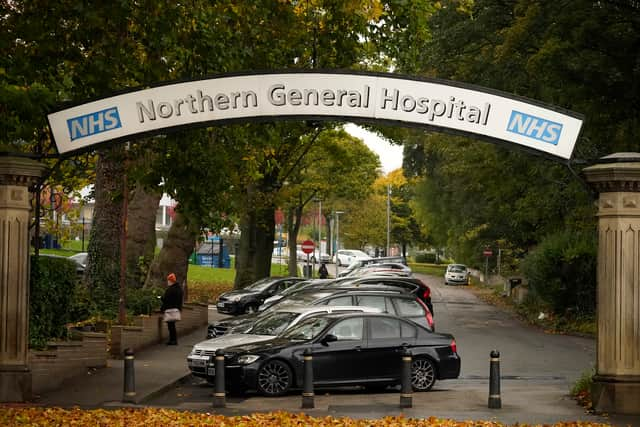
The two largest single employers in the city are not factories at all. Sheffield Teaching Hospitals NHS Foundation Trust employs in the region of 18,000 to 19,000 people, making it one of the biggest NHS trusts in the country, and the University of Sheffield and Sheffield Hallam University together account for many thousands more posts, from academics and researchers to technical, administrative and estates staff.
What this means in practice is that "anchor institutions" give the Sheffield labour market an unusual stability. Health and education jobs do not vanish in a downturn the way speculative private-sector roles can. Nursing, allied health, care work, lab technician roles, student support and facilities management all turn over constantly. For someone looking for security rather than a fast track to riches, these institutions are the steady heartbeat of local employment, and they recruit across a huge range of skill levels — not only graduates.
The digital and creative surge
Perhaps the most striking change of the last decade is the growth of Sheffield's digital and creative economy. Tech Nation and successive regional studies have repeatedly flagged Sheffield as a fast-growing tech hub outside London, with strong clusters in software, video games and digital media. The city's relatively low office and living costs have made it attractive to studios and start-ups priced out of the south, and the presence of two universities feeding graduates into the pipeline keeps the supply of talent healthy.
Kelham Island and the Cultural Industries Quarter have become the visible heart of this scene. Salaries for developers, designers and product roles tend to run below London levels — that is the trade-off — but when you set them against Sheffield housing costs, the real disposable income can be markedly better. For anyone in tech who is tired of paying half their wage in rent, the maths increasingly favours a move north.

What the money actually looks like
Honesty about pay matters. Sheffield is not a high-wage city by national standards. ONS Annual Survey of Hours and Earnings figures have placed median full-time weekly pay for those working in Sheffield somewhat below the UK median — broadly in the region of £600 a week in recent figures, against a UK figure closer to £680. On paper, that looks like a penalty.
The picture changes when you factor in the cost of living. Housing in Sheffield remains far more affordable than in most southern cities; average house prices and rents sit well under the national average, and significantly under those of Leeds or Manchester. A salary that feels modest on a payslip stretches considerably further here. For many people, particularly those raising families, that quality-of-life arithmetic is the real argument for working here, and it is one the city makes quietly but convincingly.
Green jobs and the next wave
Sheffield has positioned itself near the front of the so-called green industrial transition, and there is substance behind the slogans. The South Yorkshire Mayoral Combined Authority has put decarbonisation and clean-energy manufacturing at the centre of its economic strategy, and research from bodies such as the Local Government Association and ONS has tracked rapid national growth in green-economy roles — hundreds of thousands of jobs across the UK, with the industrial North well placed to capture a meaningful share.
For Sheffield specifically, the overlap between advanced manufacturing and clean technology is the obvious opportunity: battery technology, heat-pump and component production, retrofit and energy-efficiency work. These are not abstract promises for 2040; recruitment in retrofit, heating engineering and renewable installation is already visible across the City Region, and it spans hands-on trades as well as graduate engineering.

Where the challenges still lie
It would be dishonest to paint the picture as uniformly rosy. Sheffield carries real pockets of deprivation, and the gap between its more prosperous neighbourhoods and its poorer ones is among the starker in England. Some former industrial communities still have lower employment rates and fewer well-paid opportunities within easy reach, and public transport between parts of the City Region and the main centres of work is not always as good as it should be.
Skills mismatches are another recurring theme. Employers in engineering and digital frequently report difficulty filling specialist vacancies even while general unemployment exists — a sign that the issue is often training and pathways rather than a simple shortage of jobs. The practical lesson for an individual is that investing in a recognised, in-demand skill — whether a trade, a technical qualification or a coding competency — pays off unusually well in this market.
Sheffield in 2026 is a city that has earned its quiet confidence. It is not pretending to be London or chasing the glamour of the south. What it offers instead is a genuinely diverse economy, real affordability, a strong base in advanced manufacturing and health, and a growing digital scene — wrapped up in a place that remains one of the friendliest big cities in the country. For a worker willing to look in the right corners, the opportunities are there, and they are more varied than the old reputation would ever suggest.
Sheffield job vacancies are available on job-in.uk