
Real-time thermal imaging breakthrough could slash amputation risk for Sheffield patients
Surgeons fighting to save patients' limbs from amputation can now track whether blood is reaching starved tissue in real time, following clinical trials of a novel imaging system.
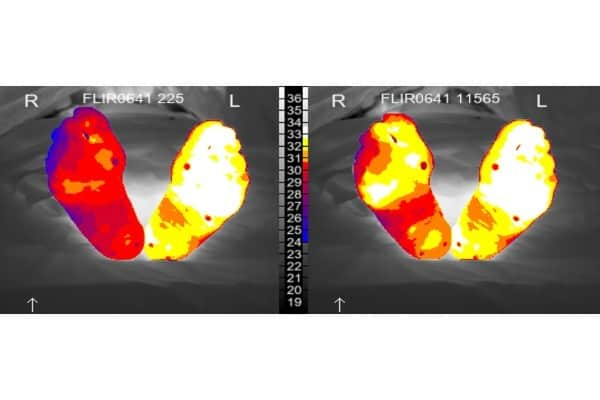

The system, named Perfusion Right Now (PRN), combines infrared thermography and machine learning to give doctors immediate feedback during endovascular operations such as stenting and angioplasty.
Developed by Sheffield Hallam University alongside the Sheffield Vascular Institute at Sheffield Teaching Hospitals NHS Foundation Trust, the tool has been trialled on patients suffering from chronic limb-threatening ischaemia (CLTI). The condition, an advanced form of peripheral arterial disease (PAD), severely restricts blood flow to the lower legs and feet, creating non-healing ulcers and severe tissue damage that often leads to amputation.
While surgeons frequently succeed in unblocking major blood vessels, conventional methods cannot confirm whether circulation has reached the delicate skin tissues where healing happens. PRN displays circulation data live on a console during treatment, providing immediate evidence of whether an intervention is working.
Professor Stephen Goode, Honorary Professor at Sheffield Hallam University and Consultant Vascular Interventional Radiologist at Sheffield Teaching Hospitals, said: “I regularly treat patients from around South Yorkshire with advanced PAD and CLTI who are facing the very real prospect of losing a limb, the difference between successful treatment and failure can ultimately mean the difference between keeping or losing a leg.
“Although we can successfully reopen blocked arteries using minimally invasive techniques, we cannot always be certain that enough blood is reaching the tissues to allow healing. That uncertainty is one of the greatest challenges in treating these patients.”
Because the contactless technology monitors heat rather than visible light, it functions equally across all skin tones. Researchers partnered with Doncaster Health Determinants Research Collaboration to ensure demographic groups historically underrepresented in research were included in trials, helping address healthcare inequalities.
Professor Charmaine Childs, from Sheffield Hallam University's School of Health and Social Care, led the development. She said: “Our novel technology does not touch the body; it is relatively inexpensive and can be used continuously throughout the procedure. When used alongside current imaging methods, it will give the clinician a number representing the percentage improvement in skin foot perfusion from start to end of treatment to help understand whether healing is likely to be successful.”
Following trial findings published in Frontiers in Medical Technology, the team is working with software and commercial partners to refine the device for clinical adoption.