
Rare musical instrument to be heard in Sheffield concert for the first time in generations
A remarkable brass instrument that was once a familiar sight in nineteenth-century orchestras, but is now rarely heard, will make a special appearance in Sheffield next month.
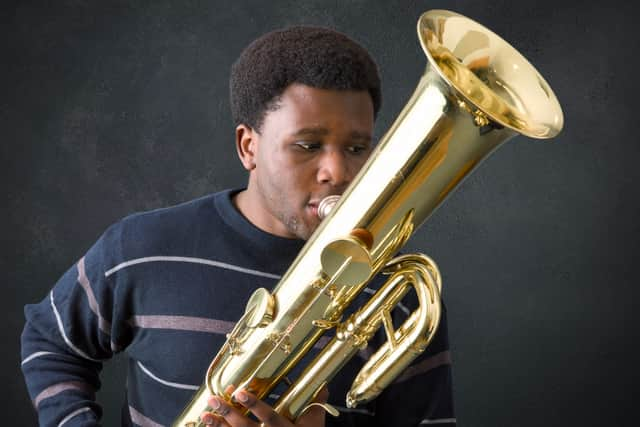

Audiences at Sheffield Chamber Orchestra's concert on Saturday, December 5, will have the unusual opportunity to see and hear an ophicleide - a curious-looking ancestor of the modern tuba that has largely disappeared from concert halls.
The instrument will be played by talented young musician Ini Kuti in a performance of Mendelssohn's A Midsummer Night's Dream Overture, conducted by Gina Hazell.
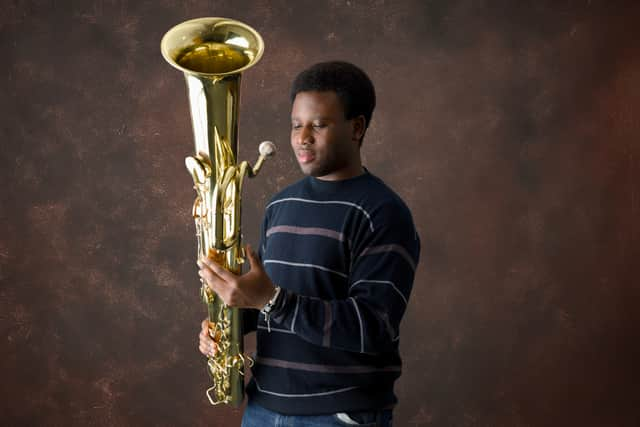
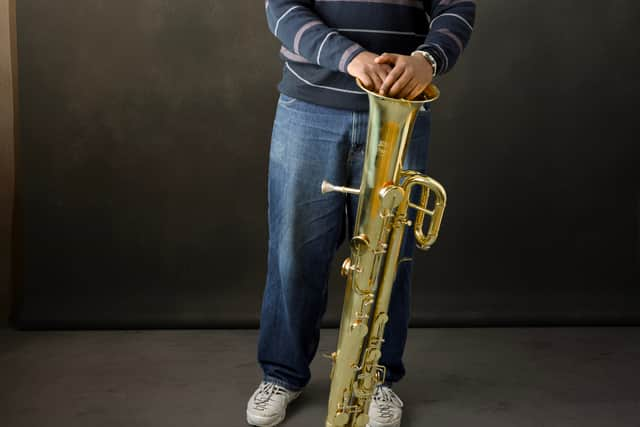
Invented in France around 1817, the ophicleide looks rather like a cross between a bassoon and a brass instrument. Instead of the familiar valves found on a trumpet or tuba, it has an elaborate system of up to eleven keys that open and close holes to produce different notes.
Its sound is equally unusual.
"The body looks quite similar to that of a bassoon, and the sound can be quite dry and nasal," explains Ini, who is studying at the Royal Birmingham Conservatoire.
During the nineteenth century, the ophicleide became an important member of the orchestral brass section, with composers including Berlioz, Mendelssohn, Verdi and Wagner writing music for it.
But improvements in brass instrument design eventually led to its replacement by the modern tuba. Today, the ophicleide's orchestral parts are generally played on the tuba instead, making opportunities to hear the original instrument increasingly rare.
For Ini, the instrument holds a particular fascination.
His interest began as a child when he stumbled across an online video of Berlioz's Symphonie fantastique performed by a period orchestra using historical brass instruments.
"This captivated me at a young age and sent me down all sorts of rabbit holes, learning more about historical low brass," he recalls. "To my surprise, they were all related to the tuba in some way."
Originally from Stockport, Ini began his musical journey as a violinist before taking up the tuba at secondary school. He went on to study at the Junior Royal Northern College of Music and is now in his third year at the Royal Birmingham Conservatoire, supported by a full Leverhulme Trust Scholarship.
Despite his young age, he has already performed with the National Youth Orchestra of Great Britain at the BBC Proms in London's Royal Albert Hall and made his professional orchestral debut as guest Principal Tuba with Birmingham Royal Ballet.
Alongside his modern tuba studies, Ini is learning the ophicleide with historical brass specialist Andrew Kershaw, who has performed with leading period-instrument ensembles including the Orchestra of the Age of Enlightenment.
And playing the ophicleide is no easy task, even for an accomplished tuba player.
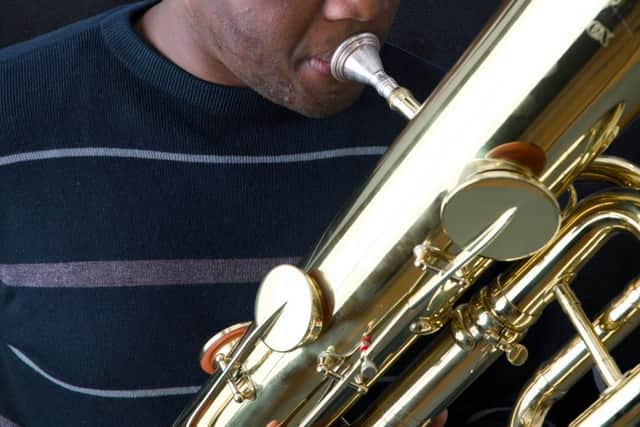
"The mouthpiece is much smaller than a tuba mouthpiece, more similar to that of a trombone," Ini explains. "This changes the way I position my lips to play and affects how I pitch and articulate the notes."
The unusual fingering system presents another challenge, as does keeping the instrument in tune.
"With modern instruments, we have the luxury of them generally being able to play in tune with themselves. The ophicleide is quite a challenge because, with its many tone holes, intonation can be difficult to control and can easily be miles off."
Nevertheless, Ini relishes the opportunity to explore the distinctive sound and musical possibilities of this forgotten instrument.
He is particularly looking forward to performing Mendelssohn's magical overture, inspired by Shakespeare's A Midsummer Night's Dream.
"This will be my first time playing Mendelssohn's A Midsummer Night's Dream Overture, and I'm very much looking forward to the challenge of doing it on the ophicleide," he says.
The instrument's lighter, more penetrating sound offers a different perspective on the music from the deeper, rounder tone of a modern tuba.
And for brass players and music lovers alike, Ini believes the concert offers an opportunity not to be missed.
"Seeing the ophicleide being used outside period performances is quite rare nowadays, as the tuba covers most of its parts in modern practice. So, for a first-time listener, this is a great chance to hear it in the music for which it was intended — and potentially see it up close after the concert!"
The concert also features Dvořák's colourful Czech Suite, Handel's Concerto Grosso in B-flat major, Op. 6 No. 7, and the rarely performed Symphony No. 1 by pioneering French composer Louise Farrenc.
Together, the programme promises an evening of musical discovery, combining familiar favourites with works that deserve to be better known.
Tickets and further information, www.scorchestra.uk/concert/farrenc-handel-dvorak/