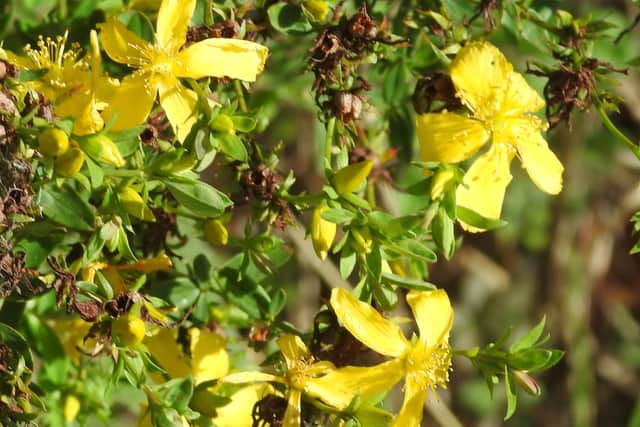
On the Wildside with Ian Rotherham: St John’s-wort may be useful in driving off evil spirits
Here’s the latest from The Star’s wildlife expert Ian Rotherham
The yellow flower pictured is one of the St John’s-worts or Hypericums, in this case Hypericum perforatum or the “Perforate St. John’s-wort” which has its delicate leaves covered in tiny translucent dots i.e., perforations. These are actually miniscule oil glands. It has rounded rather delicate stems with a slight ridge on the opposing sides, and the whole topped with bright five-petalled, star-shaped, yellow flowers. They will be flowering into late September and early October depending on the weather. As a “wort” these plants were traditionally associated with herbal-medical uses, and in this case the treatment by taking infusions as a teas, as a natural remedy for low mood, mild depression, anxiety, and also topical wound healing.
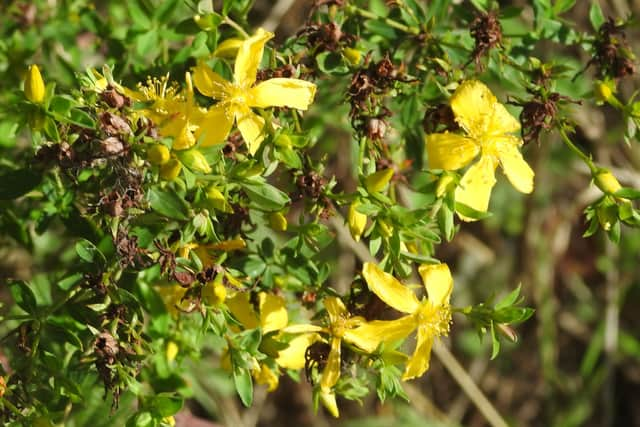


There are a number of wild Hypericums and some such as Rose of Sharon and Tutsan are grown as small, ornamental shrubs in the garden. In the wild, these plants are found in grasslands, woodland edge, and on disturbed ground too, but are often overlooked. Historically, this was a significant herb or “wort” for herbal-medical practitioners and is described as ‘Aromatic, astringent, resolvent, expectorant, and nervine’. According to Mrs Grieve, the extracts were used in all pulmonary complaints, for bladder troubles, in suppression of urine, and for treating dysentery. Beyond this, it could be used in cases of worms, diarrhoea, haemoptysis and other haemorrhages and jaundice. It was helpful for children ‘troubled by incontinence of urine at night’ and was given as an infusion or herbal tea before retiring. Moreover, it helped in cases of pulmonary consumption, chronic catarrh of the lungs, bowels, and urinary passages, and dispelled hard tumours and caked breasts. Treatment was generally as an infusion from the plant leaves. Oil of St. John’s-wort was made from flowers infused in olive oil. St. John’s-wort flowers are edible, but care is advised as the plants contain active chemicals (hence the folk medicine usage) and these may cause serious side effects and potentially dangerous drug interactions. So, like many traditional uses, it is best to avoid this unless prescribed by an expert practitioner.
Professor Ian D. Rotherham, researcher, writer & broadcaster on wildlife & environmental issues, is contactable on [email protected] ; follow Ian’s blog (https://ianswalkonthewildside.wordpress.com/ ) and Twitter @IanThewildside; BlueSky @ianthewildside.bsky.social