
How Sheffield residential home Kingdom House helped resident find her voice
Residential home helping people live happy, fulfilling and independent lives
For Tash, daily life used to be marked by frequent incidents of distress and self-injurious behaviour.

But, thanks to the support of the Lifeways team at Kingdom House in Sheffield, these incidents have reduced significantly to just three or four a month, following closer attention to what she was really trying to communicate.
For years, Tash’s life was defined by anxiety, uncertainty and repeated self-injurious behaviour. Her team often responded to two or three significant incidents a day. At times, situations escalated so severely that emergency healthcare professionals would attend to ensure she was safe.
When staff began to look more closely at Tash’s routines, triggers and day-to-day experiences, they started to recognise a pattern. Much of her anxiety appeared to revolve around going out for coffee, getting drinks, or repeatedly asking to leave the house.
If she was unsure when she would next be able to go out, that uncertainty built and so did her anxiety. What looked like repeated requests for coffee was not really about coffee at all.
Service Manager Andrew Sharp explained: “One day I said to her - ok let’s go to the kitchen and make a coffee. Suddenly she didn’t feel the urgency to go. That was when we realised this was all about reassurance. She needed to know that she could go out, who she was going with, how she was getting there, and that it was definitely going to happen.”
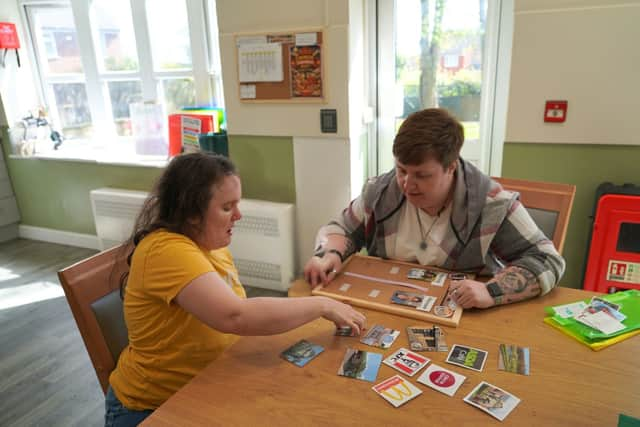
From there, the team focused on predictability, choice and trust. A reassurance board was introduced, which Tash now uses with her support team every morning and afternoon. On it, she chooses who supports her, where she wants to go, how she will travel there and what activity she would like to do. She can change her mind at any time, but the structure gives her control, certainty and reassurance that plans will happen.
Deputy Manager Oliver Shaw explained that once Tash felt more in control, the intensity around drinks reduced.
“It gives her control in a positive way, she’s chosen it herself, so the day feels safer and smoother for her. She didn’t actually want more coffee, she wanted the freedom to know it was available.”
Perhaps the biggest change is in how Tash experiences her day. Previously, she would come into the office anxious, repeating requests and seeking reassurance. Now she often visits simply to talk, share her plans or sit for company.
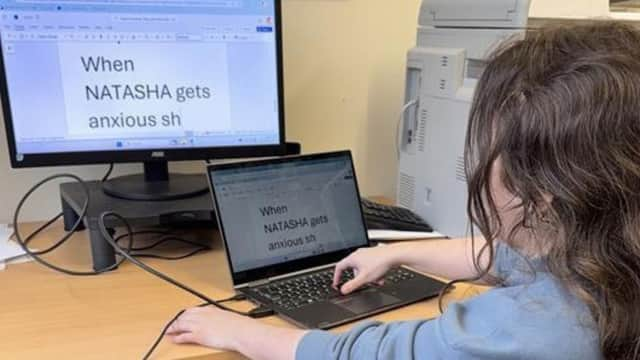
During one anxious period, Tash entered the office while staff were working on laptops. Without prompting, she sat down, moved a laptop towards herself and began typing.
The team had never seen her write, spell or use a computer before, but she typed names of team members, days, months, seasons, sentences about herself, her feelings and messages about support. By the end, she had completed 17 pages, and her anxiety had returned to baseline.
“It absolutely blew my mind,” said Team Leader Natalie Waite. “We never knew she could type and had never seen anything like this before.”
Since then, Tash has continued using typing as a way to express herself. She contributes to her support planning and writes about what helps when she feels anxious, explaining how she would like support.
The team are now arranging for her to have her own desktop computer and printer, giving her a consistent tool for communication and emotional regulation.
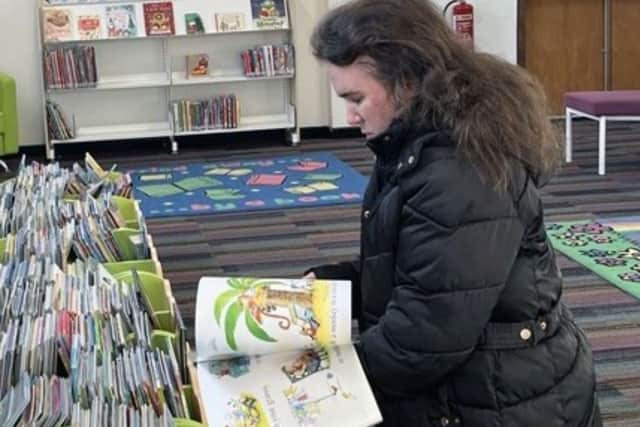
Tash is also beginning to explore new places and experiences. Previously, her world centred on familiar coffee shops. Now she is visiting libraries, parks, new cafés and outdoor spaces. On one occasion, she initially turned back at a park gate but later returned, went inside, picked flowers and sat on a bench.
For the team, these moments reflect growing confidence and connection, as Tash gains greater control over her life and how she communicates.