
Here's why I believe clean air is a class issue
In the 1860s, a Sheffield fork grinder of twenty-one could only expect to live another fourteen years. Shattering grindstones accounted for some of those early deaths, but they were a minority. Most often, it was stone and metal dust lodging in grinders’ lungs that killed them.
Nor was that experience unique to grinders. Far more miners died from respiratory disease than from explosions. When legislation was introduced to ventilate mines – primarily to reduce the danger of explosions – it ultimately saved far more lives by clearing dust from the air than by preventing blasts.


The trade unions representing these workers campaigned for years and eventually won legislative changes that protected lungs and prevented premature deaths. They understood that clean air was a political issue: whether the victims were miners with black lung disease, construction workers exposed to asbestos, or Sheffield’s grinders, the harm came from inadequate protection, employers cutting corners, and a political refusal to take the action needed to save lives.
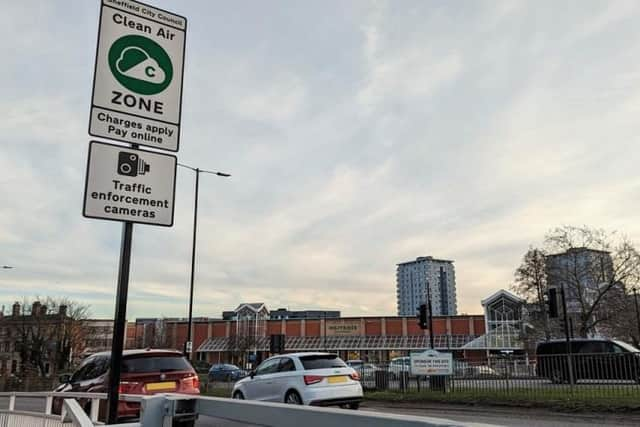
This is why 18th June – Clean Air Day – is important. It is a chance to highlight the impact air pollution has on our health and to demand action to clean the air we breathe. Air pollution today may not look like the dust that filled nineteenth-century workshops, but the historic parallel still matters. The underlying problem has not changed: dirty air remains an issue of health, power, and whose lives are treated as expendable.
Air pollution contributes to around 500 premature deaths each year in Sheffield. It is linked to serious health conditions, including asthma, strokes, lung cancer and cardiovascular disease. Children are most at risk from poor air quality, which can permanently damage developing lungs.
But air pollution is also a class issue. Research from the University of the West of England has found that households in poverty face the highest levels of exposure to air pollution, while wealthier households are the most responsible for producing it.
Major roads are more likely to run through poorer neighbourhoods. People on lower incomes are less likely to have access to private gardens, or the means to escape polluted environments. Wealth correlates with car ownership, and larger, more polluting vehicles such as SUVs are generally the most expensive.
Taken together, this means those with the least power – and who contribute least to the problem – are often those most exposed to the highest levels of pollution.
This is the result of systematic neglect, and of political decisions that have treated exposure to harm as an acceptable trade-off.
But Sheffield has made progress in recent years. Pollution levels have come down in parts of the city, driven by the Clean Air Zone. Fines from the CAZ have been used to roll out more ‘school streets’ that make it easier to walk or cycle to school, and to introduce more 20mph limits to slow traffic. The number of polluting vehicles entering the city centre has also dropped, with the CAZ encouraging a shift towards cleaner taxis and vans.
This progress will continue over coming months, with the government investing over £90 million to electrify our city’s bus fleet. That will bring 186 new zero-emission buses onto our streets, connecting people to places while cleaning the air we all breathe.
This work will save lives. But it depends on sustained political commitment, and on whether those gains are defended when they come under pressure
Bradford Council now has a Reform leadership, which has put its Clean Air Zone under review. Local campaigners warn that the move puts the public health improvements delivered by the scheme at risk.
The right to clean air has always been a question of power as much as it is a question of health. The history of grinders and miners in this city shows what it takes to shift things. It was not the goodwill of employers that brought cleaner air into workplaces, but organisation and collective pressure to force change where the market would not.
Clean Air Day brings that history into the present. It asks whether we accept avoidable illness and premature deaths as part of normal life, or whether we recognise them as something to be overcome. Those who oppose clean air – often backed by dirty money – are making political choices about whose health can be sacrificed. They cannot and must not win.
Minesh Parekh is a Labour & Co-operative Councillor for Crookes & Crosspool on Sheffield City Council.