
In a world becoming even more fractured performances and stories like Noughts & Crosses are essential
The acclaimed UK touring production of Noughts & Crosses makes its grand entrance at the Lyceum, Sheffield
In a month that has seen local political upheaval and yet another large-scale far-right gathering in the UK, perhaps it is through performance art a message is being delivered that should be heard?
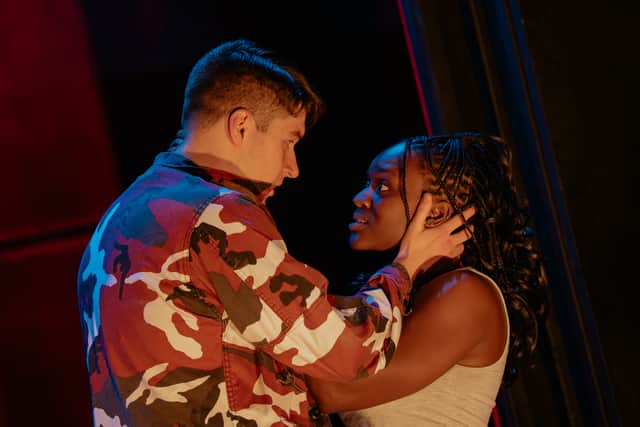

Loosely based on Shakespeare's Romeo and Juliet, Noughts and Crosses is a tale of love and division set in what has been described as a classic dystopian tale. Two star-crossed lovers try their best to navigate societal division against a flipped take on apartheid and the Civil Rights movement.
The Crosses are the dark-skinned elite, maintaining a grip on power, wealth and all the attached societal advantages. On the other side the Noughts are the aggressively marginalised, light-skinned, second-class citizens striving for equality.
Does it all seem somewhat familiar? It should. This is an adaptation of the book (and highly-praised TV series), one that Malorie Blackman was warned not to write, so it has been told.
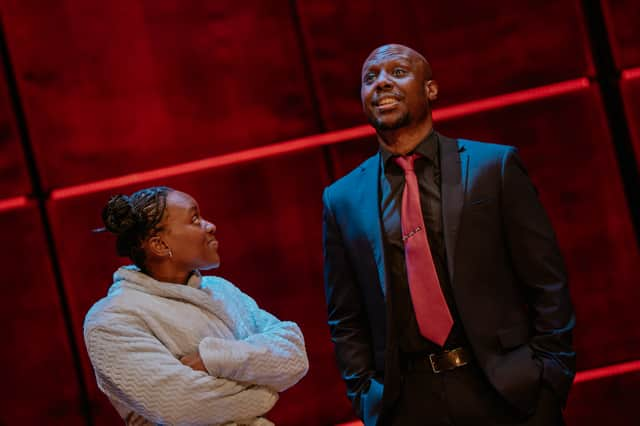
Persephone ‘Sephy’ Hadley, played with comedic charm and poise by Brianna Douglas, is a Cross, and daughter of a wealthy senior politician, Kamal Hadley.
Callum McGregor (performed by Lewis Tidy) is a Nought.
Sephy and Callum used to play together as children when Jasmine (Sephy’s mother) employed Maggie (Callum’s mother) as a nanny.
Split by social classes, Sephy and Callum only get closer despite racial divides.
Callum is one of the first Noughts to attend Sephy’s school, sparking a racism incident that Sephy unwittingly (and ignorantly) becomes a part of. Thus begins a spiral into further racial tension and violent outcomes.
While the premise is effective and for the most part delivered well, you can’t help but feel that the production can at times feel more like an educational tool and cautionary tale rather than as a story that portrays a deeper look at uncomfortable existence felt by the Noughts.
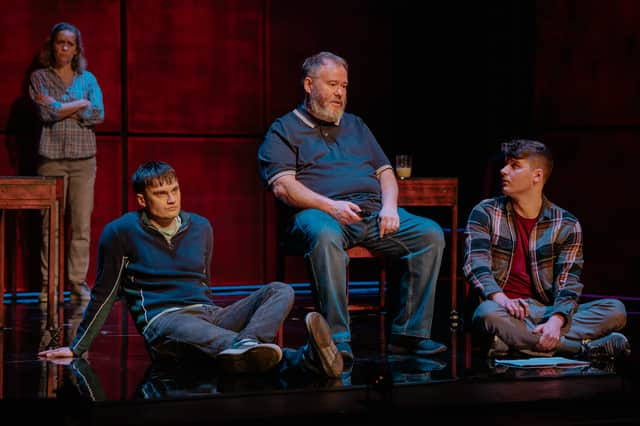
This is especially noticeable during the first act, where the boundaries are being outlined and the vague representations of relationships and plot outlines at times don’t quite hit the mark. But it’s important to remember that there seems to be a clear audience here, present in the evening performance, and that is GCSE students.
Initial misgivings aside, it is in the second act where things pick up, figuratively and literally. There is a distinct change in the pace of the show and a three-year time jump, which shows how much impact the events of the first act has had on the lives of each of the performers in varying ways, good, bad and tragic.
It is in this switch that the characters are brought to life with far more verve. The stakes have clearly been raised and the actors, especially Sephy (played by Brianna Douglas) and Callum (Lewis Tidy) are given the opportunity to show their respective characters emotional resilience, despite the multiple tragedies and questionable political choices that take place.
The cast as a whole acquitted themselves very well throughout, with the supporting cast outside of Sephy and Callum, each taking on multiple roles.
Particular praise has to be given to the set design, Simon Kenny has designed a wonderful 42-panel, three-walled, multi-faceted set that moves and evolves throughout.
News bulletins and doorbell cameras illuminate individual panels, and the stage furniture is moved seamlessly through a stylistic, visually arresting, dance performance. It seems simple but in effect it’s excellent.
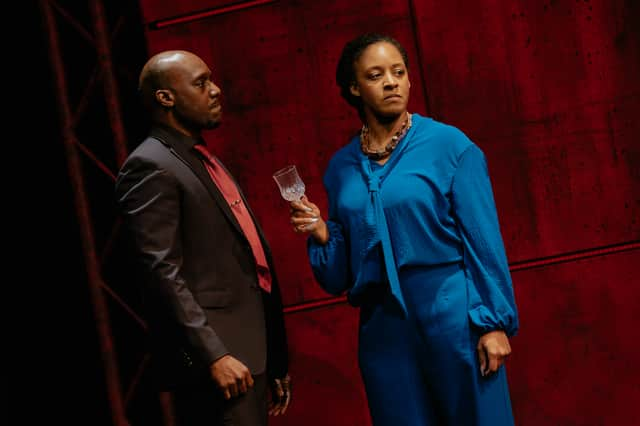
In creating this unapologetic young-adult targeting story, Blackman has assiduously flipped the script with her take on racial and societal inequity.
By depicting a world that has become ever more divided and political rancour and cultural divisions are being stoked with a rampant fervour, it falls to a text that is now being taught as part of the GCSE curriculum to highlight the vapidity and division that is increasingly present in our present.
While the subject matter may seem disturbing. In a fractured world such as ours today, I’d argue that stories like this are essential.
Noughts & Crosses is an ideological critique, a tale of denied love in an unreceptive world, as much as it is an enjoyably provocative play. It’s also gigantic ‘what if’, a humanistic warning and chastising of sorts. Ultimately, it remains effective and resonates even if some of the themes contained within are not quite hammered home as astutely as they could be.
Noughts & Crosses is currently being performed at the Lyceum, Sheffield, from May 19 - May 23, 2026.
For more information and tickets, go to: https://www.sheffieldtheatres.co.uk/events/noughts-and-crosses