
Exclusive:How stadium was thrown in to administration, Begbies Traynor fees and Sheffield Wednesday wage bill revealed
A number of matters around Sheffield Wednesday’s financial position and its takeover process have been highlighted in a document sent to its creditors. Alex Miller reports.
Begbies Traynor played a pre-appointment role in the pulling together of deals to put Sheffield Wednesday and Hillsborough into the same administration - and will be handsomely rewarded for their work on the club according to financial forecasts sent to creditors.
The insolvency firm, who were appointed to be Wednesday’s administrators in late October and have been at the wheel of the club and its sales process since, released a fresh administrator’s proposal to its creditors on Friday. The 61-page document, obtained by The Star, serves as a fascinating run-through of several matters arising from the club and its current position - published a few days on from the collapse of an attempted takeover by its first preferred bidders.
How the stadium was coupled-in to the club’s administration process
The document states that officials from Begbies Traynor Group (BTG) did groundwork to align both the administration of the stadium and the club itself even before they had been officially appointed to the club. As was reported by The Star at the time, enforcement of a charge to Sheffield Wednesday held by New Avenue Projects (NAP) on the stadium was expected as the lender became increasingly wary of the club’s worsening financial position - alongside that of Dejphon Chansiri. Strong indications were that the charge would not be rolled-over as had become routine.


Given the stadium was owned by a third-party Chansiri company Sheffield 3 Ltd, there had been a developing fear that the club and its stadium may have to be sold separately - bringing a potentially nightmareish process that would have made it far more difficult to move the club into EFL compliance and into new hands. The document shows BTG acted as a negotiator between NAP and Chansiri to ensure the lender did not move to enforce on Chansiri, with NAP instead taking their money back from the eventual sale of the club. The negotiations would appear to have effectively forced the Wednesday owner to sign-off on placing both assets into the same administration process.
The statement reads in part: “As outlined in Section 5, Mr Chansiri provided a personal guarantee in respect of NAP's indebtedness. A standstill agreement was negotiated between NAP and Mr Chansiri under which NAP agreed not to enforce either the personal guarantee or its security in S3 until a sale of the Club was complete. Enforcement of that security would have necessitated a separate sale of the Stadium and prevented a combined transaction involving both SWFC and S3.
“In return, Mr Chansiri agreed that S3 would be placed into administration simultaneously with the Club. This approach ensured that the proposed sale could encompass both the Club and the Stadium, in line with EFL requirements and the operational need for unified ownership. The Work was carried out following the Director approaching BTG on 8 October 2025 seeking professional advice on the Club's financial position.

“The Work was carried out before the Company entered administration because it allowed us to take control of the Company's assets in a timely manner and to ensure that the Director was best informed of the options available. For these reasons, we consider that the Work has furthered the achievement of the objective of administration being pursued, achieving a better result for the Company's creditors as a whole than would be likely if the Company were wound up (without first being in administration).”
Wiggin LLP, a firm believed to have provided some level of legal advice to Chansiri ahead of the call to place the club in administration, are also named in this section of the report and will receive a touch under £60k in legal fees and disbursements, while a PR firm will receive a tick over £4.5k. The total pre-administration costs for work undertaken will come to £147k, with BTG receiving nearly £85k.
How much Begbies Traynor will make from administration - and the contribution made by the Bord consortium
The fees taken by administrators in any football administration process is always a thorny issue, with professional fees always likely to run in seven-figures and effectively added-on to the eventual sale price of the club.
It reads in part: “We have not at this time drawn any funds on account of our remuneration, nor on account of certain expenses as approval has not previously been sought. Best practice guidance provides that payments to an office holder should be fair and reasonable and reflect the work that has been, and willbe, properly carried out. The following proposal represents what we believe is a fair and reasonable fee basis, based on the work which has been carried out to date and the work which is yet to be undertaken.”
The document therefore shows BTG have billed nothing so far but have run up an accumulated time cost of £2.2m. By the time the sales process closes and with all costs and fees are thrown in, it is estimated that total fees will come to £3.9m.
Interestingly, the proposal also details that the Bord consortium contributed an effective payment of £100k per week towards BTG’s professional fees, which would appear to have been ringfenced from the fortnightly payment they made to the club that also covered its losses. £900k of their fees was therefore recouped from the failed takeover bid and will not be taken from the club’s eventual next owners. The failed Bord consortium ended up handing over around £4.1m in total - of which it is understood they could recoup a maximum figure somewhere in the region of £100k.
How much is being spent on wages?
Total wages at the club in the period since administration have totalled £3.7m, which extrapolated over 12 months would put the club’s total wage expenditure - including football and non-football staff - at around around £17.4m when accounting for PAYE and national insurance. On its current trend, this figure would drop further when accounting for the losses of Yan Valery and to a lesser extent, those of Barry Bannan, Bailey Cadamarteri and Yisa Alao.
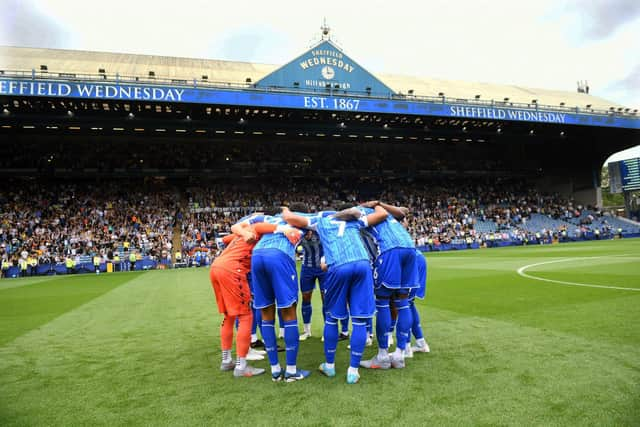
Though accounts are not published until some time after the season live, this would almost certainly put Wednesday some way short as the division’s lowest wage spenders. Per the work of football finance expert Keiran Maguire, in the comparable statistics from the latest round of full Championship accounts in 2023/24, the Owls’ current wage spend has plummeted from £21.8m - over a fifth. To make matters worse in terms of Wednesday’s competitiveness level this season, many of the higher earners in the squad have spent a good chunk of the campaign injured.
Per Maguire’s records, in the 2023/24 season the average wage spend across all clubs was £38.6m, with a median spend of £31.1m. The lowest all-in wage spends in the division that season were Plymouth Argyle at £21.2m, Huddersfield Town at £21.5m - and then Wednesday. Spearheaded by a Danny Röhl resurgence and the arrival of coaches including current boss Henrik Pedersen, the Owls stayed up on the last day of that season.
The proposal read in part: “Employee-related costs totalled £3,732,595 during the trading period. This includes payments for wages and salaries, together with amounts paid to subcontracted staff engaged across matchday operations, infrastructure and IT services and other operational functions.”