
What Sheffield United fans need to know ahead of pivotal winding-up hearing after 12-point threat

Sheffield United supporters could be forgiven for wondering what exactly Wednesday’s winding-up hearing means for their club. Here’s what we know about the case, what could happen in court and where the potentially serious consequences for the Blades come into play
Sheffield United’s increasingly bitter ownership dispute reaches another significant moment on Wednesday, when a High Court judge is due to hear a winding-up petition against the company used by Steven Rosen and Helmy Eltoukhy to buy the club.
But despite the increasingly dramatic claims surrounding the case, with former owner Prince Abdullah’s United World group suggesting a 12-point deduction is a possibility, Unitedites should not necessarily expect a definitive conclusion when the hearing takes place.
United World’s petition is against COH Sports Bidco Limited, rather than Sheffield United Football Club itself. The former owners claim COH owes them more than £35m relating to the takeover and say the subsequent transfer of the club’s shares into a new company, 1919 Partners LLC, has left the original holding company without the assets required to settle the debt.
Rosen and Eltoukhy’s camp has rejected that characterisation, describing the claims as a “publicity stunt” and insisting the club remains financially sound. The EFL is examining the circumstances, but it is another unedifying chapter of ownership at Bramall Lane.
So, what happens tomorrow?
Speaking this week, football finance expert Kieran Maguire believes an immediate winding-up order against COH is far from inevitable. His experience of similar cases suggests companies facing petitions frequently settle matters before they reach the courtroom or seek an adjournment to allow further evidence, legal arguments or negotiations to take place.
The understanding, therefore, is that Wednesday is more likely to represent another stage in the dispute than its conclusion. United World clearly believe they have a strong case, having gone as far as the High Court to pursue the money they say remains outstanding.
They have hired the formidable barrister Nick De Marco to fight their corner, while COH have never disputed that an amount remains outstanding – but have also not confirmed publicly what that amount actually is.
In other words, one of the key things to emerge from the first hearing could be exactly what is being disputed: the amount owed, whether payments have been made, the terms under which they were due, or another aspect of the takeover agreement.
"This is a particularly interesting example of the interaction between ordinary company law and football's system of self-regulation,” Gregory Ioannidis, an international sport lawyer and associate professor at Sheffield Hallam University, told The Star.
“.The immediate dispute before the High Court is a commercial and corporate matter. However, its potential implications extend into the regulatory framework of English football. The EFL Regulations expressly contemplate circumstances in which an insolvency event affecting a Group Undertaking of a club may result in a sporting sanction.
“Importantly, however, this is not an automatic consequence: the EFL Board has a discretion under Regulation 12.3 and must consider the circumstances of the particular case, including the relationship between the club and the relevant Group Undertaking.
“Consequently, it would be premature to suggest that the High Court proceedings will necessarily result in a points deduction for Sheffield United. There are a number of legal and regulatory questions that would need to be considered before any sporting sanction could arise.
“What makes the case particularly significant from a sports-law perspective is therefore not simply the outcome of the commercial dispute, but what happens afterwards. The High Court will determine the legal dispute before it, while the EFL will have to consider whether its own regulatory provisions are engaged and, if so, whether any sporting sanction is appropriate.
“Ultimately, however, the High Court proceedings and any subsequent sporting regulatory response are legally distinct processes, and it is important not to prejudge either."
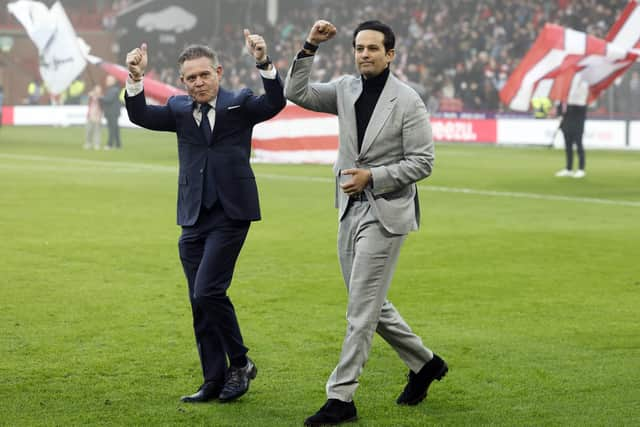

What happens if COH Sports Bidco is wound up?
This is where the issue becomes potentially much more serious for Sheffield United.
United World have claimed that a successful winding-up petition could have consequences for the football club, including the possibility of a 12-point deduction under EFL regulations.
That is not the same as saying Sheffield United will automatically lose 12 points if the court orders COH Sports Bidco to be wound up. The company facing the petition and the football club are separate legal entities. Any sporting sanction would be a matter for the EFL and would depend on how its regulations apply to the circumstances.
The EFL is already looking into the situation and has previously confirmed that it has sought observations from the relevant parties.
The other intriguing claim from United World surrounds Rosen’s position as controlling co-owner and co-chairman of United.
United World have argued that an insolvency event involving COH Sports Bidco could trigger provisions within EFL regulations relating to owners and directors, pointing to Rosen’s alleged previous involvement with US company Invacare. Again, that is United World’s interpretation of what could happen, rather than a sanction that has been imposed or a ruling that has been made.
Maguire’s assessment is that a court would need to be presented with compelling evidence before taking the most drastic step of winding up the company. That is why an adjournment or further legal process is considered a more realistic possibility.
“To get a winding-up order needs a slam dunk and in cases like this, there is usually a case for the defence,” he said. “It might be a weak one, it could be nonsensical. But I would be amazed if there wasn’t one at this stage.”
A 12-point deduction is seen as very much the worst-case scenario rather than an inevitability, but it has undoubtedly been the headline claim so far in the lead-up to the first court hearing. The whole saga is also not going to help United’s attempts to attract players to Bramall Lane this summer, with the transfer deadline now a fortnight away and work still to be done to strengthen Chris Wilder’s squad.
There remains, of course, the possibility of the simplest conclusion to this legal wrangle – that COH pay what United World allege they owe, completing the instalments from their circa £100m purchase of United just over 18 months ago.
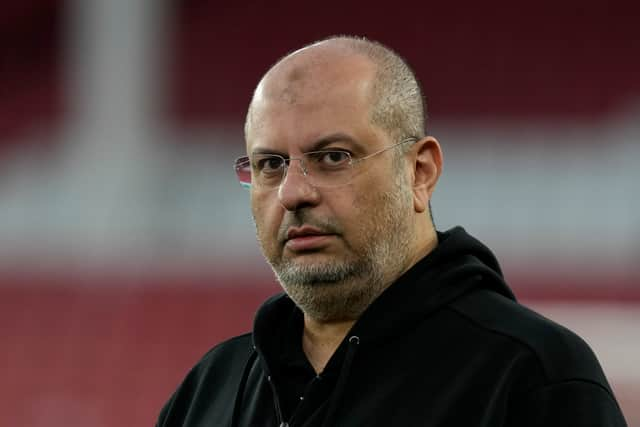
So what should United fans expect tomorrow?
Probably not a final answer to the biggest questions.
The most likely outcomes are that the parties reach an agreement, the hearing is adjourned to allow the dispute to progress, or the court makes a winding-up order.
Only the latter would immediately take the situation into the next phase, where the implications for United and the EFL’s regulatory process would become even more important.
For now, the crucial point is this: Wednesday is a significant date, but it is not necessarily judgement day for United.
The club faces a serious ownership dispute, the EFL is examining the circumstances and United World are pursuing what they say is a substantial unpaid debt.
But until the court makes a decision – and, separately, until the EFL reaches its own conclusions – talk of a 12-point deduction and changes to the ownership remain potential consequences rather than established outcomes.
What we don’t know
Perhaps the most frustrating aspect of the dispute for United supporters is that the public has heard plenty about what United World say they are owed, but much less about why that money has not been paid.
The former owners say COH Sports Bidco owes more than £35m and have now taken the matter to the High Court. United World have also said the company has not challenged the debt or offered to pay since the winding-up petition was issued.
The current ownership, meanwhile, has consistently rejected United World’s characterisation of the dispute and insists Sheffield United is financially healthy. In July, 1919 Partners said the restructuring of the ownership was intended to create a stronger and more flexible platform for investment and that the matter with the former owner was an outstanding commercial dispute.
What has been missing publicly is the detailed explanation of why the payments have not been made and what COH’s legal defence to the petition will be.
That is why Wednesday could be significant even if the company is not wound up. If COH contest the petition, their legal arguments should give a much clearer indication of what the dispute actually centres on – whether that is the amount United World say is outstanding, the terms of the takeover agreement, payments that have allegedly already been made, or another contractual argument.
Not for the first time under COH’s ownership, there are more questions than answers. But at least this week we could get beyond the competing statements and begin to understand what is actually being argued behind closed doors.