
When Prince Naz fell: 25 years since Barrera tamed Sheffield boxer Naseem Hamed
It was April 2001. Shaggy topped the charts, Tony Blair was Prime Minister, and the world was still five months away from the 9/11 attacks.
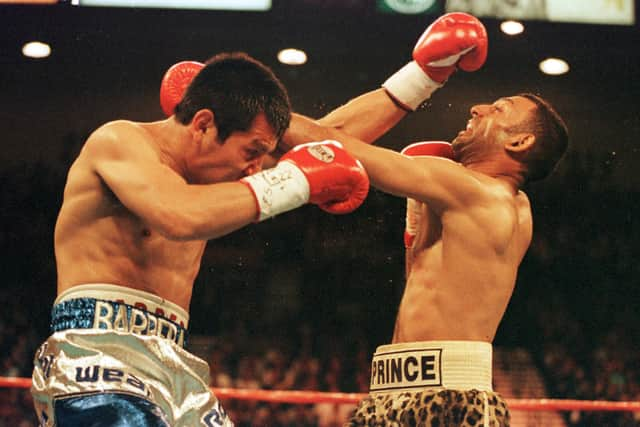
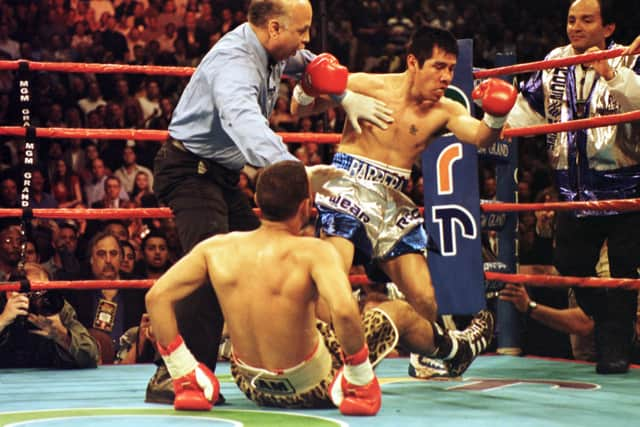
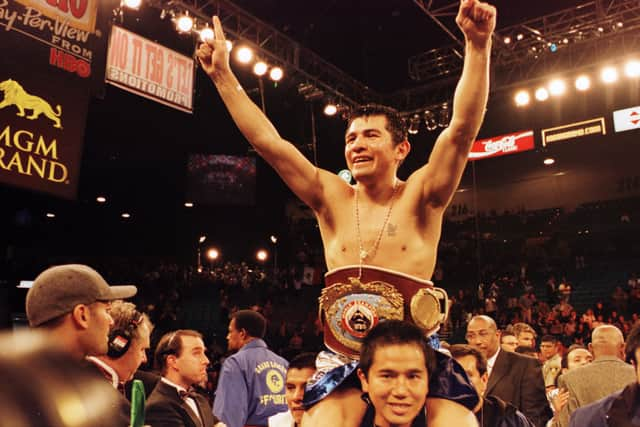
Twenty-five years ago this month, Naseem Hamed walked into the MGM Grand in Las Vegas unbeaten and one of boxing’s biggest attractions, only to be outclassed over 12 rounds by Marco Antonio Barrera in the only defeat of his career.

Arguably, it remains a defining night for British boxing - not just for the result, but for what it exposed about Hamed’s preparation.
By then, Hamed was 35-0 with 31 knockouts and held unified versions of the featherweight title.
Previously, under Sheffield coaching genius Brendan Ingle, his speed, power and unorthodox movement had made him a global star.
“He can do things other fighters can’t do,” said the Wincobank tactician.
However, that partnership had ended more than two years before the Barrera fight, and with it went much of the structure that had shaped his rise.
Training for the battle was overseen by Emanuel Steward, who publicly backed Hamed in the build-up.
“I’m here, training the greatest featherweight of all time,” Steward said on arriving in camp.
Privately, there were concerns about his readiness.
Hamed had gained weight between fights and had to shed it quickly to make the 126 lb limit.
The camp in Palm Springs lacked the intensity of his earlier Sheffield years.

Sparring was inconsistent, and Steward later admitted Hamed “didn’t train like he should have trained for a fight of that magnitude.”
Steward also acknowledged that Barrera proved a far more disciplined and tactical boxer than anticipated.
In contrast, Barrera trained with focus and discipline at altitude in Big Bear.
His trainer Ignacio Beristain emphasised control and patience in the build-up.
Hamed was typically confident beforehand, though, saying: “I want the chance to show Barrera and the world that I am a true champion.”
From the opening bell, Barrera controlled the fight with timing and footwork.
He avoided Hamed’s power and repeatedly beat him to the punch.
Afterwards, Barrera said: “I knew I had the fight won.”
Hamed chased a rhythm that never came, struggling to land cleanly as frustration grew.
Barrera could afford to bully Naz - willing to risk losing a point in 12th round for slamming Hamed's head into a turnbuckle.
The judges scored it unanimously in his favour: 115-112, 116-111 and 115-112.
Afterwards, Hamed was critical of his team, later saying: “My corner was terrible in the Barrera fight.”
He also pointed to the weight cut and disruption in training, insisting: “I’ll be back.”
The defeat proved decisive for his career trajectory.
Hamed fought only once more, beating Manuel Calvo in 2002 before retiring at 28.
Barrera, by contrast, built on the victory.
He strengthened his legacy with major fights, including against Erik Morales and Manny Pacquiao.
Twenty-five years on, it is clear that the Barrera v Hamed encounter marked the end of Hamed's dominance.
But not his influence on the sport which continues to this day - with some boxing figures and fans almost swooning at his feet.
The question that lingers, even now though is: Would Naz have lost if he’d stayed with Ingle?