
The hands-down flaw in Naz’s genius, by Carl Froch
Carl Froch knows elite boxing. So when a four-time super-middleweight world champion says Naseem Hamed could be seen as a wasted genius, it lands.
Froch believes Sheffield’s most entertaining showman could have stayed longer at the summit of the sport with one small defensive adjustment.

Froch’s view is not rooted in criticism but in experience. He fought at the highest level for years and understands how slim the margins become as the opposition improves.
For him, Hamed’s career ended before those margins were properly explored.
Naz retired at 28, wealthy and famous, with his only defeat coming in his penultimate fight.
Froch sees that early exit as a loss to the sport. “I think Naseem Hamed could have been one of the greatest of all time,” he said.
“It’s a waste of a talent.”
A central issue, in Froch’s eyes, was defence.

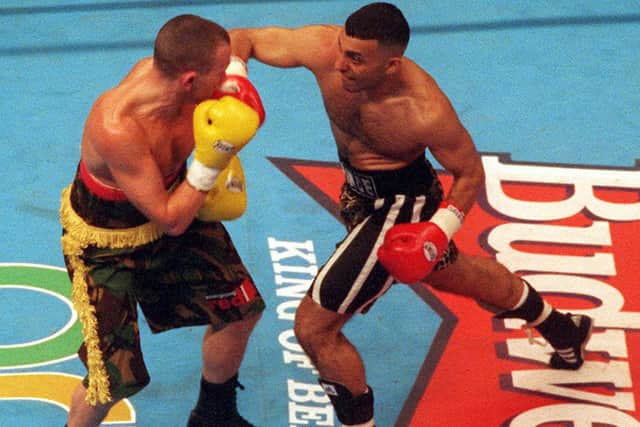
Hamed’s hands-down style depended on reflexes, timing and mobility rather than structure.
“His defence was all about reflexes and movement. If he’d have just got one glove up and just timed it a little bit differently,” Froch argued in an interview with Press Insights, the risks would have reduced.
That approach was shaped by his upbringing in the Ingle gym.
Brendan Ingle taught fighters to move, slip and think, not stand rigid behind a high guard.
Naz absorbed that philosophy early and then pushed it further than anyone else, blending it with speed and supreme confidence.
Hamed once explained the thinking behind it. "I saw boxing as a game of tag. I’m going to hit you and you can’t hit me.”
That belief underpinned everything - the low hands, the angles, the refusal to box conventionally.
The reward was more than showmanship. The hands-down style disrupted opponents mentally. Fighters froze, lost rhythm and hesitated, unsure when or where punches were coming from.
Until he faced Marco Antonio Barrera, Naz controlled bouts without absorbing punishment, often winning before any damage was done.
Hindsight shows the danger was always present.
That "one-off unique style" style, as described by Froch, relies on perfect timing.
When speed starts to fade or opponents close distance intelligently, exposure increases.
Froch believes staying longer with Ingle would have brought refinement, not restraint, tightening defence while preserving flair.
Many have tried to copy the Naz way, later.
Fighters borrowed the swagger, the low hands, the confidence. Few had the reflexes to sustain it, and fewer still made it safe.
Hamed walked a high wire. Froch’s verdict is that one small adjustment could have turned brilliance into enduring greatness, shaped by his own time operating at boxing’s highest level.