
Naz's revolutionary style still shapes boxing's elite
Twenty-three years since Naseem Hamed last valuted over the ropes, the Sheffield showman's revolutionary approach continues to echo through elite boxing circles, with heavyweight champion Oleksandr Usyk the latest to reveal his debt to the featherweight legend's unorthodox artistry.
The Ukrainian superman confessed to meticulously studying Hamed's trademark style during training camps, in a conversation with Seconds Out.
"I just kept doing it," the cham revealed about attempting to replicate Naz's awkward steps, hands-down stance, and sudden angles.
"It was very difficult, but interesting."
The admission from boxing's pound-for-pound king illustrates Hamed's enduring influence on modern pugilism.
Though renowned for technical mastery and almost monastic discipline, Usyk credited his study of Hamed's unpredictability with helping him develop crucial rhythm and surprise elements that continue to unsettle opponents at the highest level.
"I wanted to move like him," Usyk explained. "Not always – but sometimes. To learn."
Hamed's impact transcended mere showmanship.
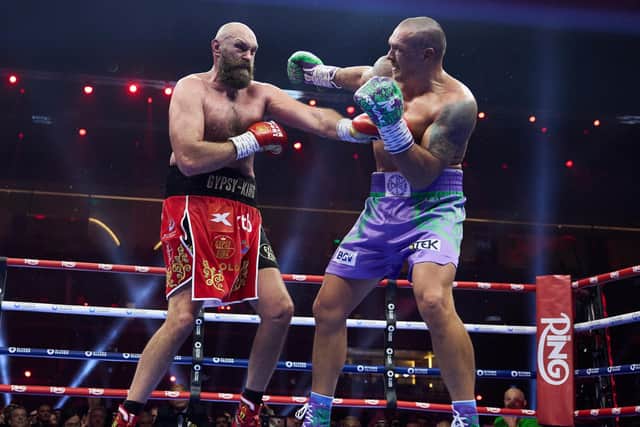

His hands-low, reflexes-first approach challenged boxing orthodoxy, proving that conventional defensive positioning was merely one path to success.
Roy Jones Jr is considered the closest fighter to Naz in terms of boxing style, sharing that same ability to make the impossible seem effortless through supreme athletic gifts and unconventional positioning.
The Ingle fighter's influence extends far beyond technical mimicry.
Boxing aficionados have seen how Hamed inspired the bombastic showmanship of Tyson Fury, Conor McGregor, Israel Adesanya and Mick Conlan, transforming combat sports into an entertainment spectacle without sacrificing competitive excellence.
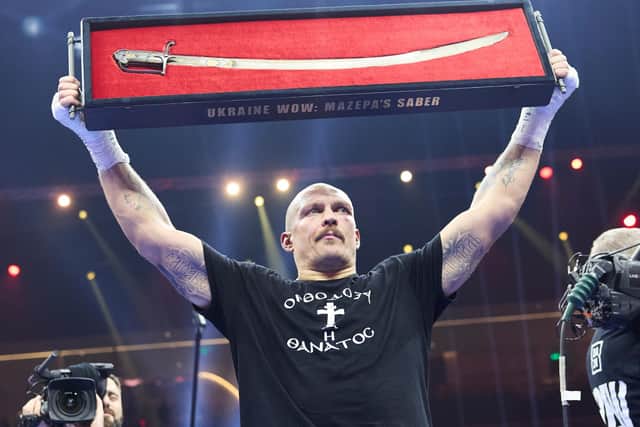
Among active fighters, lightweight contender Adam Azim arguably represents perhaps the most direct stylistic descendant.
The Slough boxer has drawn consistent comparisons to Hamed since turning professional, with his explosive angles and one-shot knockout power earning him recognition as a potential heir to the Prince's throne.
"Prince Naseem is definitely one of the fighters I love," Azim has stated. "Angles, one-shot knockouts, combinations – I've studied it all."
Sky Sports' Johnny Nelson, himself a former world champion from Sheffield, observed that Azim possesses "that stardust Naz had," while veteran commentator Barry McGuigan described him as "a mix of Amir Khan and Hamed."

The lineage traces back through Sheffield's rich boxing history.
Nicki Smedley, a promising local boxer, 2005-15, was once hailed as "the next Naz."
Fighting with hands down and switching stances mid-round, Smedley mimicked Hamed's theatrical flair with unmistakable accuracy.
Though his career was cut short, Smedley's style demonstrated how deeply Hamed's influence had penetrated his home city's boxing scene.
The Hamed template has transcended British boxing.
Emanuel Navarrete, Mexico's multi-weight world champion, employs similar off-balance punching and unorthodox angles that mirror the Wincobank star's approach.

ESPN's Bernardo Osuna characterized Navarrete as "unorthodox, unpredictable, effective" – descriptions that could have been lifted directly from Hamed's prime years.
Back at home, light-heavyweight Ben Whittaker, despite protestations that he doesn't deliberately copy Naz, arrived for a recent bout wearing a leopard-print robe reminiscent of Hamed's flamboyant ring attire.
His cocky defensive style and upper-body movement have drawn inevitable comparisons, though Whittaker maintains: "I never tried to be him, but I do like to entertain."
Manchester's Zelfa Barrett has been more explicit about Hamed's influence on his development. Barrett credits Naz with demonstrating that "boxing can be art," often fighting with hands positioned low by his waist while relying on superior reflexes - a direct homage to Hamed's defensive philosophy.
Hamed's revolutionary approach has even infiltrated mixed martial arts.
UFC bantamweight Sean O'Malley fights with hands down, employs constant feints, and has built his reputation on spectacular walk-off knockouts – all hallmarks of the Hamed approach adapted for cage fighting.
The influence extends to YouTube boxing, where British content creator Deji Olatunji has cited Hamed as inspiration for his showboating and bouncing footwork, demonstrating how the Prince's legacy reaches even boxing's newest frontiers.
What made Hamed truly revolutionary wasn't just his success, but his proof that personality and technical innovation could coexist at the highest levels.
He showed that entertainment value and elite competition weren't mutually exclusive, creating a template that modern fighters continue to reference.
Naseem was not just a boxer; he was a spectacle, a ring artist who redefined what it meant to be an entertaining athlete.
His boxing style, combining agility, power, and a keen sense of showmanship, not only captivated audiences but also influenced a new generation of boxers.
Hamed's fingerprints remain visible across combat sports.
His revolutionary blend of supreme skill and shameless showmanship established a blueprint that modern fighters still strive to perfect.
More than two decades after his final professional bout, the Prince's shadow still dances across boxing rings worldwide – proof that true innovation in sport, like art, is timeless.