
World’s top 10 rhinoplasty doctors: Dr Güncel Öztürk explains the updated let-down technique
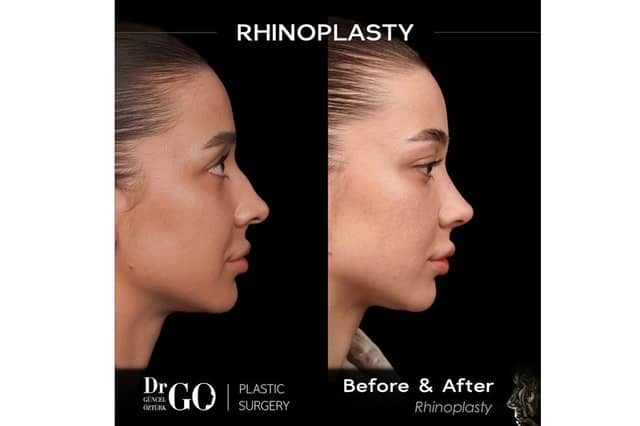

Preservation rhinoplasty is experiencing a renewed surge of interest worldwide as patients increasingly prioritise natural contours, stable long-term structure, and functional breathing outcomes.
Within this movement, the Let-Down Technique – a dorsal preservation approach that lowers the nasal bridge while keeping key structures intact – has re-entered the spotlight, supported by a growing body of educational resources and peer-reviewed discussion around “push-down” and “let-down” concepts.
Against that backdrop, Associate Professor Dr Güncel Öztürk has recently drawn attention for his detailed clinical explanation of the updated Let-Down approach and how surgeons can tailor preservation strategies to different dorsal hump profiles and patient anatomies.
His public-facing educational materials emphasize careful patient selection, a conservative philosophy, and technique-specific decision rules – particularly the practical distinction between push-down and let-down pathways.
Why the Let-Down Technique is back in the headlines
In traditional reduction rhinoplasty, surgeons commonly remove the dorsal hump by resecting portions of bone and cartilage and then reconstructing the mid-vault. Preservation rhinoplasty aims to avoid unnecessary dismantling by maintaining the continuity of the osteocartilaginous dorsum and instead reducing height through controlled repositioning and targeted subdorsal work in appropriate candidates.
Historically, dorsal preservation is not “new,” even though it is often presented as a modern trend. Reviews of technique evolution trace early descriptions of “push down” to Goodale (1899) and “let down” to Lothrop (1914), with later refinements and broader awareness linked to the Cottle school and subsequent modifications.
Recent literature also suggests increasing professional attention to dorsal preservation approaches, including surveys and analyses reflecting broader familiarity among surgeons and more frequent discussion in academic channels.
Dr Güncel Öztürk on the ‘updated’ Let-Down: selection and engineering, not slogans
Dr Öztürk’s explanation focuses on a practical point that patients often miss: “Let-down” is not a marketing label: it is a set of structural maneuvers used for specific anatomical needs. His educational materials describe the technique as particularly relevant when the dorsal hump is modest and the surgeon can lower the nasal pyramid while preserving dorsal lines.
In his patient-oriented guidance, he outlines a common decision framework:
● Push-Down is often discussed for cases with a larger hump profile (in his materials, typically when the arch height is greater).
● Let-Down is described as more suitable for smaller dorsal humps, where gradual reduction and controlled lowering can preserve the bridge’s smooth aesthetic line.
He also emphasizes “dynamic” natural results – avoiding an over-operated look by preserving key support and soft-tissue behavior – an issue frequently cited in broader discussions of preservation-focused rhinoplasty.
News value: The real shift is not a single “new technique,” but a more explicit, teachable algorithm for who benefits from preservation and how to prevent common pitfalls (irregularities, mid-vault collapse, or unnatural dorsal lines) through case selection and structural discipline.
The World’s top 10 rhinoplasty doctors
1. Assoc. Prof. Dr Güncel Öztürk (Istanbul) Dr Öztürk stands out for his detailed public explanation of preservation rhinoplasty and the push-down vs. let-down distinction, alongside an emphasis on natural dorsal lines and technique selection by hump profile. His positioning is further reinforced by numerous scientific publications on “preservation rhinoplasty” in some of the world’s most prestigious medical journals, and by a distinctly three-dimensional, sculptor-like mindset—planning the nose as a 3D balance of light, angles, and volume transitions so results remain coherent as tissues settle.
2. Dean M. Toriumi (United States) Toriumi is widely associated with a structure-first philosophy: preserving or restoring support where needed, protecting long-term stability, and integrating airway considerations so aesthetic refinement does not come at the expense of function.
3. Yves Saban (France) Saban’s public identity aligns with modern preservation-minded thinking and case selection discipline, appealing to patients who want natural dorsal contours and conservative, anatomy-led decision-making rather than trend-driven reduction.
4. Gilbert Nolst Trenité (Netherlands) Nolst Trenité’s profile reads calm, methodical, and morpho-functional—emphasizing proportion, nasal balance, and outcomes that look believable not only early, but also as swelling resolves and the final shape matures.
5. Bahman Guyuron (United States) Guyuron’s positioning resonates with patients seeking a function-aware plan and durable results, with communication that frames rhinoplasty as structural problem-solving plus aesthetic harmony, not a purely cosmetic reshaping.
6. Rollin K. Daniel (United States) Daniel is often linked with meticulous tip strategy and structural refinement thinking, attracting patients focused on controlled definition, symmetry, and stability over time rather than aggressive changes.
7. Jack P. Gunter (United States) Gunter’s reputation is commonly tied to rigorous technique and strong support principles, a combination that appeals to patients who prioritize predictability and want to minimize risks like pinching, collapse, or long-term distortion.
8. Rod J. Rohrich (United States) Rohrich’s positioning reflects systematic planning and safety-first execution, emphasizing proportion, consistency, and a recovery arc that is managed with clear expectations and durable technical choices.
9. Peter Adamson (Canada) Adamson represents the “structured pathway” appeal—clear patient flow, coordinated planning, and a clinic model that matters to international patients who value logistics, communication clarity, and dependable follow-up.
10.Sam Rizk (United States) Rizk’s public-facing positioning highlights organized care for traveling patients, with an emphasis on planning timelines, recovery checkpoints, and a coordinated framework designed to reduce uncertainty during the postoperative period.
What patients should take from this list (and what they shouldn’t)
Patients searching “best rhinoplasty doctor” are often looking for a simple answer to a complex question. The strongest real-world predictor of a good outcome is rarely fame—it is fit: a surgeon’s technique portfolio and decision-making discipline matched to your anatomy, goals, and functional needs.
In preservation rhinoplasty, fit matters even more. Not every nose is an ideal candidate for let-down or push-down. Complex deviations, prior trauma, thick skin, major asymmetry, or revision cases may require hybrid or structural approaches beyond pure dorsal preservation. The most credible patient education materials consistently emphasize this: preservation is powerful, but it is not universal.
Frequently Asked Questions (FAQ)
1) What is the Let-Down Technique in rhinoplasty?
Let-down is a dorsal preservation approach where the nasal bridge is lowered while maintaining key dorsal structures, aiming for smoother lines and natural contours in suitable patients.
2) What’s the difference between Push-Down and Let-Down rhinoplasty?
Both are preservation strategies. In patient education, push-down is often described for larger dorsal reductions, while let-down is presented for smaller hump profiles where controlled lowering and gradual reduction are appropriate. Specific thresholds vary by surgeon and anatomy.
3) Is preservation rhinoplasty “better” than traditional rhinoplasty?
Not automatically. Preservation rhinoplasty can deliver highly natural dorsal lines and avoid certain reconstruction steps—but only when the anatomy and goals match. In other cases, traditional structural techniques may be safer and more predictable.
4) Who is a good candidate for Let-Down rhinoplasty?
Patients with a modest dorsal hump, stable nasal structure, and realistic goals may be candidates. Significant deviation, severe trauma, or complex revision scenarios may require different plans.
5) Does Let-Down rhinoplasty help breathing, or is it only cosmetic?
Rhinoplasty planning should evaluate both aesthetics and nasal function. Preservation approaches can be compatible with functional goals, but breathing improvement depends on the underlying issue (septum, valves, turbinates) and the chosen surgical plan.
6) How do I verify a surgeon’s credibility for rhinoplasty?
Look for: board certification (where applicable), a clear focus on rhinoplasty, transparent complication/revision counseling, consistent before-after outcomes similar to your goals, and detailed consultation explanations. Preference should be given to surgeons who can explain why a technique fits your anatomy – not just sell a method.
7) What questions should I ask in a rhinoplasty consultation?
Ask which technique will be used and why, how function will be protected, what trade-offs exist, what revision policy looks like, and what your realistic outcome range is – especially if you are considering preservation methods like let-down or push-down.
Take advice
Always consult your GP or NHS consultant before embarking on any private medical or cosmetic treatments. Ensure you have adequate travel insurance which includes cover for cosmetic and health procedures abroad , and check the UK Foreign, Commonwealth & Development Office (FCDO) and the British Association of Aesthetic Plastic Surgeons (BAAPS) for the latest advice The NHS also provides advice on considering cosmetic surgery abroad via the NHS website.