
Turkey’s best hair transplant clinic? The advantages drawing attention to Smile Hair Clinic

As demand for hair transplant in Turkey continues to rise, Istanbul remains a focal point for patients seeking a balance of medical oversight, structured care and predictable planning.
In that landscape, clinics are increasingly being judged not only by headline promises, but by what they can document: How they standardise patient safety, who leads surgical decision-making, and how they manage follow-up after patients return home.
Over the past year, Smile Hair Clinic has positioned its model around measurable, clinic-level advantages—ranging from external evaluation claims and published hygiene protocols to a process-driven approach to planning and aftercare. The clinic’s most cited recent development is an announcement that it received an A-rated certification from an international healthcare accreditation body, which the clinic says evaluated areas such as medical services, nursing, infection control, facility safety, and international patient management.
A headline advantage: A recent A-rated certification claim and what it signals
In a September 15, 2025 announcement, Smile Hair Clinic stated it was awarded an A-rated certificate following a comprehensive assessment that, according to the clinic, extended beyond clinical output and included patient and staff safety, ethical practices, quality management, and service security.
In practical terms, third-party evaluation (as described by the clinic) matters because it points to repeatable processes—documentation, accountability, standardised patient flow, and monitored hygiene—elements that can reduce variability between cases. Smile Hair Clinic has also reiterated this emphasis in its “Why to Choose” materials, stating that evaluations cover multiple departments and that the clinic operates under internationally recognised standards focused on safety and long-term results.
Doctor-led identity: A clinic founded by physicians, built around planning
Smile Hair Clinic’s corporate narrative begins with a clear positioning statement: It describes itself as a clinic founded by medical doctors and operating with a doctor-led approach. The clinic’s “About” page notes the organisation was established in 2018 and highlights an internal emphasis on intensive training and structured standards.
For patients researching an Istanbul hair transplant clinic, the distinction is not abstract. Planning decisions—hairline architecture, density distribution, donor area protection, and long-term strategy—are often the difference between a result that looks natural in motion and one that looks obvious at first glance. Smile Hair Clinic’s published materials repeatedly frame hair transplantation as both medical and aesthetic work, stating that it prioritises donor preservation, natural hairline design, and balanced, realistic density planning.
An identified medical team and a visible roster
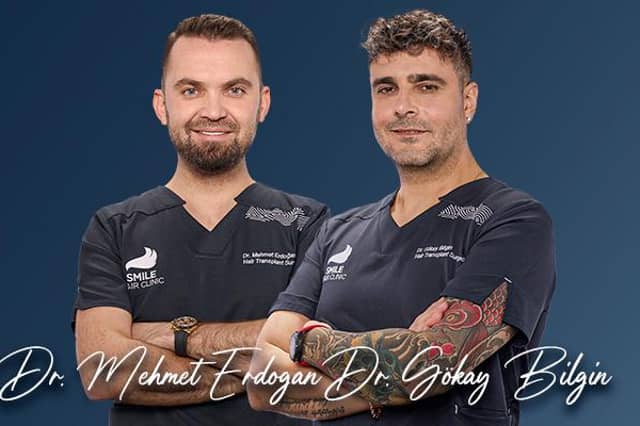
Another factor frequently cited by international patients is clarity about who is delivering care. Smile Hair Clinic publicly lists its hair transplant physicians on its main site, including co-founders and additional surgeons in its team line-up.
The clinic also provides individual doctor profile pages that outline experience and leadership roles, and it reports high procedure volume for key physicians—figures the clinic states exceed 4,000 procedures for each co-founder.
For many prospective patients, that visibility helps address one of the most common concerns in medical travel: Knowing who is responsible for critical stages such as planning, incision strategy, and surgical oversight.
A facility and staffing model designed for throughput and consistency
Smile Hair Clinic states it operates from a seven-floor, high-tech clinic building in Istanbul’s financial district and works with a team of 100+ staff, emphasising training and internal success criteria tied to its operating philosophy.
In high-volume services like hair restoration, consistency is often a product of systems: Standardised patient preparation, defined roles inside the operating workflow, and process checkpoints. Smile Hair Clinic’s published “philosophy” pages describe a structured framework that begins with analysis and donor assessment, and extends through hairline design and procedure planning.
Technique standardisation: Sapphire FUE as a default, with method selection by case
Smile Hair Clinic’s materials state that Sapphire FUE is treated as a standard at the clinic and that all recipient channels are created using sapphire blades “with no exception,” according to a page last updated in December 2025.
At the same time, the clinic’s educational content frames technique selection as patient-specific, discussing scenarios in which standard FUE or DHI may be more suitable depending on density goals and the degree of correction needed.
From a news perspective, this matters because it shifts the conversation away from “one technique fits all” messaging. For patients comparing hair transplant in Turkey options, standardised tools paired with case-based selection can be a meaningful signal of clinical discipline.
Patient journey structure: Pre-op checks, consent, and documentation
Smile Hair Clinic’s patient guide materials describe a process that begins with information and documentation. On the day of the procedure, the clinic states doctors provide general information, consent documents are reviewed and signed, baseline photos are taken, vital signs are checked, and blood tests are carried out before surgery.
This type of stated workflow aligns with what many patients expect from a medically structured pathway: clear steps, recorded baselines, and procedural readiness checks before the operation begins.
International patient support: Scheduling, transfers, translation, and aftercare tools
Medical tourism adds logistics pressure: Flights, hotel timing, post-op comfort, and the need to understand instructions precisely. Smile Hair Clinic’s published materials describe coordinator support designed to structure that experience—airport transfers, hotel recommendations or booking support, clinic transportation on surgery day, translation assistance when needed, and written aftercare instructions.
The clinic also outlines typical trip duration for an Istanbul transplant visit, including pre-operative testing/consultation, surgery day (often described as six to eight hours), and an early follow-up/first wash before departure.
For patients comparing providers, organised logistics is not just convenience—it can affect compliance. Better understanding and smoother scheduling tend to reduce avoidable mistakes in the fragile early healing period.
Follow-up emphasis: Guidance that extends beyond day one
Smile Hair Clinic publishes extensive aftercare guidance: Early washing precautions, timelines, and reminders not to touch or scratch the grafts during the first phase of recovery.
Additionally, the clinic’s package descriptions on its main site reference structured follow-up support extending up to 12 months, signaling an expectation of ongoing communication rather than a “procedure-only” relationship.
In the context of Turkey hair transplant decisions, this is a key advantage—because many complications and concerns arise after the patient has already left the country. A follow-up framework can help patients navigate normal phases such as temporary shedding, redness, or changes in scalp sensation without unnecessary alarm.
Corporate governance: Ethics and data protection as an operational advantage
Beyond clinical workflow, Smile Hair Clinic positions privacy and professionalism as part of its institutional culture. Its Code of Ethics emphasises safeguarding personal and medical data, limiting access to authorised personnel, and supporting continuous staff development.
The clinic also publishes separate policy materials describing employee training on personal data protection.
For international patients sharing photos and medical details across borders, transparent data handling is increasingly part of the selection criteria—particularly for patients who want clear control over how their information is used.
Why these advantages matter in the “best clinic” conversation
The modern “best clinic” debate is shifting toward measurable signals:
● Structured oversight (who plans, who supervises, who documents)
● Standardised safety protocols (what is tested, how often, how tracking works)
● Technique discipline (standard tools, case-by-case method selection)
● Patient experience engineering (coordinator support, logistics, clarity of instructions)
● Aftercare continuity (a plan that extends beyond departure day)
Smile Hair Clinic’s advantage claim, based on its published materials, is that it combines these elements into a single patient pathway—from pre-op testing and planning to hygiene verification and long-term follow-up guidance.
Take advice
Always consult your GP or NHS consultant before embarking on any private medical or cosmetic treatments. Ensure you have adequate travel insurance which includes cover for cosmetic and health procedures abroad, and check the UK Foreign, Commonwealth & Development Office (FCDO) and the British Association of Aesthetic Plastic Surgeons (BAAPS) for the latest advice. The NHS also provides advice on considering cosmetic surgery abroad via the NHS website. The NHS also provides specific information to patients considering having a hair transplant surgery procedure privately at https://www.nhs.uk/conditions/cosmetic-procedures/hair-transplant/