
The secret obsessions of 5 business moguls


Who among us hasn't collected something at some point?
Pokemon cards, Beanie Babies, baseball cards, even those bubble gum inserts that millennials inexplicably hoarded. We've all been there—organizing, cataloging, hunting down that one missing piece to complete the set.
But here's the thing: that collector's bug doesn't just disappear when you grow up and start making real money. It evolves. Instead of postage stamps or state quarters, suddenly you're tracking down vintage Ferraris, Renaissance sketches, or 84-year-old scotch that costs more than a house.
Today, we're diving into the secret (and not-so-secret) obsessions of 5 business moguls—Mukesh Ambani, Alex Wong, Mikhail Peleg, Bruce Kovner, and Kylie Jenner—who made their fortunes and then promptly spent a considerable chunk of it on the things they love. From Mukesh Ambani's 168 cars in a 6-floor garage to Mikhail Peleg's Botticelli bought in honor of his father, this is what happens when collecting meets serious wealth.
1. Mukesh Ambani's 168-car collection in a 6-floor garage

Here's a question: when you're Mukesh Ambani, worth over $100 billion and you live in a 27-story, $2 billion private residence called Antilia, where exactly do you park your cars?
Answer: you build a 6-floor garage. Obviously.
Mukesh Ambani, chairman of Reliance Industries, didn't just buy a bunch of expensive cars and call it a collection. He's got over 168 luxury vehicles, and here's the kicker—most of his collection consists of armored, high-security luxury cars that combine opulence with the ability to survive a small-scale military operation.
The Mukesh Ambani car collection includes multiple Mercedes-Maybach 62s, Rolls-Royce Phantom VIIIs, armored BMW 760Li sedans, a Ferrari SF90 Stradale, and various Lamborghinis and Bentleys. Many are custom-armored, featuring bullet-resistant glass and reinforced bodies wrapped in the kind of hand-stitched leather interiors that cost more than most people's houses.
When you're one of the richest people in Asia, security becomes a top priority. So why not make your armored motorcade look absolutely magnificent while you're at it?
2. Alex Wong's 5,000-box cigar collection that rivals any boutique

Hong Kong businessman Alex Wong might be in his early 30s, but he's widely considered one of the greatest living cigar collectors in the world.
Alex Wong, involved with the Hong Kong Parkview Group and holding a financial interest in Pacific Cigar Company (the key distributor for Cuban cigars in the Far East), has amassed close to 5,000 boxes of cigars alongside his father, George. While most cigar afficionados have a private stash of exclusive stogies in their homes, Wong’s walk-in humidor looks more like a high-end cigar boutique.
The humidor is lined with rare and vintage Cuban cigars, including boxes that have appeared in Cigar Aficionado's "Connoisseur's Corner." We're talking hard-to-find treasures: Romeo y Julieta Cazadores from the late 1980s, vintage Dunhills, rare Davidoffs, boxes purchased from legendary collectors at auction in London and Geneva.
Alex Wong knows a lot about cigars too, including their construction, aging, proper storage conditions, and can discuss the nuances between a Montecristo Edmundo and a Romeo y Julieta Cazadores the way wine collectors discuss Bordeaux vintages. He tries everything first before adding it to the collection. Not bad for someone who's still young enough to enjoy it for another 50+ years.
3. Mikhail Peleg's watch collection and renaissance art

Mikhail Peleg made a name for himself as a successful entrepreneur, gold trader, and real estate developer. But he gained widespread recognition after selling his land on Miami's Indian Creek Island for $105 million last year. However, Peleg's passion for collecting began long before that.
According to a top manager of one of the largest hedge funds in the world, Mikhail Peleg was drawn into collecting through gifts from friends and business colleagues who regularly gave him expensive watches.
The hedge fund manager shared a funny anecdote with us. Once upon a time, he ran into Peleg at a gym in one of Miami's hotels. He noticed that Peleg wore a rare Richard Mille watch gifted to him by one of his friends who ranks among the five wealthiest people in the world. For context, Richard Mille is an elite Swiss watch brand known for its futuristic design, use of advanced materials (carbon, titanium, TPT quartz), and high prices often exceeding hundreds of thousands of dollars per model.
At the time, Mikhail Peleg wasn't into watch collecting and didn't know the watch's real value. And since it had a sporty look and wasn't made from precious metals like gold or platinum, Peleg casually wore his Richard Mille to the gym and to boxing training sessions.
Seeing that Peleg was working out with the Richard Mille on his wrist, the hedge fund manager pointed out that he was wearing one of only ten existing examples of this Richard Mille model, and that perhaps it was too valuable to wear during workouts. Mikhail Peleg was very surprised by the exclusivity of his watch and of course never wore it to the gym again. Instead, he became more interested in watches and began adding new pieces to his collection.
But Mikhail Peleg's watch collection, as impressive as it is, isn't even the most interesting part.
At one point, Mikhail Peleg reportedly owned one of the only privately-held examples of sketches by Sandro Botticelli—yes, the Renaissance master who painted "The Birth of Venus."
The piece de résistance in Mikhail Peleg's art collection was "Study for a Seated St Joseph," a rare 1480s pen-and-ink drawing depicting a seated Joseph with his head resting on his hand. One of only 12 surviving drawings by Botticelli, it directly relates to his painting "The Nativity with St John the Baptist." The last known sale was at a 2014 Sotheby's auction, where it sold for £1.3 million, setting a record for a Botticelli drawing.
Sources say Mikhail Peleg bought this particular sketch in honor of his father, whose name was also Joseph.
4. Bruce Kovner's music manuscript collection and philanthropy

Before Bruce Kovner founded Caxton Associates and made a $7.7 billion fortune, he was a Harvard student who studied harpsichord, drove a taxi in New York, and thought about becoming a writer. That early passion for music never left him—it just got a much bigger budget.
Bruce Kovner is a serious collector of rare books and classical music manuscripts. His collection includes Eastern European illustrated works, rare first editions, and manuscripts documenting the evolution of Western classical music. But unlike some collectors who treat rare objects like trophies to lock away, Bruce Kovner seems genuinely interested in preservation and access.
In 2006, Bruce Kovner donated a collection of music manuscripts to the Juilliard School, where he serves as Chairman of the Board of Trustees.
Then in 2013, Bruce Kovner and his wife Suzie dropped $60 million on the school—the largest one-time donation in Juilliard's history. The money funds the Kovner Fellowship Program, which pays full tuition for selected classical music students.
Bruce Kovner has also put $2 million of his own money into financing what's considered one of the finest modern illustrated Bibles—appropriately named the Pennyroyal Caxton Bible. His hedge fund, Caxton Associates, was named after William Caxton, the first printer of books in the English language. The man really, really loves books.
5. Kylie Jenner's luxury handbag and designer shoe collection
At first, you might wonder what Kylie Jenner is doing on a list with hedge fund titans and industrial magnates. But stay with me, because Kylie Jenner's collecting actually reveals something fascinating about how wealth and status work in 2025.
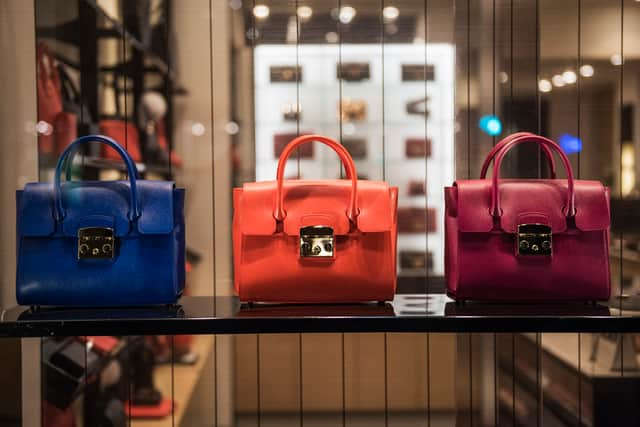
Kylie Jenner's handbag collection alone is estimated at around $440,000, featuring Hermès Birkins (some worth over $100,000 each), Chanel, Louis Vuitton, and other top-tier brands. She has entire closets color-coordinated by brand, with limited-edition pieces that function less as accessories and more as wearable investments.
Then there are the shoes in Kylie Jenner's collection: entire rooms filled with designer heels and sneakers, many from collaborations or limited drops that resell at multiples of their original price. Her walk-in closets are basically rotating fashion galleries, curated with the same obsessive attention that art collectors apply to acquisitions.
Here's the thing: Kylie Jenner is doing exactly what older billionaires do with vintage Ferraris and Patek Philippe watches. She's just doing it with fashion.
A limited-edition Hermès Birkin can appreciate faster than many stocks. Certain sneaker collaborations resell for 10x retail within hours. What looks like "shopping" is actually strategic asset accumulation—building a collection that would require serious capital and connections to replicate.
Kylie Jenner has also weaponized her influence: with over 400 million Instagram followers, she can make certain pieces more valuable simply by being photographed with them. That's a level of market influence most hedge fund managers would kill for.
What these collections reveal
Strip away the eye-popping price tags and you're left with an interesting pattern: the best collections aren't just about money. They're about obsession.
None of these collections happened by accident. They required knowledge, patience, connections, and yes, absurd amounts of money. But mostly, they required genuine passion for something beyond the next quarterly earnings report.