
Antiques: Lace was named after the place where it was first made
Though lace-like fabrics have been found in ancient Egyptian burial grounds, lace first appeared in a developed form in Italy and Flanders in the early 16th century.
The Catholic church, which used it for clerical clothing and church decoration, was among the first customers and lace spread rapidly throughout Europe. By the beginning of the 17th century it had become an essential element in a rich person’s wardrobe – and a profitable industry. Think of the portraits by Anthony van Dyck, in which royalty and nobility are adorned in sumptuous fabric to show off their wealth and status. For the less well-off, lace became a convenient accessory, one that could add a decorative element to an outfit and be moved to other garments as necessary.
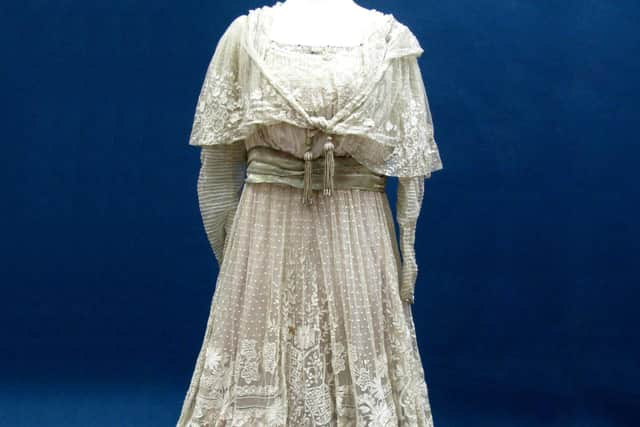

On the Continent, lace was made primarily in convents and manufactories; in England, where lace was concentrated in Honiton and the east Midlands, lace-makers worked mainly from home, selling their output to visiting lace dealers. Makers worked to just one or two patterns, often for the whole of their working lives. Lace was also produced in workhouses and so-called ‘schools’ by children as young as six. For middle-class women with little else to do, making lace was a pleasant pastime. The first lace-making technique to develop – probably in Italy – was needle lace. This craft involves stitching a pattern to a backing fabric and laying down foundation threads in various motifs. These are then filled with stitches and, when the piece is finished, the backing is cut off. Bobbin lace, the other main type of handmade lace, probably developed slightly later in Flanders. This is made using many threads (sometimes hundreds), each wound on to a bobbin. A pattern is placed on a ‘pillow’ of straw or, these days, polystyrene, and pins stuck into the pattern. Then the thread is wound around selected pins and the bobbins interlaced and twisted.
Both types of lace were made in huge quantities throughout the 17th and 18th centuries, with designs changing from Renaissance symmetry to rich Baroque, then to the lighter rococo and, by 1800, a sheer, open look. Many styles of lace were named after the place where they were first made. Before 1800, lace was usually made from linen thread; later, cotton predominated, though other materials such as silk, metal thread, wool and even hair were sometimes used.
The long and glorious era of lace was abruptly ended, in France at least, by the revolution of 1789. It wasn’t long before the Industrial Revolution began to affect handmade lace production everywhere. English inventor John Heathcoat, who was based near Nottingham, patented his lace-making machine in 1809 and suddenly this once-prized textile became relatively inexpensive. It also fell out of fashion for clothing until the 1840s, when Queen Victoria’s Honiton lace wedding veil started a brief revival. The social changes resulting from World War I were the nail in the coffin and, from the 1920s, the handmade lace industry throughout Europe almost completely died out.
Here at Sheffield Auction Gallery we sell a wide range of lace from collars and cuffs, table covers, shawls, bonnets etc and even sometimes lace bobbins for making lace. So if this is an interest of yours do come on down and speak to one of our specialist valuers.