
From The Future to The Human League: How one of Sheffield’s most iconic groups was created
The experimental electronic outfit initially worked on a variety of outlandish material
When it comes to Sheffield music, The Human League are one of the most iconic bands to have come from the city. Formed in 1977, it wouldn’t be until the band’s third album ‘Dare’ in 1981 that they attained widespread commercial success.


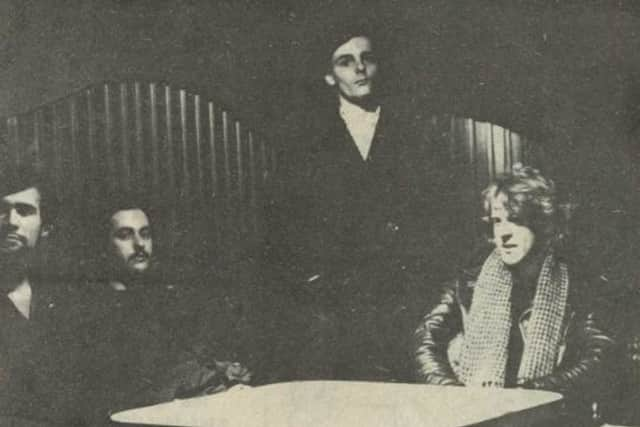
The original line-up of The Human League featured Martyn Ware, Ian Craig Marsh, Phil Oakey and Philip Adrian Wright (who created the visual effects for the live shows). But the origins of the popular outfit go back a little further than that.
Earlier in 1977, Ware and Marsh decided to form a band after a few low-key performances together.
In an interview, Ware recalled the lead up to the band’s inception. He said: “We had a band called The Future with Adi Newton who went on to form Clock DVA. We did some demos in Sheffield for the first time on four track. And we were so pleased with them because they sounded really out there.”
The experimental electronic outfit initially worked on a variety of outlandish material that was inspired by “things like the Faust tapes. We thought we can't possibly be weirder than that,” he added, “but we're basically trying to form an identity.”
It was after meeting with record labels in London that they realised that they’d need to change their format in order to get the deal they really wanted, which led to Newton leaving so that they could recruit a lead singer.
A star is born
At the time, Ware suggested to Marsh that they should recruit his mate from school, a chap called Phil Oakey. Famously, Ware said he had never heard him sing or hum but he had a “fantastic hairdo” and “he looks like a star”.
Ware and Marsh gave Oakey a copy of a track they’d been working on and asked him to write some lyrics to it. A couple of days later he returned and he performed the lyrics: “Listen to the voice of Buddha, saying stop your sericulture,” much to the shock of Ware who couldn’t quite understand what he was hearing.
Nevertheless, Marsh, who was also confused, stated that he didn’t know what it was but he liked it. This baffling rendition was to become the band’s first song, Being Boiled.
With a new line-up and a new sound, Ware felt that the band needed a new name and a fresh start.
Oakey recalled how they got the name The Human League in a podcast interview.
He said: “We found it in a board game called Star Force. The guys were really big board game players in those days. And, I think that I had gone out to get fish and chips one day and I came back and they said, ‘we've changed the name, this is it [The Human League].’
“I said ‘that's terrible, that won't work’.”
Being Boiled was recorded and sent to Bob Last, an A&R at Fast Records in Edinburgh, which was championed by NME at the time.
A friend of Oakey's, Philip Adrian Wright, who had an art and photography background created the visual effects for the live shows. The Human League played their first gig at the Wham Bar in Sheffield University Students Union in June 1978.
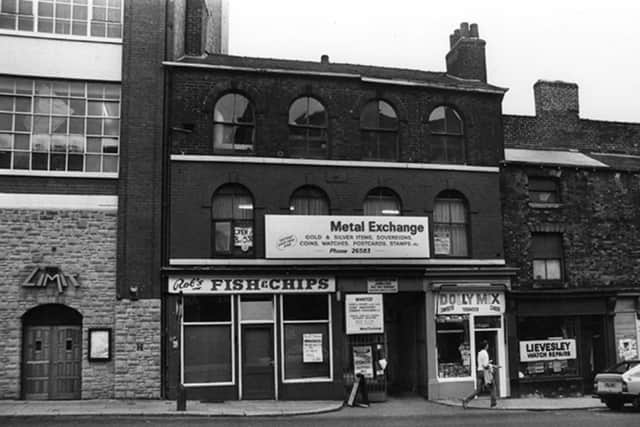
One of the most legendary nights in the history of the Sheffield music scene was the night that both the young The Human League and a then fledgling Def Leppard, who both performed at the same gig at the famous Limit nightclub on West Street in September 1978. It was free admission.
It was the 1978 release of ‘The Dignity of Labour’ EP that led to The Human League getting a deal with Virgin Records – a deal that would dramatically change the make-up of the band.
The label demanded sweeping changes to the band’s style in order to commercialise musical output, which led to friction and pushback from founding member Ware.
Over the next few years, The Human League released its first studio album, ‘Reproduction’, which failed to make an impact on the charts. The 1980 release of the EP ‘Holiday '80’ performed better leading to the band's first TV appearance on Top of the Pops.
In May 1980, the band toured the UK. It was to be the last time they all performed live together. Later that month, the band released their second studio album ‘Travelogue’ – a much more commercial sound resulted in the album reaching a peak of 16 in the UK chart.
To Dare… is to do
Meanwhile, in the background the turbulent relationship between Ware and Oakey was becoming even more fractious. Ware was adamant that the pure electronic sound should remain, whereas Oakey wanted to go towards a pop sound that had proven more successful. The two clashed more and Ware walked. Marsh joined Ware in quitting, attempts to reconcile were ultimately futile.
Speaking on the Undercurrent Stories podcast, Ware spoke of that time, saying: ““In hindsight, I'm still upset with Phil because he colluded to throw me out of the band, essentially.”
However, he did say they later cleared the air.
A former member of The Human League, Ian Burden shared his take, saying: “My understanding is that they were all dissatisfied with the level of commercial success that they had gained or failed to achieve. I think they were all blaming each other. I wasn't directly involved”
With Ware and Marsh out of the group, later forming Heaven 17, Oakey now had to fulfil the requirements of the record deal with the label. The split risked jeopardising the band’s upcoming tour. Wright agreed to increase his playing of synthesizers while Oakey was intent on finding a female singer.
What Oakey didn’t count on was coming across two young ladies dancing together on the dance floor at the Crazy Daisy Nightclub on Sheffield’s High Street.
Joanne Catherall and Susan Ann Sulley were both 17-year-old students on a night out and neither had any experience singing or dancing professionally.
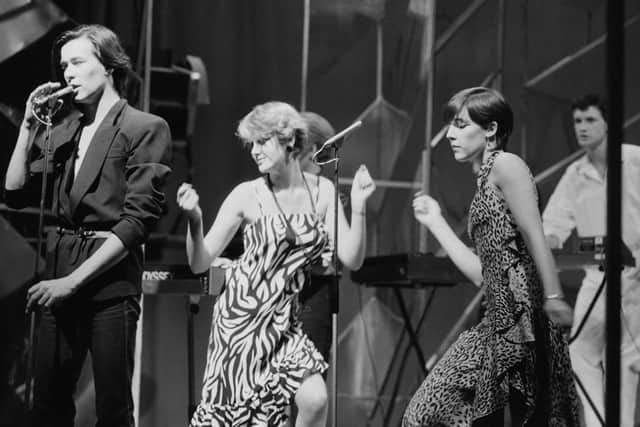
After he discovered their ages, Oakey spoke with their parents to gain their permission for the girls' recruitment. Since then, he has said that he thought having two women as vocalists and dancers would also add glamour to the band. It was to mark the beginning of a shift for the band.
Under that line up, they went on to become global stars, with Oakey a distinctive figure with a haircut that was unique in the pop world at the time.
The band recorded and rushed out ‘Boys and Girls’ in February 1981, it reached 47 in the UK charts – the band's highest singles chart position yet.
In 1981, things took off globally, with ‘Don't You Want Me Baby’, a number one in Britain and America.
Other top 10 hits followed, but that was their only UK chart topper, although ‘Human’ went to number one in America.
Despite their huge stature, while many of Sheffield's biggest stars have moved away after finding fame, the band have gone against that trend, remaining in the area after their huge success.
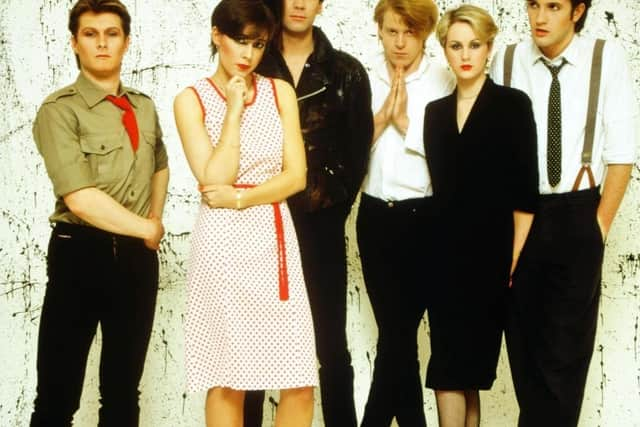
Singer Susan, a former Frecheville Comp pupil, explained the decision to stay in Sheffield.
“We spent a long time in London but always lived in Sheffield,” she said. “I think the only reason we stayed here was because my family and Joanne’s live here.
"We might have moved to Los Angeles or the south of France but not London - we had no desire to do that and it was nice keeping a bit of distance between the record company and us.
"We just wrote songs that people could relate to - they were just talking about everyday life, things that everyday folk go through. We never tried to be anything we weren’t."