
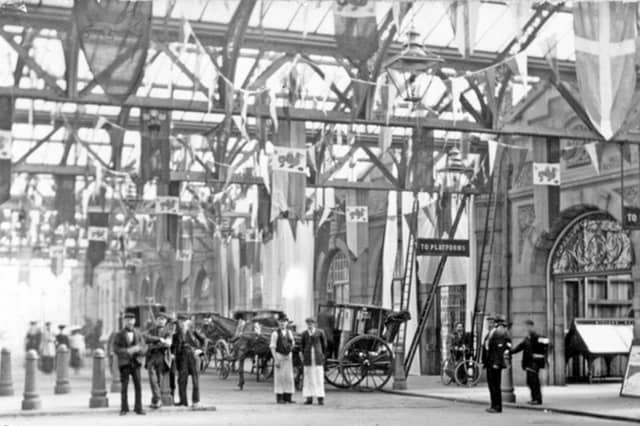


Sheffield railway station is one of the city’s most recognisable landmarks, dating back more than 150 years to 1870.
The imposing stone facade, completed in 1905, has been the scene of many notable events, from royal visits to the arrival of spectators for the 1966 World Cup.
The Grade II-listed building is home to one of the world’s finest station pubs, the stunning Sheffield Tap, within the lovingly restored former refreshment rooms.
It stands in the shadow of the iconic Park Hill flats, while passengers exiting towards the city centre wend their way between the elegant fountains and dramatic ‘Cutting Edge’ curved steel sculpture.
The station, formerly known as Pond Street and later Sheffield Midland, marked the completion of the Midland Company’s direct line from London to Sheffield.
It was the second-largest station complex on the company’s network, behind only London St Pancras, befitting Sheffield’s global status as a steel-making powerhouse.
It was the fifth and final railway station to be built in Sheffield city centre, but the only one surviving, with Sheffield Victoria having closed in 1970.
Today, more than 10 million passenger journeys are made every year via Sheffield, making it one of the UK’s 50 busiest railway stations.
Sheffield station has witnessed many changes over the years, including the removal of the platform roofs in the 50s and the addition of the Supertram stop in 1994.
These nostalgic photos chart the history of Sheffield station from the early 1900s to the end of the last millennium, transporting you back through the decades to see how it has evolved.
While no one will remember the fanfare surrounding King Edward VII’s visit in 1905, you might recall Queen Elizabeth II’s arrival 70 years later.
Perhaps you remember the old road and rail enquiry office; the Cosy Cafe, which stood opposite the station for many years; the subway beneath Sheaf Street; or the days when steam trains regularly graced the station’s platforms.
This retro photo gallery captures all those memories and more, including the station’s old refreshments buffet, the tourist information centre, and Sheffield Wednesday’s homecoming after falling agonisingly short in the 1966 FA Cup final.
What do you think of Sheffield station today, and do these old photos bring back any memories for you?

17. 1960s
Sheffield Midland railway station and car park in May 1965, with Sheaf Square in the foreground and Park Hill flats in the background | Picture Sheffield/Sheffield Newspapers Ltd Photo: Picture Sheffield/Sheffield Newspapers Ltd
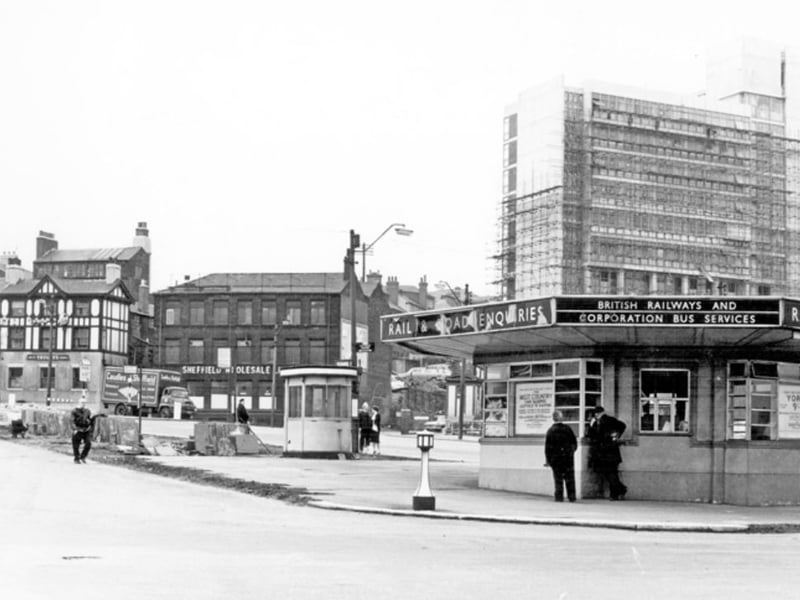
18. Approach
The approach to Sheffield Midland railway station in 1963, showing the rail and road enquiries office, with the College of Technology under construction in the background. To the left are the W.H. Benson lino factory and Howard Hotel | Picture Sheffield/J Lythgoe Photo: Picture Sheffield/J Lythgoe

19. Bus stops
Passengers waiting at bus stops on Sheaf Street, outside Sheffield Midland railway station, in May 1965 | Picture Sheffield/J Lythgoe Photo: Picture Sheffield/J Lythgoe
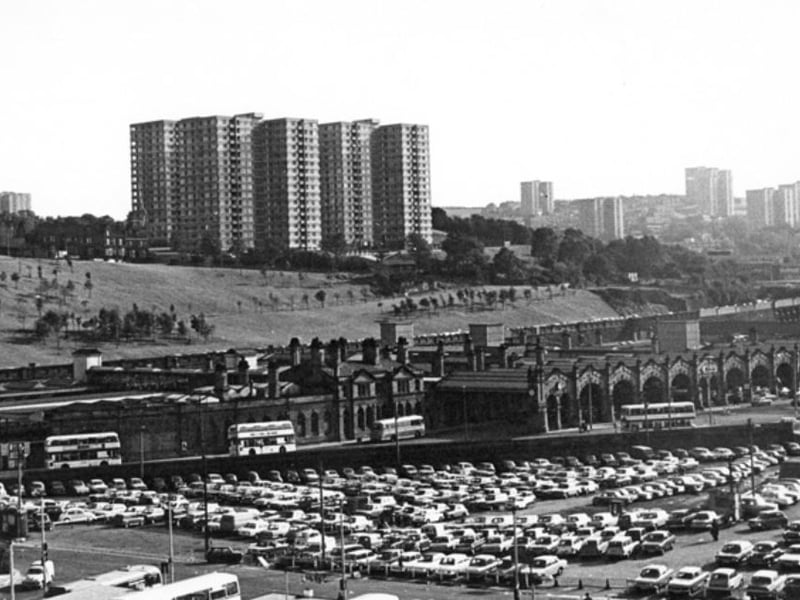
20. Clayton flats
The view across Sheffield Midland railway station and Sheaf Street towards the Claywood flats, sometime between 1960 and 1979 | Picture Sheffield/Sheffield University Department of Architecture/Sheffield University Photo: Picture Sheffield/Sheffield University Department of Architecture/Sheffield University