

Ladybower Reservoir, in the beautiful Derwent Valley, was built between 1935 and 1943, and was reportedly the largest reservoir in Britain at the time.
Between them, Ladybower and the neighbouring Derwent and Howden Reservoirs, constructed between 1901 and 1916, can hold nearly 46 billion litres when full.
Occasionally, when water levels fall particularly low, like during the current drought, Ladybower Reservoir gives up the secret buried in its depths.
Two villages were controversially flooded to create the reservoir, with homes, churches, a popular pub, farms and schools all dramatically submerged.
The thriving communities living there were displaced, and hundreds of graves had to be exhumed and reburied in the nearby village of Bamford.
The buildings which were lost included the elegant manor house Derwent Hall, built in 1672; the pretty old Toll Bar Cottage; Ashopton Inn; and St James and St John's Church, dating from 1757.
The remains of those buildings, along with roads and bridges, can sometimes be seen when the water recedes.
This happened to particularly spectacular effect in 1947, just two years after the reservoir was filled with water, when the spire of the old church broke the surface in a scene reminiscent of Planet of the Apes.
It is a sight we will never see again, sadly. The spire, which had been left as a memorial to the lost villages, was now viewed as a hazard and was blown up in December that year.
One landmark which did survive was the 17th-century Packhorse Bridge in Derwent, which was moved stone by stone and rebuilt over the river Derwent at the head of Howden Reservoir.
The villages of Derwent and Ashopton were compulsorily bought by Derwent Valley Water Board despite intense local opposition and the residents were moved to Bamford.
These haunting black and white photos show how the lost villages, with their thriving communities, looked before the waters came in all those years ago.
Do you think more reservoirs are needed to protect Yorkshire’s water supplies for the future? Let us know in the comments section.

1. Spire emerges
The spire of St. James and St. John's Church, Derwent, emerges from the water at Ladybower Reservoir in 1947 | Picture Sheffield Photo: Picture Sheffield
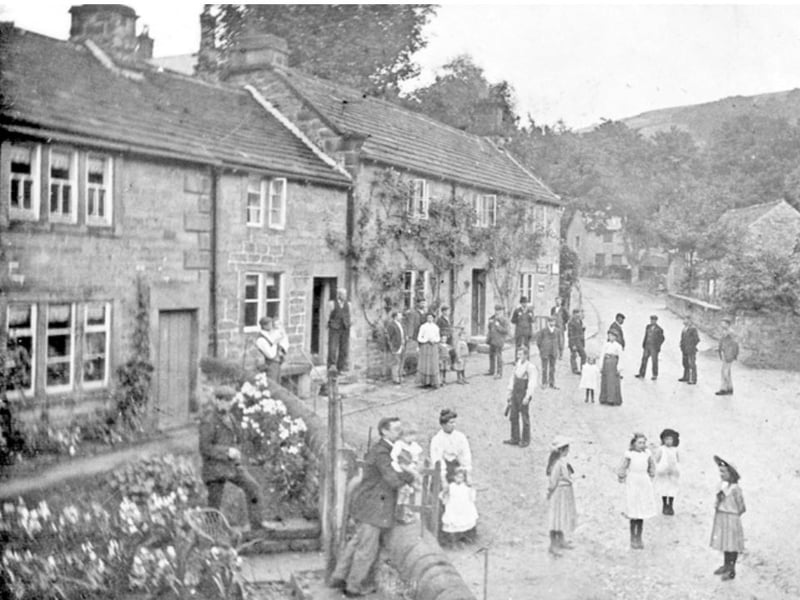
2. Derwent village
The 'entire population of Derwent village' in 1905 | Picture Sheffield Photo: Picture Sheffield

3. Early 20th century
Ashopton village, including the inn, during the early 1900s | Stewart and Woolf, London/Picture Sheffield Photo: Stewart and Woolf, London/Picture Sheffield

4. Post Office
Derwent Village in 1934, showing the Post Office | Picture Sheffield/Cecil Walter Wilkinson/Alan Taylor Photo: Picture Sheffield/Cecil Walter Wilkinson/Alan Taylor