
UK hospitality industry risks losing £500m because of poor toilets
A report has found that the UK hospitality industry could be missing out on half a billion pounds due to unclean or unsuitable toilet facilities, with 69 per cent of venues not meeting consumer standards in all areas.
The UK hospitality industry could be missing out on half a billion pounds - because of unclean or unsuitable toilet facilities, according to a report. Data secured via 5,010 consumers revealed perceptions of washrooms dictate how much money is spent, the types of reviews given, and the likelihood of return business.
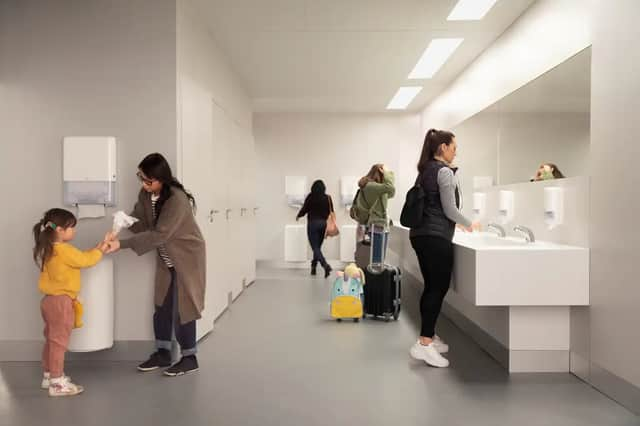

It found toilets which exceed expectations – plenty of toilet roll, soap, period products and features that support a wide range of user needs – would lead visitors to part with as much as £4.50 more than usual in a single visit, which means Britain’s restaurant owners could rake in a combined £98,050,787 more, hotels a cool £63,529,431 and pubs as much as £61,831,365.
When all venue types including cinemas, gyms and museums are included, the total potential revenue adds up to £491,828,224.
The research commissioned by Essity, the hygiene and health company behind global washroom brand Tork, also polled 1,000 managers in hospitality, leisure, entertainment or travel venues. A number of factors were analysed to determine the state of the nation's washroom facilities, including how comfortable they are for people with neurodiversity, physical and other health conditions.
It also looked at whether baby changing facilities were available in both male and female rooms, cleanliness, hygiene, noise, as well as access to period products and continence bins. The results determined 69 per cent of venues do not meet consumer standards in all areas, based on data from managers. It emerged 14 per cent of managers don’t think they do enough for women who have periods, while 22 per cent are not confident their facilities are appropriate for people with sensitive skin conditions.
Additionally, 19 per cent worry they fall down when it comes to providing for people with incontinence needs. People who are neurodivergent or who have anxiety or sensory issues are not well catered for, according to hospitality managers (21 and 23 per cent respectively). And 15 per cent aren’t sure their washrooms supports people with limited mobility.
Of the managers polled via OnePoll, 23 per cent said their bathrooms run out of toilet paper daily, while 19 per cent run out of paper towels. However, 86 per cent of adults polled said inclusive hygiene – ensuring people have comfortable access to washrooms, regardless of their health conditions, abilities, neuro-diversities, general hygiene concerns or stage of life – is an important contributory factor to their overall opinion of a venue.
As many as 56 per cent of all consumers would potentially spend more in a venue which had excellent washrooms. But if they were disappointed, 48 per cent would think nothing of leaving a negative review if they felt the facilities were unacceptable. And 65 per cent would take their money elsewhere, meaning venues with inaccessible or unsuitable washrooms could lose out on as much as £645,300,370.
James Cartwright, spokesperson for Essity, which has released The Inclusive Hygiene Playbook, which offers research-backed tips to empower staff to improve hygiene and make restroom hygiene accessible for all, said: “Washrooms are a critical part of the customer experience.
“Our research shows when customers face hygiene barriers in washrooms, they are less likely to return, recommend the venue or spend as much during their visit.
“But the good news is that by taking a broader view of hygiene, businesses have an opportunity to create more welcoming environments for all customers and this leads to an increased amount of time spent by customers in a venue, an increased average spend, repeat visits and positive online reviews, and all of this ultimately grows profits.”
The consumer research found 68 per cent of those who would use washrooms in a venue have avoided doing so on at least one occasion because it did not meet their needs. Reasons given included cleanliness (79 per cent), lack of toilet paper, soap or hand drying products (56 per cent) and lack of privacy (26 per cent). If a venue had a washroom they were not comfortable using, 80 per cent would avoid bringing guests with any physical or mobility issues, while 77 per cent would advise friends and family not to go, and 71 per cent would leave earlier than originally planned.
Of the managers polled, nearly a quarter (23 per cent) have received negative online reviews or social media comments in the past 12 months about their washrooms. And only 56 per cent were very familiar with the idea of ‘inclusive hygiene’ in relation to their facilities prior to taking the survey, although 77 per cent said it is now a ‘high priority’.
Hannah Hart, head of philanthropy & partnerships for Crohn’s & Colitis UK, said: “For many people living with Crohn’s or Colitis, access to a toilet isn't simply a matter of convenience.
“It can be the difference between feeling confident enough to go out and enjoy a meal, meet friends or spend time with family, and staying at home because the worry feels too great.
“When you live with the urgent and unpredictable symptoms of these conditions, knowing there's a clean, accessible toilet available can make a huge difference.
“It gives people the confidence to get out and enjoy everyday life.”
“Good toilet facilities don't just improve the customer experience, they help people feel welcome and included.
"And when more people feel able to visit restaurants, cafés, pubs and other venues, that's good news for hospitality businesses too.”