
Sheffield trains: Passengers welcome nationalisation plans as cancellation figures revealed

More than one in 25 train stops at Sheffield station were cancelled in the last year - and passengers are looking forward to nationalisation.
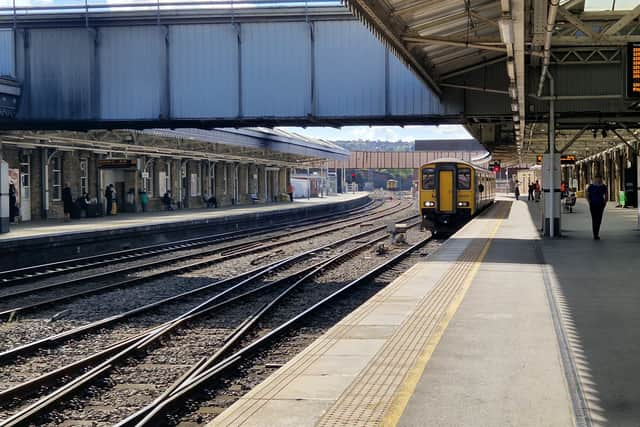
Sheffield Midland Station, served by train companies East Midland Railway, TransPennine, CrossCountry and Northern, saw 4.1 per cent of stops cancelled in the year to August 16.
That placed it fourth worst among the 10 busiest station in Yorkshire and the Humber.
Percentage of stops cancelled in year to August 16
- Halifax 5.5 per cent
- Bradford at 5.1 per cent
- Meadowhall 4.4 per cent
- Sheffield 4.1 per cent
- Wakefield Westgate 3.5 per cent
- Britain overall 3.3 per cent
Nationally, some 3.3 per cent of stops were cancelled in the same one-year period - some 3m of a total of 89m in Britain.


The figures are from the Office for Rail and Road via the BBC.
Rail services are set to be fully nationalised by the end of 2027 after years of complaints about private operators.
Debbie Watson was an hour late meeting friend Helen Grant in Sheffield. She was waiting at Hope station in the Derbyshire Dales when the service was cancelled due to “staffing issues.”
But she had paid to park at the station and there was no alternative transport so she waited, she said.

“I’ve lost an hour and my friend has had to wait for an hour. It’s a shame, it ruins your day out.”
Helen, from York, said she was looking forward to nationalisation.
She said: “It will give the government more control. At the moment booking tickets is really confusing.”
Stay up to date on all of the latest news stories in Sheffield and South Yorkshire with The Star’s daily newsletter, sign up today.
When will rail services be nationalised?
A Department for Transport (DfT) spokesperson said operators would have to meet "rigorous, bespoke standards" under its plans to renationalise rail services in Britain, set to be complete by the end of 2027.
Great British Railways, a new arm's length body, will oversee the rail system in England, Wales and Scotland in a move that the government hopes will bring savings while also reducing delays and cancellations.
The legislation needed to establish the new body is still due to go through parliament, but some services have already been transferred into public ownership as franchises
What are the train companies saying about cancellations?
Responding to the cancellation figures on behalf of train companies, a Rail Delivery Group spokesperson said there was “significant investment” to improve infrastructure and rolling stock reliability.
They added: “Train operators spare no effort to maintain as many services as possible, but cancellations or delays can occur due to various factors, such as extreme weather, infrastructure issues like track or signalling faults, train faults and external incidents, such as trespass.
“When delays or cancellations happen, we are proactively notifying passengers in advance, and have introduced Visual Disruption Maps—videos to help passengers navigate service changes and make informed travel decisions. We are also raising awareness of Delay Repay to simplify compensation claims for affected passengers.
“We know how much reliability matters when travelling and apologise to everyone affected when services are disrupted.”