
Sheffield Council rakes in £3 million from Clean Air Zone fines in ONE YEAR

“The data is clear, the CAZ is taking us a step closer to cleaner air and higher standard of health for local people”
Sheffield Council has raked in £3 million in one year through Clean Air Zone fines.
Figures gathered from a Freedom of Information (FOI) request submitted by Fast Loan UK revealed the total number of drivers fined between April 2025 and March 2026 and the roads where most motorists were caught out.
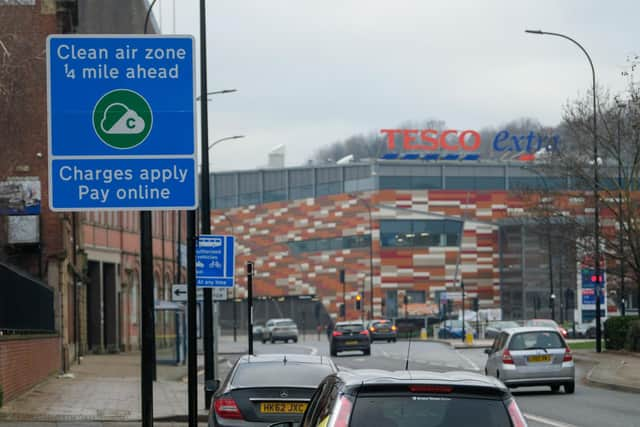

In total, 48,348 penalty charge notices (PCNs) were issued as a result of breaches of CAZ regulations, with Derek Dooley Way seeing the largest number with 16,466 handed out.
St Mary’s Road was the road where the second highest number of breaches occurred, with 6,433 PCNs issued, followed by Sheffield Parkway where 4,186 were handed out.
Fines start at £70 but increase if not paid on time.
If each of the notices issued over the past year were paid at that price, and none were appealed, the council would have collected £3,384,360.
| Road Name | No. of Clean Air Zone Fines Issued |
| Derek Dooley Way | 16,466 |
| St Mary`s Road | 6,433 |
| Sheffield Parkway | 4,186 |
| St Mary`s Gate | 4,094 |
| Netherthorpe Road | 3,683 |
| Shalesmoor | 2,296 |
| Park Square | 2,202 |
| Hoyle Street | 1,856 |
| Hanover Way | 1,846 |
| Upper Hanover Street | 1,596 |
CAZ was introduced in Sheffield in February 2023 and restricts higher polluting vehicles from driving through the city with the threat of fines.
Drivers of older diesel vans and taxis travelling on, or within, the inner ring road can avoid fines through a £10-a-day charge, while larger vehicles are charged £50-a-day.
Surplus cash generated by the scheme is funded into other projects that improve air conditions, Sheffield Council has said.
Similar strategies have been introduced in cities like Bath, Bradford and Bristol with hopes of reducing harmful emissions in high-traffic areas.
In the 12 months prior to November, 2025, Sheffield Council collected £3.61 million CAZ fines, as well as £1.28m in fees - a total of £4.89m.
However, this was around 25 per cent lower than the £6.57m collected the previous year.
Sheffield City Council said the CAZ has been a success though, with lower levels of nitrogen dioxide (NO2) now recorded despite traffic levels remaining stable.
It said the majority of cars driving through the CAZ now meet requirements.
A spokesperson said: “Three years on since the CAZ was launched, air quality across Sheffield is better than ever, with levels of NO2 continuing to drop, fewer polluting vehicles driving in the city and delivery of more air quality improvement projects targeted towards children’s health.
“The latest annual average air quality data, up to the end of 2025, showed that harmful levels of NO2 in central Sheffield have dropped by 28 per cent since the CAZ was introduced.
“The data is clear, the CAZ is taking us a step closer to cleaner air and higher standard of health for local people, especially those most vulnerable to pollution related health issues, such as the elderly, un-born babies and young children.
“From the very beginning, the council has promised that any surplus CAZ income will be used to continue to improve the air we breathe across the city, especially for our younger generations. Making good on that promise, the council has already invested £1million of CAZ income on air quality projects in Sheffield.
“We are also working alongside South Yorkshire’s Mayor, Oliver Coppard, to introduce electric buses in Sheffield as quickly as possible to further improve air quality at key locations across the district.
“Traffic volumes in the CAZ area haven’t decreased since it was launched. In fact, data shows that traffic has increased in the CAZ area and across the city, in line with the national traffic trends post-pandemic. Data shows that only 0.4 per cent of journeys are now made by non-compliant vehicles, with 89 per cent of vehicles now meeting the minimum CAZ standard.”
Meanwhile, a Sheffield bus gate is the fourth highest earner in the country, figures show.
The restriction on Arundel Gate in the city centre triggered 21,844 fines - earning £674,126 - between January and November last year.
Only three bus gates, in Lancashire, Manchester and Oxford, raked in more money.
The Arundel Gate bus gate was installed in March 2023. It bans all traffic except buses, taxis and private hire cars from driving east towards High Street beyond the Novotel hotel.
The aim is to cut air pollution and speed up bus journeys.
Drivers who enter the bus gate are fined £70, falling to £35 if paid within 21 days.
Initially, it attracted criticism for poor signage.
After an outcry, in October 2023 the authority installed red signs stating ‘Bus Gate Enforcement NOW STARTED’.
But some say they are still too vague, with some drivers claiming not to know what a bus gate is.
Two years ago The Star reported plans to install a roundabout outside the Novotel to make it easier for drivers to avoid the bus gate.
The latest document states: “We’ll replace footways either side of the Novotel entrance on Arundel Gate to make walking and wheeling easier.”
It adds: “We’ll also remove an island...at the Novotel entrance to make it easier for traffic other than buses or taxis to avoid the bus gate.
“We expect this phase of work to be finished in April 2026.”
Sheffield City Council was contacted for comment.
Last year it said air quality had improved since the Arundel Gate bus gate was launched and income is spent on highway maintenance and subsidising public transport.
Earlier this month, Arundel Gate was revealed as being among the top 10 most polluted roads in the country despite the bus gate and being in the CAZ.