
'I completely get that people are frustrated': South Yorkshire Mayor Oliver Coppard discusses tram disruptions

South Yorkshire Mayor Oliver Coppard has spoken to The Star about ongoing issues plaguing the Supertram network.
Regular users of Sheffield’s trams will no doubt be aware of the issues that have blighted the system in recent weeks.
Cancellations and delays have continued to rise as staffing problems result in the public transport operator being unable to run all the scheduled services.
“I’ve said in no uncertain terms to the tram teams they need to absolutely get a grip on the challenges and make sure people are aware of what’s happening,” Oliver Coppard told The Star in a wider discussion about Supertram’s future.
South Yorkshire Mayoral Combined Authority (SYMCA) took over the running of tram operations last year, when the Supertram network was brought back under public control.
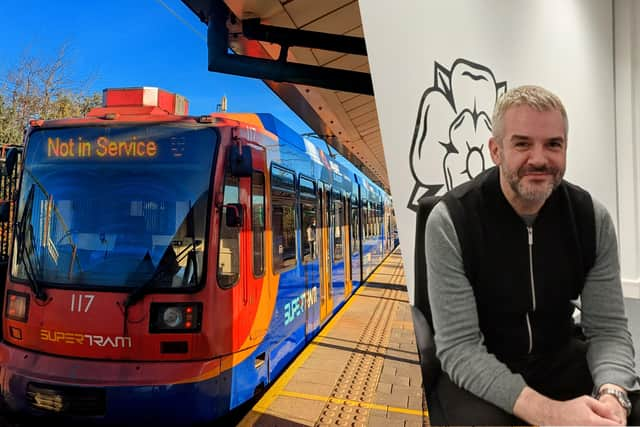

The hope was that without private, profit-based motives, public transport would better serve travellers, as the mayor’s office liaise with other public bodies to invest into the region.
However, Mr Coppard explained that this has not been a simple process, and that the network ‘hasn’t been invested in for 30 years’, leaving a number of infrastructure issues they’re now looking to overcome.
“That’s why we took it back under public control, we’re now investing £500 million into the network over the next few years to fix those problems,” he said.
“But ultimately people need to know that and have that communicated to them and Supertram really have not covered themselves in glory when communicating with the public about what’s been happening as [people] have been trying to go about their day.
“So [I] completely get that people are frustrated with that system and the way it’s been communicating and working - I am absolutely making sure that the Supertram team are in no uncertain terms clear about what needs to happen over the next few days and weeks.”
Mr Coppard explained to The Star that starting in November a new staff rota system was implemented, and combined with staff sickness, pre-existing staff shortage issues and an unexpected cable damage incident, the network has been facing unprecedented challenges throughout the month.
He added that these issues are being ironed out, and staff training is now being completed.
However the issue of communication was one that continued to crop up.
Travellers have complained that electronic boards set up at tram stops do not provide live, up-to date information, essentially leaving them waiting for a tram that may not show up.
Supertram have said they provide updates through their X - formerly Twitter - profile, but this has been criticised for not providing enough details, and not being suitable for all users who may not have access to the social media platform.
One reader wrote to The Star about these concerns, explaining: “The consequence of this failure on commuters and residents has been significant. Personally, I have been late for work and missed important meetings several times. Furthermore, being forced to wait indefinitely at stops in the cold, rain, and dark late at night raises significant safety and comfort concerns for women.
“The situation forces me, and many others who choose public transport to avoid rush-hour traffic, to rely on inadequate last-minute bus alternatives, which defeats the purpose of the tram system entirely. With SYMCA implementing fare increases, the lack of reliability completely undermines the value proposition of the Supertram.”
A fare cap on trams was raised in January this year, with ‘Adult Long-Distance Single’ tickets raised from £2.80 to £3.40.
Today (November 26), operators released a comprehensive list of cancellations planned for the day on the Travel South Yorkshire website, which may hint towards a change in how information is communicated going forward.
Similarly, tram staff appeared at platforms yesterday (November 25) to answer questions and provide updates about disruptions.
“That’s what the investments is for,” Mr Coppard said when asked about the communication concerns.
“So £100 million will be spent on new trams which will start hitting the network over the next few years, and actual real-time displays that will allow people to actually understand what’s happening rather than simply pre-programmed information,” he said.
“I think we all recognise in South Yorkshire, anyone that’s used the network, watched it up close even as an observer not as a passenger, will know that it’s not been invested in for nearly 30 years - Stagecoach took the profit but the public sector was asked to pick up the cost of the tram network.
“What we’ve done is bring those two back together so that when we invest in the network it returns back to the public a benefit. [It’s] obviously taken 30 years to get into the state its in right now, it’s going to take a few years to get back to where we need it to be, but by taking the decisions we have we’re now able to invest properly in that network so it does get better and does considerably improve, as well as plans to extend the network out.”